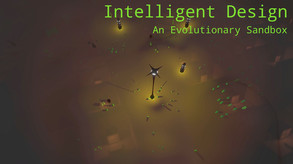
Polygons eating polygons eating polygons. An evolution sandbox where the genetics really are simulated. Seed a world, walk away, and come back to species neither of us designed. Watch populations boom, bust and go extinct. Best left on a second monitor.
Modeled estimate, not a reported figure. How we estimate →
Discounts
Every price cut of more than 20% we have observed, in each market that quoted one, with this game's chart position on either side of it. These are episodes, not a model: a sale is one event, and one event cannot tell you what the next one will do.
Reviews, worldwide (the counter carries no country): 0/day in the week to Sep 1 → 0/day in the week after.
Reviews, worldwide (the counter carries no country): 0/day in the week to Jul 21 → 0/day in the week after.
For scale, across Steam · Top Sellers · Brazil over the last 30 days: the 25 chart moves that followed a price cut of more than 20% went a median of 10 places towards #1, and the 2,413 moves with no price cut behind them went 2 away. One store, one chart, one country — it is the only place we have enough observations to say even that.
Prices outside the United States have been collected since 6 August 2026 and chart positions since 19 July 2026, so a cut older than that has no market to compare and a market that joined later has no history yet. Nothing here is converted between currencies.
About
In a universe driven by targets, a faceless corporation has employed you to create an evolving ecosystem you will never control.
Intelligent Design: An Evolutionary Sandbox is a god game with fully simulated genetics and evolution. Create species of plants, herbivores and carnivores, release them into a world, and then find out what evolution does with them.
Every organism's behaviour comes out of its genes. How tall will a plant grow? How fast can a herbivore run? How often does a carnivore go looking for prey? Those genes pass down generation after generation with random mutations, and there is nothing underneath them but the simulation. No tricks, no statistical approximations, no scripted events waiting to fire. Leave a world running long enough and species will speciate, boom, crash and go extinct without you touching anything
This is a slow simulation. Populations take generations to change. Your role is to seed a world, change something small, and come back later and see what happened. One of our players leaves it open on a second monitor during work, I leave it on my TV while I’m cooking. If you’re looking for objectives, scores and explosions this is not that kind of game (but we do make those).
You can engineer the genetics of organisms directly, but you should do that carefully, because once a genome is loose in your ecosystem it is very hard to control. And do you even know what those genes do? Getting a food chain to balance is satisfying. Watching that same food chain collapse in 2 minutes because you made the equivalent of a spelling mistake is, we’d argue, even more satisfying.
This is for you if: you have heard of SimLife, SimEarth, Creatures or Framsticks; you find a population graph more interesting than a quest marker; you are happy leaving a simulation running while you do something else.
This is probably not for you if: you want goals, a story or a win screen; you want something to happen in the first ten minutes; you want the game to tell you what its numbers mean. One of our own players put it in capitals “THIS IS NOT A QUICK GAME DON'T EXPECT STUFF TO HAPPEN FAST” a positive review)
Pill Bug Interactive is two people in Wales, Sean and Dave. We have been making games about systems that misbehave when you leave them alone for the best part of a decade, and we were nominated for a BAFTA Cymru along the way.
Engagement
Reviews
Themes across 40 recent reviews and how positive each mention is. A keyword signal, not full sentiment analysis.
Reviews
"Intelligent Design: An Evolutionary Sandbox" ist eine Ökosystem-Simulator. Wir haben hier kein Spiel, sondern eine abstrahierte Simulation eines Ökosystems. Man platziert also verschiedene Lebewesen, versucht diese im Gleichgewicht zu halten und hat ansonsten langfristig kaum etwas zu tun als dem Treiben auf dem Bildschirm zuzuschauen. Das zu besiedelnde Gebiet ist dabei nicht allzu groß und besteht nur aus einfarbigen Senken und Hügeln, die irgendwie an einen Marskrater erinnern. Die Einteilung der Klassen ist dabei mehr als simpel. Es gibt Pflanzenartige, Pflanzenfresser und Fleischfresser. Zu Beginn können wir diese Lebewesen auch nur in ihrer Grundform einsetzen, später können wir durch Forschung noch diverse Werte der drei Klassen variieren. Forschungsoptionen erhalten wir durch eines der drei "Gebäude", die wir kaufen können. Das zweite Gebäude sammelt Biomasse, die als eine Art Währung gilt und das dritte erweitert das bebaubare Gebiet. Wenn wir Forschungsstufen freischalten, können wir jeweils einen neuen Schieberegler bedienen, der eine Eigenschaft des Lebewesens beeinflußt. Dabei sind Dinge wie die Reproduktionsrate, die Bewegungsgeschwindigkeit oder auch die Lebenserwartung. Im Kern geht es eigentlich nur darum, ein wenig mit den Werten rumzuexperimentieren und zu schauen, welche Auswirkungen sie haben, um ein gut ausbalanciertes Ökosystem zu erzeugen. Optisch werden diese Werte so gut wie gar nicht repräsentiert (außer daß zum Beispiel die Pflanzen sich an die höchste mögliche Größe halten). Es gibt zwar eine rudimentäre Evolution und Mutation dadurch, daß bestimmte Werte variabel in die Folgegeneration vererbt werden können, allerdings führt das nie zu einer wirklichen Evolution, in der auch komplexere Lebewesen entstehen. Wir bleiben immer bei den simpelsten Lebewesen. Die Simplizität findet sich auch in der rudimentären Grafik wieder. Pflanzen sind einfach grüne Tuben und die Viecher sind planlos rumwuselnde Tabletten, die ein wenig an Bakterien erinnern. An deren Verhalten merkt man auch recht deutlich, daß ein mathematisches Prinzip ihre Bewegungen steuert. "Intelligent Design: An Evolutionary Sandbox" hat ein interessantes Grundkonzept, ist allerdings in den Möglichkeiten zu eingeschränkt als daß es wirklich lange fesseln kann. Eine Weile ist es interessant, ein paar Regler zu verschieben und die Umwelt zu beobachten. Da es aber auch wenig deutliche Rückmeldung gibt, greift sich das doch recht schnell ab. [h1]Wertung:[/h1] 6/10 Atmosphäre -/10 Story 5/10 Grafik 5/10 Sound 6/10 Spielmechanik -/10 Balancing 6/10 Spielspass [h1]Fazit:[/h1] Nur für Petri-Schalen-Fetischisten. [h1][b]6/10 Gesamtwertung
Media

Related
Related
Price dynamics, follower growth, revenue and sales trajectories with interactive tooltips
This and every other Pro feature is free until October 20, 2026. A free account is all it takes.
Genres
Stats
All-time low is the lowest price we've recorded for this game since we started tracking it.
Languages: English**languages with full audio support
Hours played at review time, across 40 reviews with recorded playtime.
positive critical· bar length = how often the theme comes up
As the title suggests, "Intelligent Design: An Evolutionary Sandbox" is a sandbox game in which the player tries to create a stable ecosystem consisting of plants, herbivores and carnivores. By collecting biomass it is possible to buy a research building that allows to adjust given genes. So the player may create and save different species... that may survive, die immediately or crash your whole ecosystem. The graphics and audio are... compared to other games... nearly not worth mentioning, but all in all it suits well to the style of the game. For example the plants are displayed as cylinders of different size, color etc. To mention an other disadvantage of the game you can create a few different ecosystems, but after 10-15 hours it is possible that you have experienced most of the content and the game could become boring easily. Lets come to the advantages: If you love searching for the right composition of genes using different regulators you may have a lot of fun, because you are able to witness your own creations. Will the carnivores wipe out all of your herbivores or does the population stay stable? It is also possible to reach most of the steam achievements by playing which it is quite fun. I can summarize that "Intelligent Design: An Evolutionary Sandbox" is [b]worth the prize[/b]. If you do like to tinker at your own species, and enjoy the results for 5-15 hours gameplay, you should buy it :).
Intelligent Design: An Evolutionary Sandbox is an interesting concept (although the controversial title is a poor choice). It's a thematic ripoff of games like SimEarth, and while more recent, it does come across as a bit shallow compared to that older title. The idea is that you create and maintain an ecosystem of plants and animals... a sandbox experience. There's a few goals and achievements to hunt for but otherwise it's just wrestling with the UI and being disappointed by the technical implementation, which, unfortunately, is far too weak to permit this to find the success it may have had if it had higher production value. From a technical perspective, the game doesn't meet basic minimum requirements that most PC gamers expect as standard. We can say with great certainty that this game is not an asset flip. This is because the assets are of such poor quality that no self respecting asset creator or artist would publish them under any circumstances. Certainly, nobody likes to see asset recycling, stock assets are intended to be used as placeholders until superior assets can be created by the developer, but when we get what's worse than either stock assets being flipped or professional assets, it's a reason for gamers to go out of their way to avoid the product. The game features lazy low-polygon "retro" assets, making this look like a barely functional 3D game from the 1990s. It's unclear why the developers weren't able to arrange high quality, high polygon count contemporary assets for the game, and also irrelevant... what matters is that this looks bad as a result of their decisions, a compromise PC gamers shouldn't have to put up with. The controls can't be customised, which will be an annoyance for many, but it can also render the game unplayable for differently-abled gamers, left handed gamers or gamers using AZERTY or other international keyboard layouts. The game features no proper level design or game/story flow/plot, and while some game formats can be ameniable to this, they must be truly exceptional, where this is not. The developers of this game made the deliberate, arguably lazy choice to avoid doing the most important component of game development, content creation, and instead made this an empty "sandbox" game with few if any goals or point to playing. These technical defects push this game below acceptable standards for any modern PC game. Intelligent Design: An Evolutionary Sandbox didn't appeal much to the people who own a copy of the game, either. It has achievements, and they show us a very clear picture that the game didn't really capture any interest from gamers. The most commonly and easily attained achievement is "Balance ", is for creating an environment with more plants than animals and more carnivores than herbivores for a day, trivial to get, but less than 22 percent of players bothered to get that far before uninstalling the game. Hardly a success story, even the people who own this game weren't interested in it. So, should you buy this game? Is this one of the best of the 110,000+ games on Steam? Intelligent Design: An Evolutionary Sandbox has the comically over-optimistic price of around $7 USD, it's not worth it given the defects and shortcomings with the product, especially considering the sheer number of completely free, much higher quality games on Steam. This is also competing with over 14,000 free games available on Steam, many of them far better than this paid product.
There's a game here somewhere? Not worth playing at all, save yourself some time and money and just move on to the next thing on the store
The game has a great concept but it's executed in a way that presents itself as bland and confusing. The game could've had way better UI design and just better general concept integration. I can't recommend this game unless you're [i]really[/i] curious about the idea of observing evolution
this is a very good game if your in the evolutionary type games -THIS IS NOT A QUICK GAME DON'T EXPECT STUFF TO HAPPEN FAST- (one problem, the link in the game to the discord server does not work)
It's always an interesting idea, to me, to see simulations of genetics and evolution. However, Intelligent Design doesn't really do a great job of showing those systems off through their sandbox. There's very little to do in the game, little to no explanation of the different attributes at play in the game's systems, and I'm not even sure what sort of generational genetics are involved in the simulation, because there's little visual about the genetics system's attributes, no easy way to check on attribute values/ranges of individuals/groups, and no way at all to track that information across generations, other than remembering, "I think these guys used to be slower on average, so I guess the pressures selected for higher speed?" You're really not missing much of anything by skipping out on this one.
Цэ е пыздец.
It has interesting game mechanics and you can run multiple mini game like areas using the towers. Very fun and interesting evolution simulation game !
More what could had been then what it is, this is a early prototype game at best. You cant do much visualy wise its even more empty. The most basic eco simulation possible with nearly zero input from you or any waypointing..
Selling now
See how fast this game is selling right now — estimated copies and revenue per day from recent review growth.
Players by region
Where this game's players are, estimated from review languages.
Related
| Game | Estimated lifetime revenue | Reviews | Review score | Price |
|---|---|---|---|---|
| $538.9K | 639 | 77% | $19.99 | |
| $426.7K | 937 | 94% | $11.99 | |
| $2M | 2.3K | 94% | $24.99 | |
| $897.5K | 1.3K | 62% | $24.99 | |
| $590.7K | 2.3K | 94% | $6.99 | |
| $48.8K | 65 | 82% | $12.59 |
Related
| Game | Estimated lifetime revenue | Reviews | Review score | Price |
|---|---|---|---|---|
| $33K | 170 | 98% | $9.99 | |
| $33K | 96 | 97% | $14.99 | |
| $33K | 97 | 98% | $14.99 | |
| $33K | 206 | 80% | $8.99 | |
| $33K | 139 | 99% | $14.99 | |
| $33K | 55 | 73% | $19.99 |