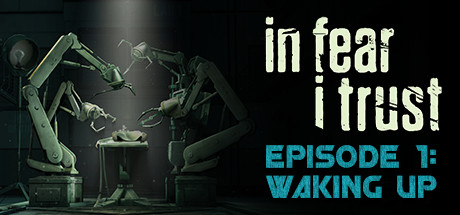
In Fear I Trust is a critically acclaimed first-person horror adventure. Explore eerie locations, solve puzzles and unravel the dark truth behind a secret soviet experiment in this story-driven psychological thriller.
Modeled estimate, not a reported figure. How we estimate →
Media
About
Genres
Stats
All-time low is the lowest price we've recorded for this game since we started tracking it.
Languages: English*, French, Russian*languages with full audio support
Engagement
Hours played at review time, across 40 reviews with recorded playtime.
Reviews
Themes across 40 recent reviews and how positive each mention is. A keyword signal, not full sentiment analysis.
positive critical· bar length = how often the theme comes up
Reviews
Beware - this game makes you feel motion sick real quick, for whatever reason
Игру делали русскоязычные разрабы, делали опираюсь на советскую тематику, но в это же время криво прикрутили субтитры , про озвучку которой нет и вовсе молчу
Хорошая идея, но отстойная реализация. Даже не начинайте, нет, я серьёзно. Полнейшее неуважение авторов к игрокам.
IDisclaimer: I did enjoy this game, but objectively - it's just not so good. So that ended up as a thumbs down. If I had to put it on a scale I'd say this is a 5\10 game. Short review: + That's a puzzles-only game, if that's your cup of tea. Personally, it reminded me a bit of the 7th Guest & 11th Hour, although it does not live up to the same quality of puzzles, and has a much more serious vibe. + Somewhat ok stories for each chapters separately. + Collectibles +/- Very short, around 2-4 hours to complete all episodes. +/- No action sequences whatsoever - no fighting, no running, no one is chasing you. +/- Story is rather vague and gets increasingly hard to follow +/- Graphics&Sounds are usually meh - Incomplete (episode 5 would probably never release) - Puzzles quality and difficulty is very inconsistent. Some portion of the puzzles is extermely difficult and illogical, on others you're practically fed with the solutions. A small remaining portions is actually good ones. Longer Review: STORY By this point you probably have notices the game is split into 5 episodes (with the final one never released). Withtout spolering away too much (this would be a difficult thing to do, anyway) you're playing some guy named Nikolay. It seems the story mostly has to do something with his memories. The developers tried to give a feeling all episodes are connected with some dramatic "Next time in In Fear I Trust.." sequences after episodes 1, 2, 3 and similarly "Last time on ..." sequences for episodes 2, 3, 4. Personally, I didn't get it. The story was very incoherent among the chapters and any connection between them was spelled rather vaguely. With that being said, each episode by itself seem to hold an interesting enough tale on its own, and doesn't actually seem that bad. The story is delivered mostly via short reading segments (diaries, newspaper articles, etc..), some audio recordings of memories, and cutscenes, which are find for being very cheaply done. I actually even thought the acting was ok (again, for a low budget title). As mentioned, the product is unfinished, and it does get increasingly hard to follow as the game progresses, which kind of ruins everything. GAMEPLAY This plays out somewhat like many other horror-indies-shorties you probably know by now, only that in here they didn't give in to the temptation of adding monster encounters, chase scenes, etc. That's right, nothing really threatens you here! You can wonder around as long as you like. What's left, then? Puzzles! In a strange way, I did enjoy playing them, but I must admit they're simply, almost always, just not very good. The "Puzzles" on IFIT are partly inventory-based puzzles, and parly some actual "brain mini games", allegedly, but they mostly don't really serve as such. You have something called "Retrospective mode" which you may use for a limited time, this shows you all the "hotspots" in the area and also some hidden information. At first I thought this served more as some sort of a "cheat mode" which you can play without, if you want the challange of looking for stuff for yourself and solving riddles on your own. That doesn't seem to be the case, since most of the puzzles (not all, though) are only solved by activating "Retrospective" which simply feeds you the answer (e.g. you have to play piano keys on a certain order. You activate retrospective and discover numbers attached to the keys, which actually tell you which order of keys you should play. Puzzling at its best). So, while the general format shows potential, in my opinion, it certainly doesn't live up to it. That being said, I mentioned I did enjoy the game in general and the puzzles in particular, so some people may find joy in this. But objectively, it's simply not good. GRAPHICS, SOUNDS & HORROR Games in general and horror titles in particular always benefit from good graphics and sound design, and especially a horror title which has practically no action bits in it, you'd imagine it must have a very thoughtful creepy environment. That's not 100% the case here, while not particularly bad, most of the scenes and sound design didn't really fit much into the horror thingy. They certainly tried to, but a big part of the game just isn't that scary. Some parts of the 1st&3rd chapters made me a bit uneasy, but that was about it. Graphics were ok but felt very generic. I thought the 4th episode stood out and was the most pleasant to the eye (albeit not creepy at all), and sound&music didn't feel like they played any significant part in the whole. LENGTH That is a fairly short game. Each of the 4 episodes have content for around 30 minutes if you know what you're doing. If you don't, double it as most 2 times. That means around 2-4 hours to complete everything (to me it took 3). REPLAYABILITY Practically non-existent. Each episode measures the time taken to complete it and lists some collectibles you could have found or missed, which can probably hint at attempts to complete the game again to find more collectibles and\or speedrun the game faster, but (1) You would almost never miss a collectible, unless you really want to, since you must use Retrospect mode to win the game, which also shows you all the hotspots around you, and (2) I really don't see a reason to replay it again to try and beat the clock.
Puzzles interessantes e de certa complexidade. Apenas o hint é que estraga o jogo, nos faz usa-lo toda hora.
"salué par la critique". Non.
63p overpriced
In Fear I Trust is a first-person psychological horror experience that leans far more heavily on atmosphere, implication, and unease than on traditional survival-horror mechanics. Developed by Black Wing Foundation and published by Fulqrum Publishing, the game places players in the role of Nikolay, known only as Patient #17, who awakens in a bleak, claustrophobic facility with little understanding of who he is, where he is, or why he has been imprisoned. From the very beginning, the game establishes a sense of vulnerability and disorientation, using confined spaces, muted colors, and an oppressive silence to make players feel trapped inside both the environment and the protagonist’s fractured memory. The setting draws strong inspiration from Cold War–era institutions, blending Soviet-style architecture with the unsettling suggestion of unethical medical experimentation. Corridors are narrow, rooms are sparsely furnished, and everything feels worn down by time and neglect, reinforcing the idea that this is a place where human suffering has been normalized and forgotten. Rather than relying on overt scares, the game cultivates tension through its environments, letting flickering lights, distant noises, and sudden changes in perception do most of the work. This slow-burn approach gives In Fear I Trust a distinctly psychological edge, encouraging players to constantly question what is real and what might be a product of trauma or manipulation. Storytelling is delivered in fragments, with notes, audio recordings, environmental details, and brief surreal sequences gradually hinting at the broader narrative. Much of the game’s intrigue lies in what it does not explicitly explain, allowing players to piece together clues about Nikolay’s past and the nature of the experiments conducted within the facility. This indirect narrative style can be compelling, particularly for players who enjoy interpretive storytelling, but it can also feel frustratingly vague. The episodic structure, with each chapter being relatively short, reinforces this sense of incompleteness, as major revelations are often teased rather than fully explored, leaving the overarching plot unresolved for long stretches of time. Gameplay focuses primarily on exploration and puzzle-solving rather than combat or stealth. Players move through the environment searching for keys, switches, codes, and mechanical solutions that allow progression to the next area. The puzzles themselves are generally straightforward, rarely requiring complex logic or extended trial and error. A notable mechanic is the Retrospective Mode, which allows players to glimpse echoes of the past, uncover hidden clues, and occasionally receive direct guidance on puzzle solutions. While this feature fits thematically with the idea of reliving memories, it also significantly lowers the difficulty, making many puzzles feel more like narrative gates than meaningful challenges. The pacing of the experience reflects its mobile origins, with relatively compact environments and limited interactivity compared to larger PC horror titles. Episodes can often be completed in under an hour, which makes the game approachable in short sessions but can also diminish its impact, as tension has little time to escalate before the chapter concludes. Some players may appreciate this restrained scope, while others may find it difficult to fully immerse themselves in a horror experience that repeatedly resets its momentum at the end of each episode. Technically, In Fear I Trust shows its age, particularly in character models and animations, which can feel stiff and underdeveloped. Environmental visuals fare better, with detailed textures and effective lighting doing much of the atmospheric heavy lifting. Sound design is one of the game’s stronger elements, using ambient noise, subtle audio cues, and an eerie musical score to enhance feelings of isolation and dread. However, voice acting and audio clarity can be inconsistent, sometimes making important narrative information difficult to catch without relying heavily on subtitles or written documents. Taken as a whole, In Fear I Trust is a flawed but intriguing psychological horror title that prioritizes mood and mystery over mechanical depth or narrative closure. Its strengths lie in its unsettling environments, slow-building tension, and commitment to ambiguity, while its weaknesses stem from simplistic puzzles, short episodic structure, and an overall lack of narrative payoff. For players who enjoy introspective horror experiences that emphasize atmosphere and suggestion, it offers a haunting journey through memory, fear, and confinement, even if it ultimately feels more like an unfinished thought than a fully realized nightmare. Rating: 5/10
Hra je dobrá částečně náročné Puzzle a secrety. Ale jinak doporučuji. Koupil jsem hned všechny 4 party a cca ten part vychází na 1H. Takže GLHF a just do it.
og
Related
Related
Trends
Concurrent players on Steam, sampled daily since tracking started.
Momentum
Pace estimated from the game's recent review growth (our daily snapshots) at its own sales-per-review ratio — a momentum signal, not booked sales.
Audience
Estimated from the language of this game's reviews — a proxy for where players are, not official Steam demographics.
Related
| Milo's Tiny Fish Pond | $4.1K | 51 | 88% | $4.99 |
| If you touch me, I will marry you. Pt.1 | $4.1K | 119 | 66% | $1.99 |
| Dysfunctional Systems: Orientation | $4.1K | 54 | 78% | $4.99 |
| 5 Minute Raid | $4.1K | 56 | 91% | $4.99 |
| Another Star | $4.1K | 60 | 93% | $2.99 |
| Major Stryker | $4.1K | 60 | 78% | $2.99 |