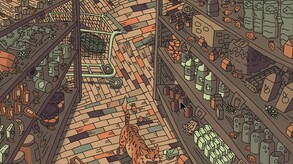
Some hidden object games challenge players to spot tiny details buried inside crowded environments. Others test patience through complexity or visual overload. This experience chooses a far stranger idea. Instead of searching for hidden characters placed cleverly within artwork, players are tasked with finding people who are invisible. Not hidden behind objects. Not disguised. Invisible. The concept sounds absurd at first, almost like a joke designed to confuse people before they even begin, yet that unusual premise becomes the foundation for an unexpectedly engaging search adventure built entirely around observation, patience, and attention to the smallest visual clues.
The challenge is deceptively simple. Players explore a collection of fantasy-inspired artworks filled with locations carefully constructed by commissioned artists who were given one unusual objective: hide as many invisible people as possible inside their creations. The result transforms every scene into a giant puzzle where curiosity and concentration become the primary tools for progression.
Unlike traditional hidden object experiences that often rely on recognizable silhouettes or obvious environmental tricks, this game encourages players to slow down and examine every part of the environment carefully. Tiny visual disturbances, unusual patterns, and subtle clues become critically important. Success comes not from rushing but from developing stronger observation skills over time.
The fantasy environments themselves play a major role in making the experience enjoyable. Each artwork functions almost like its own miniature world filled with atmosphere and personality. Rather than feeling like static backgrounds, these environments create a sense of place that encourages exploration naturally. Players are not simply completing objectives; they are carefully exploring artistic spaces designed to reward patience and curiosity.
Visual variety strengthens progression considerably. Multiple unique artworks ensure that players continue encountering fresh scenery rather than repeating the same visual ideas repeatedly. Each setting creates new search conditions and forces players to adapt observation habits depending on environmental composition and artistic detail.
The difficulty structure also deserves recognition because it successfully accommodates different playstyles. Some players enjoy carefully solving every challenge independently, refusing assistance entirely. Others may prefer occasional guidance to maintain pacing. The inclusion of unlimited hints creates a more welcoming experience without eliminating challenge entirely. Players maintain control over how demanding they want the search process to become.
One particularly clever design choice comes through progression flexibility. Every environment remains available without forcing strict completion requirements before advancing elsewhere. Players can move freely between available content depending on preference, reducing frustration while encouraging exploration at a comfortable pace.
The game also demonstrates strong respect for player convenience through progression systems that prioritize accessibility. Multiple save slots provide flexibility for replaying content or maintaining separate progress files without complications. Session persistence ensures discoveries remain preserved naturally while allowing players to return comfortably over time.
Replay value receives additional support through an especially unusual mechanic that allows players to restore previously discovered invisible characters back into completed scenes. Finding the final remaining hidden elements inside partially completed artwork often becomes significantly more challenging than larger early discoveries. By allowing selected discoveries to return randomly, environments regain much of their original mystery while creating additional opportunities for mastery.
For players who enjoy measuring personal performance, completion tracking systems add another layer of motivation. Timers allow players to compare results and challenge themselves to improve efficiency over repeated sessions. Small additions like this strengthen longevity while encouraging players to sharpen observation skills naturally.
Control accessibility receives thoughtful attention as well. Traditional mouse navigation supports movement and zoom functionality smoothly, while additional keyboard controls ensure players using alternative hardware setups retain comfortable ways to explore environments. Small quality-of-life features strengthen the overall experience significantly.
Audio presentation further enhances immersion by giving each artwork its own atmosphere through dedicated music and environmental sound design. Soundscapes complement visual exploration effectively without becoming distracting, helping players settle into a calmer search rhythm while reinforcing the identity of individual environments.
What ultimately makes the experience memorable is not complexity but commitment to a strange idea executed with confidence. Searching for invisible people sounds ridiculous initially, yet the premise succeeds precisely because it embraces absurdity fully while building meaningful gameplay around observation and exploration.
The experience transforms patience into progression, curiosity into accomplishment, and visual awareness into challenge. It creates a hidden object formula that feels playful, unusual, and surprisingly satisfying without requiring complicated mechanics or overwhelming systems.
For players who enjoy hidden object experiences, atmospheric puzzle design, observational challenges, and games willing to build entire concepts around unusual ideas, this invisible search adventure offers an experience that proves sometimes the strangest concepts leave the strongest impressions.
Rating: 5/10