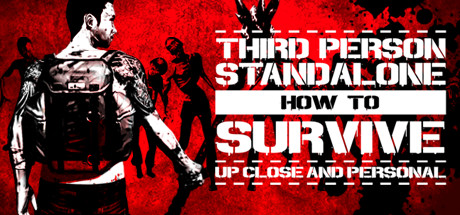
How To Survive: Third Person Standalone is a survival-focused action game that reinterprets the original How To Survive by shifting its perspective from isometric to over-the-shoulder third person. Developed by Eko Software and published by 505 Games, this standalone release attempts to offer a more immersive take on the series’ zombie-infested island setting, while retaining the core mechanics of scavenging, crafting, and managing basic survival needs. The result is an experience that feels familiar at its foundation, yet noticeably altered by its new viewpoint—for better and for worse.
The game drops you onto a chain of tropical islands overrun by the undead, where survival is never guaranteed and preparation is everything. Hunger, thirst, fatigue, and injuries must all be managed alongside the constant threat of zombie attacks. Food must be hunted or scavenged, water purified, and shelter maintained, creating a survival loop that demands steady attention. This constant balancing act gives the game its identity, as neglecting even one aspect of survival can quickly lead to failure. The islands themselves are varied enough to encourage exploration, featuring beaches, jungles, abandoned camps, and interior spaces that hide both resources and danger.
Crafting remains the heart of the experience and is one of the game’s strongest elements. Nearly every useful item is built from scavenged components, ranging from simple melee weapons to complex traps and improvised firearms. Experimentation is rewarded, as different weapon combinations offer varying degrees of effectiveness against enemy types. The crafting system encourages players to think ahead, conserve materials, and adapt to circumstances rather than relying on a single powerful loadout. This depth helps maintain engagement even when other systems begin to feel rough around the edges.
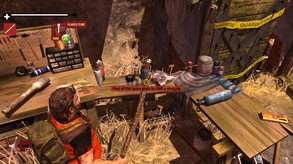
The transition to a third-person camera dramatically changes how the game feels moment to moment. Exploration becomes more intimate, placing the player closer to the environment and enemies, which heightens tension during encounters. However, this perspective also exposes limitations that were less noticeable in the original isometric format. Combat can feel awkward and imprecise, particularly when dealing with groups of zombies or attempting ranged attacks. Enemy movement is often aggressive and direct, and without especially refined aiming or evasive options, fights can feel more frustrating than thrilling.
Despite these issues, the overall structure of progression remains engaging. The story mode guides players through a loose narrative framed around survival tips and escape attempts, while additional modes such as challenge scenarios and permadeath variations offer alternative ways to experience the islands. These modes extend replayability by placing harsher restrictions on resources or removing safety nets, appealing to players who enjoy testing their survival instincts under pressure.
Visually, the game shows its age, especially when viewed up close through the third-person camera. Environments lack fine detail, and character animations are serviceable rather than fluid. While the art direction successfully conveys a sun-bleached, decaying tropical setting, it struggles to maintain immersion during longer sessions. Technical quirks such as camera collisions and inconsistent movement further contribute to a sense that the game was not fully rebuilt to support its new perspective.
Sound design and atmosphere do some heavy lifting in reinforcing tension. Ambient noises, distant groans, and environmental audio help sell the isolation and danger of the islands. While the soundtrack is understated, it supports the survival tone without overpowering the experience. These elements work best during exploration, where the slow buildup of danger feels more effective than direct combat encounters.
Ultimately, How To Survive: Third Person Standalone is an uneven but interesting reinterpretation of a solid survival concept. Its crafting depth and resource management systems remain compelling, offering meaningful decision-making and long-term planning. However, the shift to third person highlights mechanical and technical shortcomings that prevent it from fully realizing its potential. For fans of the original game or players specifically interested in survival systems over polished action, it offers a challenging and content-rich experience. For those expecting smooth third-person combat or modern production values, it may feel dated and occasionally frustrating. The game stands as a reminder that perspective changes can significantly alter how mechanics are perceived, and that not every system transitions seamlessly without deeper redesign.
Rating: 6/10