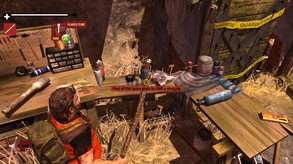
Driven by community suggestion, 505 Games and EKO Software introduce you to a new single player 3rd person view experience that allows you to re-play the zombie crafting adventure "How to Survive" from a deeply immersive point of view.
Modeled estimate, not a reported figure. How we estimate →
Media

About
Genres
Stats
All-time low is the lowest price we've recorded for this game since we started tracking it.
Languages: English*, French, Italian, German, Spanish - Spain, Japanese, Russian*languages with full audio support
Engagement
Hours played at review time, across 40 reviews with recorded playtime.
Reviews
⠀⠀⠀⠀⠀⠀⠀⢀⣤⣶⣶⣤⡀⠀⠀ ⠀⠀⠀⠀⠀⠀⠀⠀⣾⣿⣿⣿⣿⣿⡄⠀ ⠀⠀⠀⠀⠀⠀⠀⠀⠹⣿⣿⣿⣿⡿⠁⠀ ⠀⠀⠀⠀⠀⠀⠀⠀⠀⠈⠉⠉⠉⠀⠀⠀ ⠀⠀⠀⠀⠀⠀⠀⣰⣿⣿⣿⣦⠀⠀⠀⠀ ⠀⠀⠀⠀⠀⠀⣰⣿⣿⣿⣿⣿⠀⠀⠀⠀ ⠀⠀⠀⠀⠀⢰⣿⣿⣿⣿⣿⣿⡀⠀⠀⠀ ⠀⠀⠀⠀⢠⣿⣿⣿⣿⡿⣿⣿⣧⣀⠀⠀ ⠀⠀⠀⠀⢺⣿⣿⣿⣿⣧⣬⣻⢿⣿⣿⡦ ⠀⠀⠀⠀⠀⠙⠻⠿⢿⣿⣿⣿⣿⡏⠛⠁ ⠀⠀⠀⣀⠀⠀⠀⠀⠀⠀⣽⣿⡿⠁⠀⠀ ⠀⢀⡠⣿⣷⣤⡀⠀⠀⢸⣿⣿⠃⠀⠀⠀ ⠰⠿⠿⠿⠿⠿⠇⠀⠠⠿⠿⠏⠀⠀⠀⠀
短短2小时的游戏,我已经有一大堆的话想说了。首先人物动作生硬,不敢相信这个游戏和宣传CG的差距。其次就是游戏本身的HUD,完完全全的像一张纸一样,看起来一点感觉都没有,但是值得一提的是,游戏槽点非常多,首先僵尸模型根本无非就那几个,感觉有点偷工减料,而且没有中文,但是对于我这样英文不好的炸鸡来讲起码大概可以看懂一点,至少故事模式的流程我能看懂,食物,睡眠,饥渴度,这些都很符合求生类游戏的标准,但是我觉得游戏物资少,而且很多道具都需要合成,技能表示一窍不通。总而言之,一句话,这游戏想玩的值得一入,但是受不了僵硬动作的我劝你还是出门右转……
.
standart How To Survive oyununun kamera açısı değiştirilmiş hali aslında oyun içi dlc olarak çıkabilirmiş fakat farklı bir oyun olarak sunmuşlar fakat üzerinde çok çalışılmadan atılmış buraya izometrikten çevrildiği için birkaç sorunla berbaer gelmiş efektler vuruşlar kötü birkaç bugda cabası
É assim que a primeira versão deste jogo deveria ter sido!
💋
Not Recommended
How To Survive: Third Person Standalone is a survival-focused action game that reinterprets the original How To Survive by shifting its perspective from isometric to over-the-shoulder third person. Developed by Eko Software and published by 505 Games, this standalone release attempts to offer a more immersive take on the series’ zombie-infested island setting, while retaining the core mechanics of scavenging, crafting, and managing basic survival needs. The result is an experience that feels familiar at its foundation, yet noticeably altered by its new viewpoint—for better and for worse. The game drops you onto a chain of tropical islands overrun by the undead, where survival is never guaranteed and preparation is everything. Hunger, thirst, fatigue, and injuries must all be managed alongside the constant threat of zombie attacks. Food must be hunted or scavenged, water purified, and shelter maintained, creating a survival loop that demands steady attention. This constant balancing act gives the game its identity, as neglecting even one aspect of survival can quickly lead to failure. The islands themselves are varied enough to encourage exploration, featuring beaches, jungles, abandoned camps, and interior spaces that hide both resources and danger. Crafting remains the heart of the experience and is one of the game’s strongest elements. Nearly every useful item is built from scavenged components, ranging from simple melee weapons to complex traps and improvised firearms. Experimentation is rewarded, as different weapon combinations offer varying degrees of effectiveness against enemy types. The crafting system encourages players to think ahead, conserve materials, and adapt to circumstances rather than relying on a single powerful loadout. This depth helps maintain engagement even when other systems begin to feel rough around the edges. The transition to a third-person camera dramatically changes how the game feels moment to moment. Exploration becomes more intimate, placing the player closer to the environment and enemies, which heightens tension during encounters. However, this perspective also exposes limitations that were less noticeable in the original isometric format. Combat can feel awkward and imprecise, particularly when dealing with groups of zombies or attempting ranged attacks. Enemy movement is often aggressive and direct, and without especially refined aiming or evasive options, fights can feel more frustrating than thrilling. Despite these issues, the overall structure of progression remains engaging. The story mode guides players through a loose narrative framed around survival tips and escape attempts, while additional modes such as challenge scenarios and permadeath variations offer alternative ways to experience the islands. These modes extend replayability by placing harsher restrictions on resources or removing safety nets, appealing to players who enjoy testing their survival instincts under pressure. Visually, the game shows its age, especially when viewed up close through the third-person camera. Environments lack fine detail, and character animations are serviceable rather than fluid. While the art direction successfully conveys a sun-bleached, decaying tropical setting, it struggles to maintain immersion during longer sessions. Technical quirks such as camera collisions and inconsistent movement further contribute to a sense that the game was not fully rebuilt to support its new perspective. Sound design and atmosphere do some heavy lifting in reinforcing tension. Ambient noises, distant groans, and environmental audio help sell the isolation and danger of the islands. While the soundtrack is understated, it supports the survival tone without overpowering the experience. These elements work best during exploration, where the slow buildup of danger feels more effective than direct combat encounters. Ultimately, How To Survive: Third Person Standalone is an uneven but interesting reinterpretation of a solid survival concept. Its crafting depth and resource management systems remain compelling, offering meaningful decision-making and long-term planning. However, the shift to third person highlights mechanical and technical shortcomings that prevent it from fully realizing its potential. For fans of the original game or players specifically interested in survival systems over polished action, it offers a challenging and content-rich experience. For those expecting smooth third-person combat or modern production values, it may feel dated and occasionally frustrating. The game stands as a reminder that perspective changes can significantly alter how mechanics are perceived, and that not every system transitions seamlessly without deeper redesign. Rating: 6/10
tuve que meterle patchs y mods para que esta cosa funcionase, no lo compren ni aunque este en 90% de descuento esta pesimamente optimisado
i'll be positive but i wish there was an option for a neutral review. this game is decently enjoyable for the first hour or so. it's buggy and animations are not great, but that's part of the charm. there's little to no substance. as it goes with games like this, it gets boring after a few hours. pick it up on sale if you like zombies but don't pay full price.
Related
Related
Trends
Modeled estimate over time, reconstructed from Steam's monthly review histogram.
Momentum
Pace estimated from the game's recent review growth (our daily snapshots) at its own sales-per-review ratio — a momentum signal, not booked sales.
Audience
Estimated from the language of this game's reviews — a proxy for where players are, not official Steam demographics.
Related
| Gecko Gods | $269.4K | 660 | 96% | $15.99 |
| Master of Orion 2 | $269.2K | 1.7K | 96% | $5.99 |
| Savara | $269.5K | 568 | 88% | $19.99 |
| Bastard Bonds | $269.6K | 885 | 89% | $10.99 |
| Unworthy | $269.7K | 852 | 81% | $14.99 |
| Lonely Mountains: Snow Riders | $269.7K | 789 | 92% | $14.99 |