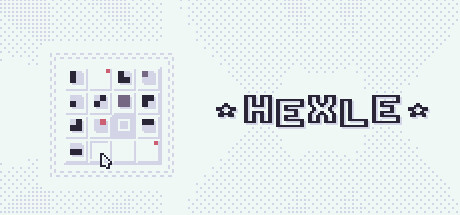
Hexle, developed and published by PUNKCAKE Délicieux, is a tightly designed logic puzzle that takes the familiar structure of Sudoku and reshapes it into something more technical and demanding. On the surface, it presents a clean grid and a simple objective—fill in the missing numbers—but the rules governing those placements quickly reveal a deeper, more layered system. By combining traditional number-placement logic with additional constraints inspired by hexadecimal and binary relationships, the game transforms a recognizable formula into a more intricate mental exercise.
The core gameplay revolves around carefully placing numbers within a grid while respecting multiple overlapping rules. As in Sudoku, each value must remain unique within its row and designated sections, but Hexle adds extra limitations that restrict how certain values can coexist. These additional constraints force players to think beyond simple elimination and instead approach each puzzle as a network of interconnected conditions. Solving even a small section often requires considering several possibilities at once, making the experience feel more analytical and deliberate than many other puzzle games in the same space.
One of the game’s strengths is how it introduces these ideas gradually. Early puzzles ease players into the structure, allowing them to grasp the fundamental rules before increasing the complexity. As the difficulty ramps up, the puzzles begin to demand more advanced reasoning, often requiring players to plan several steps ahead and revisit earlier assumptions. This steady progression creates a satisfying sense of growth, where each solved puzzle feels like a genuine accomplishment rather than a routine task. The inclusion of procedurally generated boards ensures that there is always new content to engage with, while daily challenges and larger, more demanding grids provide structured goals for those looking to test their skills further.
Replayability is supported by this constant stream of puzzles, but also by the way the game encourages refinement of thought. There is a noticeable difference between simply completing a puzzle and solving it efficiently, and players who enjoy optimizing their approach will find additional satisfaction in revisiting challenges. A light progression system adds small rewards in the form of unlockable color palettes, giving players the option to customize the visual tone of the game without interfering with its core mechanics. This subtle sense of progression complements the otherwise minimalist design.
Visually, Hexle embraces simplicity in a way that aligns closely with its gameplay. The interface is clean and uncluttered, ensuring that the player’s attention remains on the puzzle itself. There are no unnecessary distractions, and every element serves a functional purpose. While this approach makes the game easy to read and navigate, it also means that it lacks a strong visual identity. The presentation is effective but understated, and it may not leave a lasting impression beyond its clarity and usability. The audio design follows a similar path, offering a subdued background that supports concentration without drawing focus.
The main challenge the game presents is its learning curve. While the mechanics are introduced in a structured way, the combination of rules can still feel overwhelming at first, especially for players unfamiliar with logic-heavy puzzles. Understanding how different constraints interact requires patience, and the game does little to simplify this process beyond its initial onboarding. For some, this depth will be the game’s greatest strength; for others, it may act as a barrier that limits accessibility.
Another factor to consider is its niche appeal. Hexle is firmly rooted in logic-based problem solving, and its enjoyment depends heavily on a player’s interest in that type of gameplay. It does not attempt to broaden its appeal with narrative elements or alternative modes, instead focusing entirely on delivering a pure puzzle experience. This focus gives it a clear identity, but it also narrows its audience.
In the end, Hexle is a well-crafted and intellectually engaging puzzle game that succeeds by building complexity from a simple idea. Its layered mechanics, steady progression, and endless supply of challenges make it a rewarding experience for those who enjoy deep, methodical problem solving. While its minimal presentation and steep learning curve may limit its reach, it stands out as a thoughtful and satisfying entry in the logic puzzle genre.
Rating: 7/10