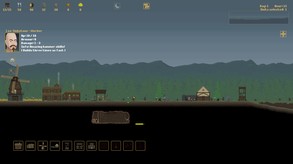
Your village must survive for 13 days! Gather resources, expand, explore the underground for riches, and train soldiers to defend against hordes of the undead.
Modeled estimate, not a reported figure. How we estimate →
Media
About
Genres
Stats
All-time low is the lowest price we've recorded for this game since we started tracking it.
Languages: English, Simplified Chinese
Engagement
Hours played at review time, across 41 reviews with recorded playtime.
Reviews
Themes across 41 recent reviews and how positive each mention is. A keyword signal, not full sentiment analysis.
positive critical· bar length = how often the theme comes up
Reviews
Grim Nights, developed and published by Edym Pixels, is a small-scale strategy game that manages to feel far more intense than its simple presentation suggests. At a glance, it looks like a straightforward pixel-art colony builder, but once it begins, it quickly reveals itself as a tightly wound survival experience built around pressure, planning, and constant trade-offs. It doesn’t rely on complexity or scale to create challenge—instead, it focuses on a concise gameplay loop that steadily tightens as each day passes, pushing players to make efficient decisions or face collapse. The structure revolves around a clear and effective day-and-night cycle. During daylight hours, you gather resources, construct buildings, assign villagers to tasks, and prepare for what’s coming. When night falls, the game shifts into defense mode, with waves of enemies attacking your settlement from all directions. This rhythm creates a natural tension that defines the experience. Early on, the cycle feels manageable, even relaxed, but it doesn’t take long before the demands begin to stack. Every decision made during the day directly impacts your ability to survive the night, and the margin for error shrinks quickly as threats escalate. What makes the game engaging is how it blends multiple systems without overcomplicating them. Resource management, base construction, and unit control all feed into each other, creating a loop where growth and defense are inseparable. Expanding too quickly can leave you vulnerable, while playing too cautiously can stall your progress and leave you underprepared for later waves. There’s a constant need to prioritize—whether it’s producing more food, training additional defenders, or reinforcing key positions—and this balancing act is where much of the game’s challenge comes from. It’s not about mastering a single mechanic, but about understanding how they all interact under pressure. Combat itself leans into a defensive, almost tower-defense-like structure, with units positioned to intercept incoming enemies. While the mechanics are relatively simple, the effectiveness of your defenses depends heavily on placement and timing. As the nights grow more dangerous, the chaos increases, and managing your forces becomes more demanding. The game doesn’t overwhelm you with controls, but it does expect you to react quickly and adapt when things go wrong. This creates moments where a well-planned setup holds firm, as well as others where a small oversight leads to rapid collapse. Replayability is one of the game’s strongest qualities. Each run introduces slight variations through randomized elements, such as villager traits or resource distribution, encouraging players to adjust their approach. Because individual sessions are relatively contained, it’s easy to start over and try a different strategy, refining your understanding of the game with each attempt. This loop of failure and improvement is central to its appeal, giving it a “just one more run” quality that can be surprisingly addictive. Visually, Grim Nights keeps things simple with a pixel art style that prioritizes function over detail. While the aesthetic is consistent, it can become visually busy during intense moments, especially when multiple units and enemies overlap in a small area. This occasionally makes it harder to track what’s happening, particularly when quick decisions are required. Despite this, the clarity of the core elements generally holds up, and the visual simplicity helps maintain focus on the gameplay. There are a few areas where the game shows its limitations. Controls can feel slightly cumbersome when managing larger groups or navigating more complex layouts, and the interface doesn’t always streamline actions as efficiently as it could. Over time, the relatively small pool of mechanics and content can also lead to a sense of repetition, especially for players who invest heavily in multiple runs. While the core loop remains engaging, it doesn’t expand significantly beyond its initial structure. Even with these drawbacks, Grim Nights succeeds because it understands its scope and executes it well. It doesn’t try to compete with larger strategy titles in terms of depth or scale; instead, it delivers a focused experience where every system serves the central loop of preparation and survival. The tension it creates—between building, defending, and adapting—is consistent and effective, making each session feel meaningful. In the end, Grim Nights is a compact but compelling strategy game that rewards careful planning and quick thinking. It offers a satisfying blend of management and defense mechanics, wrapped in a straightforward presentation that keeps the focus on gameplay. While it may not have the breadth or polish of bigger titles, its tight design and replayable structure make it an enjoyable experience for players who appreciate focused, challenge-driven strategy. Rating: 8/10
游戏很紧张很吃操作,四五个小时通关,值得一玩但是槽点太多玩不开心 单位寻路是没有的,并不能点到哪里去哪里,要一个个安排上楼下楼 村民寻路资源点只会找同层是很好,防止窜到怪物层被杀,寻路距离有限制也可行,因为总不能家里树砍完了跑到敌人家里,但在矿洞里就别这样了吧 村民特性辨识度低,要一个个点过去查看然后分配,平平无奇的村民可以拿去献祭 药水只能存一种,再捡到药水就会直接扔掉了,完全没必要这样 boss真逆天了,第一个boss有15防御力,只能用bug卡位磨死,最终boss如入无人之境到处乱杀,都不管上层塔楼 兔子打死了为什么还要专门去收获,没必要这样 食物消耗没有给每天消耗量,只能靠观察,我结档时81人一半当兵一半生产,大概是28个无加成农民种地的食物消耗甚至还要进口一些 开局看脸,有可能挖很久都找不到升二本要的金矿,建议直接保底几个,毕竟牧师也吃金矿,不搞牧师就很坐牢
good
真不是我吹,一坐就是一天,上一个让我这么着迷的游戏叫皇城守卫军!!!
Its very fun, and its very entertaining and endless possibilities. But my attention span sucks whenever i have to wait for something
个人还是很喜欢的,但是应该是开发团队太小了,很多操作的地方都不流畅且冗余,还是比较喜欢这种画风和游戏模式
Its a great premise, had fun playing it and its very unique of a game, however playing it on standard setting i couldn't get past day 6. Of course I restarted again but i couldn't get past the 3rd day. Apparently its completely luck based, nodes will spawn in different places even after you save so you cant find 6 nodes of gold and rewind and miss the tombs, no each time you open a wall it changes the percentage of whats behind it. Then even the villagers come by at random. I only got to level 6 due to getting a lot of essential farming +1 and gold +2 villagers, after restarting I only got combat exclusive villagers which did not help at the beginning. Another twist is that I got to day 6 due to a technical glitch. I left the game running for a good 40 minutes, came back and the day was stuck on hour 6 for more than an hour real time. after pausing it fixed and I didn't get past the level. If I were to suggest any ideas, It would be to just extend the time for each mode. so there's more time to prepare for waves and tweak the values for new villagers. Good game, luck based, lost my mind.
还是比较不错的,就是有些消耗时间、后面要是加个暂停的同时可以部署就好了
The game is enjoyable and quite addicting but there are few issues that made it unpleasant for me. Here's a list, hopefully the devs will read and fix: 1. Archers aim at random targets that were supposedly blocked by vision. For example they would aim to shoot at bunnies on another floor instead of the zombies on the same floor. 2.you have to click the stairs first before moving the units to desired locations. pathfinding is rather poor and instead of just clicking once, you have to micro-manage a bunch of them. 3. when there are multiple floors, units often hop on undesired floors. for example i click on underground 3 but they would move to underground 2 instead. 4. some placement glitches. if you click fast enough, you can grow a bunch of trees (from the trader) in a row. sometimes moving buildings back and forth allows players to place it in locations that weren't allowed before. you can place half the farm (mill) on slope, which is beneficial for the players but aesthetically unpleasant and just feels wrong. 5. iron and gold looks quite similar. i think it's better to make them visibly more different. 6. need an option for adjusting sound effects volume. the mining sound is too loud. 7. The melee units are too static. it'd be nice if they have a range they would move to engage combat. maybe add a few control options like staying in place, move to combat, move to combat and move back... 8. which creates another problem. when there are multiple units. often times melee units just stood there and watch the ranged units get destroyed instead of engaging in combat despite being near. it'd be nice if there's an option when moving multiple units, the melee would move to the front, then the healers, then the ranged.
Good!
Related
Related
Trends
Concurrent players on Steam, sampled daily since tracking started.
Momentum
Pace estimated from the game's recent review growth (our daily snapshots) at its own sales-per-review ratio — a momentum signal, not booked sales.
Audience
Estimated from the language of this game's reviews — a proxy for where players are, not official Steam demographics.
Related
| Towa and the Guardians of the Sacred Tree | $102.4K | 239 | 64% | $17.99 |
| Farmagia | $102.4K | 86 | 59% | $49.99 |
| Soda Drinker Pro | $102.4K | 640 | 94% | $4.99 |
| Full Spectrum Warrior | $102.4K | 333 | 73% | $9.99 |
| Convenience Stories | $102.4K | 288 | 93% | $12.99 |
| Untamed Kingdom | $102.4K | 166 | 52% | $15.99 |