Grim Nights, developed and published by Edym Pixels, is a small-scale strategy game that manages to feel far more intense than its simple presentation suggests. At a glance, it looks like a straightforward pixel-art colony builder, but once it begins, it quickly reveals itself as a tightly wound survival experience built around pressure, planning, and constant trade-offs. It doesn’t rely on complexity or scale to create challenge—instead, it focuses on a concise gameplay loop that steadily tightens as each day passes, pushing players to make efficient decisions or face collapse.
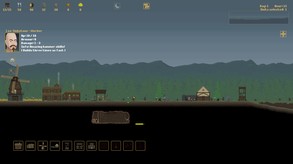
The structure revolves around a clear and effective day-and-night cycle. During daylight hours, you gather resources, construct buildings, assign villagers to tasks, and prepare for what’s coming. When night falls, the game shifts into defense mode, with waves of enemies attacking your settlement from all directions. This rhythm creates a natural tension that defines the experience. Early on, the cycle feels manageable, even relaxed, but it doesn’t take long before the demands begin to stack. Every decision made during the day directly impacts your ability to survive the night, and the margin for error shrinks quickly as threats escalate.
What makes the game engaging is how it blends multiple systems without overcomplicating them. Resource management, base construction, and unit control all feed into each other, creating a loop where growth and defense are inseparable. Expanding too quickly can leave you vulnerable, while playing too cautiously can stall your progress and leave you underprepared for later waves. There’s a constant need to prioritize—whether it’s producing more food, training additional defenders, or reinforcing key positions—and this balancing act is where much of the game’s challenge comes from. It’s not about mastering a single mechanic, but about understanding how they all interact under pressure.
Combat itself leans into a defensive, almost tower-defense-like structure, with units positioned to intercept incoming enemies. While the mechanics are relatively simple, the effectiveness of your defenses depends heavily on placement and timing. As the nights grow more dangerous, the chaos increases, and managing your forces becomes more demanding. The game doesn’t overwhelm you with controls, but it does expect you to react quickly and adapt when things go wrong. This creates moments where a well-planned setup holds firm, as well as others where a small oversight leads to rapid collapse.
Replayability is one of the game’s strongest qualities. Each run introduces slight variations through randomized elements, such as villager traits or resource distribution, encouraging players to adjust their approach. Because individual sessions are relatively contained, it’s easy to start over and try a different strategy, refining your understanding of the game with each attempt. This loop of failure and improvement is central to its appeal, giving it a “just one more run” quality that can be surprisingly addictive.
Visually, Grim Nights keeps things simple with a pixel art style that prioritizes function over detail. While the aesthetic is consistent, it can become visually busy during intense moments, especially when multiple units and enemies overlap in a small area. This occasionally makes it harder to track what’s happening, particularly when quick decisions are required. Despite this, the clarity of the core elements generally holds up, and the visual simplicity helps maintain focus on the gameplay.
There are a few areas where the game shows its limitations. Controls can feel slightly cumbersome when managing larger groups or navigating more complex layouts, and the interface doesn’t always streamline actions as efficiently as it could. Over time, the relatively small pool of mechanics and content can also lead to a sense of repetition, especially for players who invest heavily in multiple runs. While the core loop remains engaging, it doesn’t expand significantly beyond its initial structure.
Even with these drawbacks, Grim Nights succeeds because it understands its scope and executes it well. It doesn’t try to compete with larger strategy titles in terms of depth or scale; instead, it delivers a focused experience where every system serves the central loop of preparation and survival. The tension it creates—between building, defending, and adapting—is consistent and effective, making each session feel meaningful.
In the end, Grim Nights is a compact but compelling strategy game that rewards careful planning and quick thinking. It offers a satisfying blend of management and defense mechanics, wrapped in a straightforward presentation that keeps the focus on gameplay. While it may not have the breadth or polish of bigger titles, its tight design and replayable structure make it an enjoyable experience for players who appreciate focused, challenge-driven strategy.
Rating: 8/10