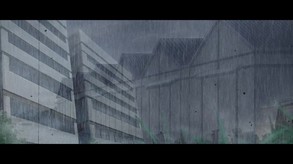
It is the year 1988. Japan is in the midst of the bubble economy. New buildings are sprouting up everywhere, and the people are ecstatic. This is a story of people who live for one year... in such a little corner of the city.
Modeled estimate, not a reported figure. How we estimate →
Media

About
— An encounter in Tokuo
— that nothing about love

Visual Novel

It is the year 1988. Japan is in the midst of the bubble economy.
New buildings are sprouting up everywhere, and the people are ecstatic.
The old disappears and the new is born,
but there are some people, some places, some things, that nobody notices...
or perhaps nobody chooses to notice them.
This is a story of people who live for one year...
in such a little corner of the city.

Kanna is a first-year high school student
who's involved in a traffic accident during the summer.
She finds herself unable to stay in her hometown any longer.
Jing fails his university entrance exams in China.
He spends a year or so working at a job he doesn't like.
Both of them hear of the incredible opportunities presenting themselves
in the bubble economy of Tokyo.
Therefore, Kanna drops out of high school and goes to Tokyo.
Jing quits his job and goes to Japan.
The job both of them set their eyes on,
would have them simply living in an old, run-down train station.
Although the job only pays a measly 400 yen per hour, it runs for 24 hours a day,
so it really isn't that bad.
They wouldn't have to pay rent, heating, or electricity.
Kanna is a bit awkward around people, and Jing doesn't speak Japanese.
The employer only wants one person.
Neither wants to give up on this job, so Sakura, the woman in charge of hiring them,
recommends that they simply do it together.


Age 19 → 20
"I have a goal."
He failed his university entrance exams in China and went to Japan.
What surprises him the most during his time there is the cost of living.
A day of part-time work in Japan earns more than a month of salaried work in China.

Age 15 → 16
"I was unlucky... That's what I decided to think."
She dropped out of high school and moved to Tokyo because of the bubble economy.
She's a little introverted.
She enjoys eating sunflower seeds.
Height 159cm, Measurements 81/62/87

Age 7 → 8
"Sis, buy me ice cream! Ice cream!"
She follows her sister to the big city.
She's bubbly and upbeat, but never afraid.
She's still a child, so she doesn't really understand what's going on.
Height 128cm

Age 21 → 22
"Many people still have a lot to deal with. Like you and me."
She grew up in Tokyo. Her family is involved in the real estate business.
She employs both main characters.
She's nice and approachable, but she can put her foot down when needs be.
Height 165cm, Measurements 89/60/90

Age 37 → 38
"I don't do stuff that doesn't earn money."
He came to Japan twenty years earlier from China.
For various reasons, he keeps trying to push dangerous jobs on Jing.
Most of his business is in nightclubs and land speculation.

Age ???
A black cat.
He lives in the old station building.
He seems friendly, but runs away if you try to catch him.

Original Story · Scenario: Tomo Kataoka
Concept Art: Werkbau
Character Art: Werkbau, Ringo, Takehiko Akino, Yatumi Suzuame
Scene Art: Ringo, forfreedo, Kyarumii
Cast: M.N.H, Hiroko Taguchi, Kaori Nazuka, Yuko Goto, Jin Li, Tomoe Tamiyasu
Music: bermei.inazawa
OP Vocal: Annabel
BGM Vocal · Chorus: lasah, Raheem "Mega Ran" Jarbo, Mari Yura, Annabel, Shouichi Taguchi, Mashiro Shirakami
LOGO Design: Nachi Kio (KOME WORKS)
UI Design: Mu Xia
Visual Design: C.I.C, Mu Xia
Movie: C.I.C, Yazi
Performance · Script: 2B, Koraku
Program: Xiao Ai 363
Operation · PR: Xue Han
Web Design: Yume Amamiya, Shi Jiu
Planner · Director · Producer: Koraku
Translation: Holm Hinners
Editing: tyabann
Script Insertion: Alice Davidson
Image Editing: Liew Shan Yuan
Quality Assurance: R. Stuart
Project Manager: John Baumlin, PMP
General Manager: Koji Hotta
Beta Testers: Dizzy Valiel, arccun, Cassandra Hockaday
Genres
Stats
All-time low is the lowest price we've recorded for this game since we started tracking it.
Languages: Simplified Chinese*, Traditional Chinese, Japanese*, English*languages with full audio support
Engagement
Hours played at review time, across 40 reviews with recorded playtime.
Reviews
Themes across 40 recent reviews and how positive each mention is. A keyword signal, not full sentiment analysis.
positive critical· bar length = how often the theme comes up
Reviews
氛围非常棒 画风音乐顶级 非常推荐的一作 期待世纪末之诗!
并非恋爱的邂逅, 每个人都有属于自己的故事,,包括你和我。
推的第三部gal,之前推了白2和hentai监狱,这部虽然风格不同,但做的感觉很不错,情感很细腻,期待一下世纪末之诗
特别的,令人感动的故事
非常震撼的视觉小说,片冈智的脚本依旧优秀,和narcissu系列一样感动
Christmas Tina -泡沫冬景- is a beautifully written visual novel that quietly delivers one of the most emotionally sincere and atmospheric storytelling experiences available on Steam. Developed by Koraku and published by Nekoneko Soft, the game takes place during Japan’s late-1980s economic bubble period, an era commonly associated with prosperity, neon-lit cityscapes, and rapid modernization. However, instead of focusing on wealth and glamour, the story chooses to explore the forgotten side of that era through the lives of lonely outsiders struggling to survive in a city that promises opportunity while quietly crushing those unable to keep up. The result is a deeply human narrative centered on emotional isolation, immigration, regret, and fragile connections formed between broken people trying to find meaning in their lives. The story follows Jing, a young Chinese man who arrives in Tokyo after failing his university entrance exams, hoping the booming economy will offer him a second chance at life. Instead, he quickly discovers the harsh reality faced by foreigners attempting to survive in an unfamiliar country. Financial instability, language barriers, loneliness, and uncertainty dominate his daily existence. At the same time, the story introduces Kanna, a quiet and emotionally withdrawn Japanese girl whose life was permanently altered by a tragic accident. Both characters eventually find themselves working together at a small train station job barely capable of supporting them financially, yet this ordinary workplace slowly becomes the foundation for one of the most emotionally authentic relationships in modern visual novels. One of the game’s greatest achievements is its atmosphere. Christmas Tina recreates late-1980s Tokyo with remarkable emotional depth and attention to detail. Neon lights, crowded train stations, narrow apartments, quiet winter streets, and aging neighborhoods all combine to create a city that feels alive while also emotionally distant. The setting constantly reinforces the contrast between economic prosperity and personal loneliness. Tokyo is presented as both exciting and alienating, a place filled with opportunity but also emotional isolation for those unable to fully belong within it. The writing is exceptional throughout the entire experience. Unlike many visual novels that rely heavily on exaggerated anime tropes or constant dramatic twists, Christmas Tina takes a far more restrained and mature approach. Much of the emotional impact comes from small conversations, awkward silences, and subtle character interactions rather than explosive drama. The dialogue feels natural and deeply personal, allowing characters to gradually reveal their emotional scars through quiet moments rather than lengthy exposition. Jing is an especially compelling protagonist because of how realistically the game portrays his struggles as an immigrant trying to survive in a foreign country. His uncertainty about the future, difficulty communicating, financial stress, and desire to prove himself all feel painfully believable. The story handles themes of cultural identity and displacement with surprising nuance, showing both the excitement and emotional cost of leaving one’s home behind in search of a better future. Kanna is equally memorable. Her emotional trauma and introverted personality are written with remarkable sensitivity, allowing her development to unfold slowly and naturally throughout the story. Rather than relying on exaggerated emotional breakdowns or sudden personality changes, the game carefully builds her relationship with Jing through shared loneliness, quiet companionship, and gradual trust. Their chemistry feels believable precisely because the story avoids forcing romance too quickly. The supporting cast also contributes heavily to the emotional atmosphere. Characters such as Sakura and Kanna’s younger sister provide moments of warmth and humanity that help balance the overall melancholic tone. Even side characters feel grounded because everyone in the story appears shaped by economic pressure, disappointment, loneliness, or personal compromise. The city itself feels populated by people quietly carrying emotional burdens beneath their ordinary lives. Visually, the game is stunning. The artwork captures the nostalgic atmosphere of 1980s Tokyo perfectly through beautifully detailed backgrounds, expressive character portraits, warm lighting, and carefully constructed urban scenery. Winter streets illuminated by neon lights, cramped apartments, train platforms, and quiet city corners all contribute to a powerful sense of immersion. The visual presentation constantly reinforces the game’s themes of nostalgia, emotional distance, and fragile human warmth. The soundtrack deserves enormous praise as well. Soft piano melodies, melancholic ambient tracks, and nostalgic city themes create an emotional atmosphere that perfectly complements the slow pacing of the story. The music rarely overwhelms scenes but instead quietly enhances the emotional weight of conversations and character moments. Few visual novels use music as effectively as Christmas Tina does, and the soundtrack remains memorable long after finishing the game. The pacing is intentionally slow and reflective, which works heavily in the story’s favor. Rather than rushing through dramatic events, the game allows players to fully absorb the emotional atmosphere and character relationships over time. Everyday conversations and small interactions gradually build emotional investment until the story’s most impactful moments arrive naturally. This slow-burn approach makes the emotional payoff feel far more genuine and powerful. Another impressive aspect is the maturity of the themes explored throughout the narrative. The game quietly examines loneliness, economic inequality, immigration, trauma, broken families, and the search for belonging inside a rapidly changing society. Despite the historical setting, many of these themes still feel deeply relevant today. The story consistently focuses on emotionally vulnerable people trying to survive inside systems that often ignore or exploit them. However, the game is not without flaws. One of the most common criticisms is its extremely slow pacing. Since much of the story focuses on atmosphere and character interaction rather than constant dramatic developments, some players may struggle with the restrained narrative style. Those expecting frequent plot twists or high-energy storytelling may occasionally find portions of the experience too quiet or uneventful. The linear structure may also disappoint players looking for heavy player choice or multiple branching routes. Christmas Tina functions more as a tightly directed narrative than a heavily interactive visual novel, which limits replayability despite strengthening the overall storytelling focus. The melancholic tone may also feel emotionally exhausting for some players. While the story contains moments of warmth and hope, much of the experience revolves around loneliness, regret, poverty, and emotional trauma. The emotional heaviness becomes one of the game’s strengths, but it may not appeal to players seeking lighter or more uplifting narratives. For fans of visual novels focused on mature storytelling, slow-burn character development, emotional realism, and nostalgic urban settings, Christmas Tina delivers an unforgettable experience filled with quiet beauty and emotional depth. It is a story that remains memorable not because of spectacle or shock value, but because of how authentically human its characters and emotions ultimately feel. Rating: 9/10
正篇还行,dlc和平默示录夯爆了
及格的作品,两代不幸的人的故事总是相似。
佳作,人设情节合理,前期搞笑,后期有点思考
剧本:片冈智 这几个字让我对游戏的预期拉的很高,但很遗憾《泡沫冬景》本体的故事,我只能说是,挺好的,但我对片冈智其他的作品例如《120日元之冬》的评价是“我也想写出这样的作品” 简单来说就是有些失望,因为作者是片冈智,作品却没有让我觉得属于它…… 不过话说回来,游戏的几个DLC我还是很满意的,我甚至觉得这游戏就该叫《和平默示录》 总得来说,在片冈智本人众多作品中,该作比较平庸,但DLC很是亮眼,哪怕只是为了DLC 买这款游戏,也值了
Related
Related
Trends
Modeled estimate over time, reconstructed from Steam's monthly review histogram.
Momentum
Pace estimated from the game's recent review growth (our daily snapshots) at its own sales-per-review ratio — a momentum signal, not booked sales.
Audience
Estimated from the language of this game's reviews — a proxy for where players are, not official Steam demographics.
Related
| Quest Hunter | $890.3K | 2.3K | 81% | $19.99 |
| Survisland / 实境求生 | $890.4K | 1.5K | 63% | $14.99 |
| Treasure Hunter Simulator | $890.1K | 1.7K | 54% | $16.99 |
| Slackers - Carts of Glory | $890.4K | 2.1K | 91% | $12.99 |
| Beastieball | $890.9K | 1.4K | 98% | $24.99 |
| Shin chan: Shiro and the Coal Town | $889.5K | 913 | 96% | $29.99 |