functional is a puzzle game about math and abstraction.
Modeled estimate, not a reported figure. How we estimate →
Media

About
Genres
Stats
All-time low is the lowest price we've recorded for this game since we started tracking it.
Languages: English
Engagement
Reviews
Themes across 40 recent reviews and how positive each mention is. A keyword signal, not full sentiment analysis.
Reviews
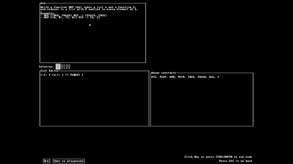
I think it is a fun little reminder of lambda calculus principles. But I can't recommend it. The issue just comes down to a lack of polish I'd expect for a paid game. The most glaring issue is inaccessibility. The game has a minimalist, terminal aesthetic - that itself is fine, it fits the point of the game. But it is very hard to read the text - it has a small, blocky font that is unpleasant to look at and difficult to read for users with worse eyesight. There are no settings to customize this, no accessible mode. Font size and style should be the minimum required settings for a terminal game like this. Instead you just have a volume setting. The controls are also a bit of an issue. The game seems to use an odd mix of keyboard and mouse controls. There are some buttons that can only be clicked, like solution selection, or 'open on playground' button, but don't seem to have key controls. On the other hand, menu items aren't buttons and can't be clicked; you have to navigate using keyboard only. So you can use keyboard for most things, but not all, and still need a mouse, but you can't use a mouse everywhere you'd expect. I get it's trying to be a terminal game, but it just doesn't have the consistency one would expect. This really is a refresher for lambda calculus. It's not an introduction. And unfortunately that makes it less of a game - it's geared towards people who already know the content well, not those looking to learn something new. I think the endearing thing about the Zachtronics games is that you don't need the exact technical background to get into the games - it might help, but it's not necessary. The games build from zero, and have the necessary documentation and explanation to introduce even beginners to the material as you go. This game just doesn't have that. The first level, 'anything', is fine enough. It gives you a few example terms, and you just copy one. But starting from the second level, 'identity', things break down. The game freely mixes formal notation and in game syntax, making it difficult for the player to separate them at first. In the info boxes you have formal syntax like '->' and 'A[x=B]' which are used for explanation but don't relate to the actual syntax you use as a player. I spent a bit of time wondering if it was possible to label my own functions for reuse (it is not). You slowly build up a set of functions you can reuse in later levels, but there's not any document to describe or explain things aside from the info boxes in each level, so if you need to look something up, you need to go back to the individual level. The info boxes do help a bit, but just don't feel like they are written for someone who doesn't already know lambda calculus. Finally, at least on windows, there is an open terminal in the background with debug info as the game runs. As a player I'd prefer if... there weren't?
Related
Related
Trends
Concurrent players on Steam, sampled daily since tracking started.
Hours played at review time, across 40 reviews with recorded playtime.
positive critical· bar length = how often the theme comes up
All these freakin' noobs needing a tutorial?! Bah humbug I say. Git Gud as the kids say. The interface is a little confusing at the beginning and the syntax a little restrictive, but if you follow the stages as recommended it does guide you through it. I liked this puzzle game a lot actually. It kind of reminded me of the time I tried to make a for loop in C macros. It actually feels a lot like C macro programming which I have always loved the puzzle of much to the chagrin of my coworkers or code reviewers.
The game is clear as mud and presented in a font designed to damage your eyes. I am tempted to say that there is no explanation of the syntax, but it might just be that it is just worded extremely badly. Don't expect to learn anything.
If you try this game, expect to be solving levels with trial-and-error, not your wit. The "puzzles" of this game are trying to understand what the developer is trying to say. The examples and explanations in-game of what reducing is and how it works are NOT sufficient enough to make the material understandable. I shouldn't be three sections into the game and still not understand the output of the "Explain" button after passed or failed tests. The difficulty and pacing is also all over the place. One of the easiest levels I've encountered so far said "This level is very hard. It's mind-twisting to create this recursive structure." This level took ONE try, and it was a straight-forward solution. It even went so far as to suggest skipping to the next level. If you're looking for games that will actually challenge your mind, I'd recommend Human Resource Machine or 7 Billion Humans. This one's just never-ending frustration and reading through bad explanations.
Okay, so I'll put a review and update it when I finish the game. This game is worth it's $6.00. First off, I think there should be some more content for $6.00. But, I am thrilled this game exists at all so take that for what you will. Second though, there are things that might not be obvious to you. Like, you can use a function of one argument and a function of two arguments in the same place if the function of one argument returns a function that also takes one argument. I guess it's currying (of a kind maybe??!?!?). But, it's not intuitive.
With the caveat that this is only for the nerdiest of nerds. A great introduction to lambda calculus. The interface could use some work, however.
My recommendation for this comes with some big issues to be aware of: · If you aren't interested in maths and/or computer science at all, this is not going to be fun for you. · The argument order is a bit weird for anything regarding lists: Usually in functional languages the function comes first, which leads to shorter definitions of a lot of things · I've just now looked up some literature on it, and as it seems this way of representing lists seems to be the norm in how things like these are taught, but I personally much prefer `cons = \h.\t. \c.\n. c h t` and `nil = \c.\n. n` because it matches how you'd match against it in languages like Haskell with `data List a = Cons a (List a) | Nil`. · There's a lot of convenience functions that make life much easier missing that would be nice additions as constants, such as `flip` (even though that's a puzzle in here), `const` (though you *can* abuse `TRUE` for that), and things like function composition. In general, it would've been nice to be able to create your own constants somewhere, if that's possible I haven't found it.
lambda calculus fun
ラムダ計算の教材として優秀 エディタと実行結果の確認がつらいので外部で計算できる環境があるとよさそう
Would be great, if: - The window fit on my screen --- now it clips both above and below, and there is no way to change size/resolution - Home/End keys did work Otherwise seems nice
Audience
Estimated from the language of this game's reviews — a proxy for where players are, not official Steam demographics.
Related
| Pawn of the Dead | $8.2K | 54 | 91% | $6.99 |
| 作死吧!UP主! | $8.2K | 59 | 80% | $4.99 |
| V1RUZ | $8.2K | 59 | 61% | $4.99 |
| Bumblebee - Little Bee Adventure | $8.2K | 59 | 86% | $4.99 |
| Freddi Fish and Luther's Maze Madness | $8.2K | 103 | 80% | $4.99 |
| Garlic Builder | $8.2K | 324 | 93% | $0.87 |
Related
| 2 3 4 Player Mini Games | $684.6M | 1.4M | 87% | Free |
| Sid Meier’s Civilization® VI | $580.3M | 376.6K | 86% | $59.99 |
| Pizza Ready! | $573.4M | 2.7M | 88% | Free |
| DayZ | $531.7M | 465.8K | 78% | $49.99 |
| Phone Case DIY | $492.3M | 913.3K | 87% | Free |
| Hearts of Iron IV | $478.6M | 372.6K | 90% | $49.99 |