Fish Hero is a quirky physics-based climbing platformer developed and published by MODE24. Built around a deliberately absurd concept, the game challenges players to guide a fish through a towering obstacle course far removed from the creature’s natural aquatic habitat. Rather than relying on traditional platforming mechanics, the game centers on unpredictable physics-driven movement that turns every jump, flop, and bounce into a careful test of timing and control. What begins as a humorous premise quickly evolves into a demanding gameplay experience where persistence and mastery of awkward movement mechanics become the keys to success.
The premise is intentionally simple yet effective. Players control a stranded fish attempting to climb a massive vertical world composed of strange platforms, environmental obstacles, and surreal landscapes. Because the protagonist is a fish outside of water, its movement is intentionally clumsy. Instead of running or jumping like a traditional platforming character, the fish propels itself by flopping, sliding, and launching its body across surfaces. This awkward method of movement is not merely a visual joke—it forms the core gameplay challenge. Each action is governed by physics, meaning the direction, speed, and momentum of the fish’s body determine how far it travels. Even small mistakes can send the character tumbling down from great heights, forcing players to carefully consider every move.
The world of Fish Hero is designed as a massive vertical ascent. Players must gradually climb higher through a sequence of environments that form a continuous obstacle course. Each section of the map introduces different platform arrangements and terrain shapes that alter how the fish interacts with the environment. Sloped surfaces can help players gain momentum, while narrow ledges require delicate positioning to avoid slipping. Because the entire experience revolves around climbing upward, the threat of falling back down remains constant. Losing balance or misjudging a jump can send the fish sliding several layers downward, undoing minutes or even longer stretches of progress.
This design creates a powerful tension between advancement and failure. Every new platform reached represents a small victory, while each fall becomes a lesson in movement control and patience. Unlike traditional platformers where checkpoints frequently preserve progress, Fish Hero encourages players to overcome obstacles through persistence rather than safety nets. As a result, the emotional experience of the game fluctuates constantly between triumph and frustration. Successfully navigating a particularly difficult section can feel extremely rewarding, especially after multiple failed attempts.
The physics-based movement system is the most distinctive element of the game. Instead of precise button presses resulting in predictable jumps, the fish’s body reacts dynamically to surfaces and angles. Players must experiment with how to position the fish before launching themselves forward. In many cases, the most effective movement comes from learning how to bounce off edges or use slopes to gain extra momentum. Over time, players develop a deeper understanding of the mechanics, gradually transforming what initially feels like chaotic movement into something resembling controlled technique.
The environments themselves are intentionally stylized and abstract. The world is not designed to simulate realistic landscapes but instead functions as a strange vertical playground filled with platforms, ramps, and oddly placed structures. Each biome introduces new visual themes that help maintain variety during the long climb. The level design is carefully arranged to challenge players’ understanding of the physics system, forcing them to adapt their movement strategies to different surfaces and platform arrangements.
In addition to the solo climbing experience, the game includes multiplayer functionality that introduces a completely different type of challenge. When multiple players climb together, the experience becomes far more unpredictable. Characters can collide with each other, accidentally pushing one another off platforms or interfering with carefully planned jumps. This feature transforms the game into a chaotic social experience where laughter often replaces frustration as players sabotage one another’s progress, intentionally or otherwise. Cooperative climbing quickly turns into competitive antics as each participant struggles to reach the highest point first.
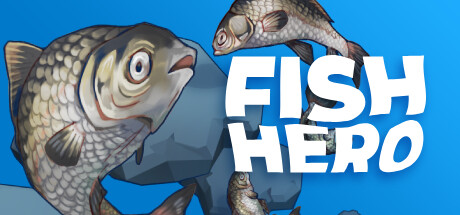
Visually, Fish Hero adopts a bright and playful art style that emphasizes clarity and humor. The fish protagonist is exaggerated and expressive, reinforcing the absurdity of watching a fish attempt to climb towering structures. Environmental elements are rendered with bold colors and simple shapes, ensuring that players can easily identify platforms and obstacles while focusing on the precision required for movement. While the graphics are relatively minimalist, the visual presentation supports the gameplay effectively by maintaining readability during tense climbing sequences.
The sound design complements the game’s tone with subtle environmental audio and lighthearted effects. The sound of the fish flopping across surfaces or bouncing off obstacles adds comedic charm to the experience, reinforcing the awkward nature of the character’s movement. Background music is used sparingly, allowing moments of quiet concentration to heighten the tension when players attempt particularly risky jumps. The occasional musical cues during successful climbs help emphasize the satisfaction of making progress.
One of the most notable aspects of the game is its emphasis on perseverance. Failure is not treated as a setback but as a fundamental part of the gameplay loop. Players quickly learn that falling is inevitable, and progress often comes from repeated attempts rather than perfect execution on the first try. This design philosophy aligns with a broader category of challenging “climbing games” that reward patience and resilience. Over time, players who stick with the game begin to feel genuine improvement in their control over the character.
However, the same mechanics that make the game engaging can also become frustrating. The intentionally awkward movement system means that progress sometimes feels inconsistent, particularly for players who prefer precise and responsive platforming controls. Falling large distances after a small mistake can be discouraging, especially during longer climbing sessions. Additionally, the game’s relatively simple structure means that the experience is focused almost entirely on the central climbing mechanic, which may feel repetitive for some players after extended play.
Despite these potential drawbacks, Fish Hero succeeds in delivering a memorable experience built around its unusual concept. The combination of physics-based movement, vertical exploration, and humorous presentation creates a game that stands out from more traditional platformers. Its design encourages players to embrace both failure and experimentation, turning each attempt into an opportunity to better understand the mechanics.
Ultimately, Fish Hero is a quirky and challenging indie title that thrives on its simplicity and personality. Its unpredictable physics system, humorous premise, and tense climbing gameplay create a distinctive adventure that rewards determination and adaptability. While the difficulty and unconventional controls may not appeal to everyone, players who enjoy skill-based climbing challenges and physics-driven platformers will likely find the experience both entertaining and addictive.
Rating: 7/10