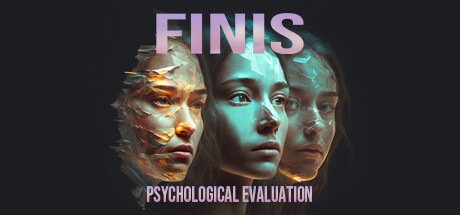
FINIS is a puzzle game with a difference, we create a psychological evaluation based on your choices. Each universe offers a different experience, terror, calm, destruction, war, progress... You can choose between 8 completely different paths and each path will take you to a unique ending.
Modeled estimate, not a reported figure. How we estimate →
Media

About
Stats
All-time low is the lowest price we've recorded for this game since we started tracking it.
Languages: English, Spanish - Spain, French, German, Simplified Chinese, Catalan, Turkish, Ukrainian, Dutch, Spanish - Latin America
Reviews
I played two ways and there are a lot more to go. The puzzles can be a little confusing, but it's doable^^ You get a psychological report based on Lüscher after every playthrough (not serious, but interesting)
I enjoyed this up uintil I got stuck in Tunnel Vision haha. Before that tho I managed to fgure out the puzzles. Not sure how the evalutations factor in tho. The game ran nicely and the atmosphere is quite nice. Gameplay here: https://youtu.be/ygRY2gl0L-w
Interesting puzzles, fun little scenarios. For the price, it's a decent afternoon with friends to joke around about your psychological evaluations. I give it 6/10 coffee mugs. Warm coffee mugs, like a hug from a psychiatrist.
Абсолютно не впечатлило, прям вообще. Но покупая такую игру вы должны понимать, что покупаете абстрактную мутотень https://youtu.be/FVgYW17oj8Q
juego en la linea de "After You" o "Tempus", si os gustan los puzzles este es de lo mejor que encontrarás junto con una banda sonora magnífica que te acompaña y que no molesta en ningún momento.
Willkommen zu Finis Psychological Evaluation einen Psychologischen Testspiel aus Rätseln und Farben. Du Entscheidest durch deine Handlungen und deine Auswahl den Weg. Wir testen den Test für den uns JanduSoft freundlicher weise einen Steam Key zur Verfügung gestellt hat. In diesem Test Wir werden uns auf die Spielsteuerung und Mechanik des Spiels in diesem Test beschränken. Story oder Rätsel lassen wir weg bis auf ein wenig deren Steuerung zu erläutern. Der Spieler soll später selbst entscheiden und zu seinem eigenem Ergebnis kommen. Und los Das Spiel beginnt in eurem Apartment in einer Cyperpunk ähnlichen Zukunft. Habt ihr die mini Aufgabe gelöst erscheint eine Art Kapsel in eurem Apartment die ihr betreten müsst. Beim betreten könnt ihr schon direkt in der Kapsel auf die Aufteilung des Weges schauen. Wenn ihr drin seid schließt sich Kapsel und ihr habt die Möglichkeit eine Farbe zu wählen wenn ihr euch umdreht. Denn an der nun geschlossenen Türe ist ein Panel aus 6 wählbaren Farben. Die Kapsel ist auch Bestandteil eines jeden Level bzw. Rätselwechsel. Nach Beendigung des Rätsel müsst ihr die Kabine betreten und kommt weiter, wenn ihr eine Farbe gewählt habt. Das ist der Weg? Gesamt habt ihr eine Auswahl an 8 komplett unterschiedlichen Wegen. 21 verschiedene Universen erwarten euch. Jedes hat seine eigene Story und seinen eigenen lauf. Nichts wiederholt sich. Die Farbauswahl die euren Weg bestimmt in der Kabine basiert auf dem Lüscher-Farbtest. Es gibt Multiple Enden, daher Ideal für Leute die es mehrfach durchspielen wollen. Ein Tipp Achtet genau auf eure Umgebung um die Rätsel zu lösen. Es gibt viele Details. Auch die richtige Reihenfolge um ein Rätsel zu lösen ist bei einigen Rätsel wichtig. Bei anderen Rätseln reicht es manchmal einfach zu beobachten. Noch ein Hinweis Der Test bzw. das Puzzlespiel sollte beim Ergebniss nicht Real genommen werden. Die Persönliche-Psyche anhand von Farben zu bestimmen ist eine Pseudowissenschaft. Einen wirklichen ernsthaften und realen Test können nur entsprechende Psychologen erstellen und mit einem Patienten durchführen. Fazit Das Puzzlespiel hat uns gut unterhalten. In einem weiteren Durchgang sogar animiert einfach mal andere Farben zu wählen um andere Rätsel und Universen zu erreichen. In unserem Test viel nur leider Negativ auf das wir nach jedem starten des Spiels die Sprache neu einstellen mussten da dies nicht gespeichert wird. Vielleicht wird dies in einem späteren Update geändert. Das Spiel ist erhältlich für PC im Steam Store, Playstation 4, Playstation 5, XBox One, XBox Series X und S. Test von Controller Bandits : https://www.controller-bandits.de/finis-psychological-evaluation
This game tries to give you a pseudoscience personality evaluation based on what colors you pick and puzzle solving speed. This just involves you going into a box, picking a color, then going to a location where you solve a puzzle. It honestly feels kind of Myst-like, but I cannot understand the end game puzzles at all, they don't make any sense and its stupid.
别买,快跑.JPG
玩的我质疑自己的智商,外星人那里三个图案按钮死活想不出答案,最后照着外星人的模样按了几下就成功了
FINIS is an experimental first-person puzzle adventure created by k148 Game Studio and published by JanduSoft that blends philosophical themes with interactive gameplay. Rather than presenting a traditional story-driven puzzle experience, the game explores the relationship between choice, perception, and personality through a series of surreal environments. The entire experience is built around the idea that decisions—even seemingly simple ones—can reveal something deeper about the player. Through a mixture of puzzle-solving, exploration, and color-based choices, the game attempts to create a psychological journey that changes depending on how each player interacts with it. The central concept behind FINIS is inspired by psychological theories related to color perception and emotional interpretation. Throughout the game, players are frequently asked to make choices between colors that represent different emotional states or symbolic meanings. These decisions influence the direction of the game’s narrative and determine which environments the player will encounter next. Over time, the game collects these choices and uses them to build a psychological profile of the player, ultimately presenting an interpretation of their personality at the conclusion of the experience. The gameplay takes place entirely from a first-person perspective, allowing players to move freely through a sequence of surreal and symbolic worlds. Each environment represents a different universe within the game’s fictional multiverse. These universes are not simply different locations but rather conceptual spaces that reflect various ideas about humanity, civilization, and the consequences of human choices. Some of these worlds appear peaceful and harmonious, while others feel bleak, chaotic, or even dystopian. As players progress through the game, they encounter puzzles that must be solved in order to advance to the next universe. The puzzles generally involve interacting with objects in the environment, manipulating mechanisms, or identifying visual clues that unlock pathways forward. The difficulty level of these puzzles is intentionally moderate, focusing more on maintaining the flow of exploration rather than presenting extremely challenging obstacles. This design choice ensures that the puzzles support the narrative experience rather than dominating it. One of the defining features of the game is its branching narrative structure. Instead of following a single storyline, FINIS offers multiple possible paths depending on the choices players make throughout the journey. Each decision can alter the sequence of universes the player visits, leading to different interpretations of the world and ultimately different endings. Because of this design, no two playthroughs are exactly the same. The game contains several major narrative routes that can lead to different conclusions. Each route represents a distinct philosophical perspective shaped by the player’s accumulated decisions. The ending the player receives is essentially a summary of their choices and what those choices suggest about their personality. This structure encourages players to reflect on the reasoning behind their decisions, transforming the game into a kind of interactive personality experiment. The multiverse concept plays a major role in shaping the game’s environments. Players travel through a wide variety of worlds that differ dramatically in tone and visual style. Some universes depict futuristic civilizations where technology has reshaped society, while others portray desolate landscapes that hint at the collapse of human progress. There are also worlds that feel abstract or symbolic, presenting surreal imagery designed to provoke thought rather than depict realistic settings. Each environment uses color and design elements to communicate its thematic identity. Bright and harmonious color schemes often represent worlds of balance and stability, while darker or more chaotic color palettes suggest conflict or destruction. These visual contrasts reinforce the idea that each universe represents a different possible outcome of human choices and societal development. The art style of FINIS leans toward stylized environments rather than photorealistic visuals. The developers focus on creating spaces that feel symbolic and atmospheric rather than strictly realistic. Architecture, lighting, and environmental design often carry metaphorical meaning, encouraging players to interpret what each world might represent. Sound design contributes significantly to the game’s immersive atmosphere. Ambient audio and subtle environmental sounds help create a sense of presence within each universe. Rather than relying heavily on dramatic music, the game often uses quiet soundscapes that emphasize isolation and introspection. These sounds reinforce the feeling that the player is traveling through strange and unfamiliar realities. The pacing of the game is deliberately contemplative. Players are encouraged to move through the environments slowly, observe their surroundings, and think about the implications of their choices. The absence of time pressure or combat allows the experience to feel more reflective than competitive. This slow pace aligns with the game’s focus on psychological exploration. Although the puzzles themselves are relatively straightforward, their role within the experience is primarily to guide the player from one universe to the next. They act as transitional challenges that maintain engagement without distracting from the broader themes of the game. This design makes the experience accessible even to players who are not usually fans of complex puzzle games. One of the strengths of FINIS lies in its replayability. Because the story branches depending on player choices, multiple playthroughs can reveal entirely different universes and endings. Players who wish to see every possible outcome may return to the game several times, experimenting with different color selections and puzzle decisions to explore alternate paths. However, the simplicity of the puzzle mechanics may also be seen as a limitation for some players. Those expecting intricate puzzle design or deep gameplay systems may find the mechanics somewhat basic. The game’s primary focus is not on challenging the player’s intellect but on encouraging reflection about the choices being made. Another aspect that defines the experience is its relatively short length. A single playthrough can often be completed in a modest amount of time. While this brevity allows players to quickly experience the core concept, it also means that the game relies heavily on its branching paths and multiple endings to extend its overall value. Despite these limitations, FINIS stands out as an unusual and creative entry within the puzzle adventure genre. By combining philosophical themes with interactive decision-making, it attempts to turn the player’s choices into the central narrative device. The idea that a game could analyze and interpret player behavior adds a layer of intrigue that goes beyond conventional storytelling. Overall, FINIS is less about solving difficult puzzles and more about exploring the relationship between decisions and identity. Through its multiverse structure, symbolic environments, and psychological evaluation system, the game invites players to reflect on how their choices shape the path they follow. While it may not appeal to players seeking complex gameplay or lengthy adventures, it offers a distinctive and thought-provoking experience that blends philosophy, psychology, and interactive storytelling into a unique digital journey. Rating: 7/10
Related
Related
Trends
Modeled estimate over time, reconstructed from Steam's monthly review histogram.
Related
| Fidget Spinner Editor | $2.1K | 98 | 89% | $1.99 |
| HorrorCore: Maze and Pools of Horror | $2.1K | 85 | 55% | $0.75 |
| Fly Fly Tuk Tuk | $2.1K | 74 | 88% | $0.99 |
| The Last Tree | $2.1K | 51 | 73% | $1.99 |
| Monkey Doomsday | $2K | 61 | 82% | $1.99 |
| City Zoomer | $2.1K | 189 | 94% | $4.99 |
Related
| Euro Truck Simulator 2 | $421.6M | 932.1K | 97% | $19.99 |
| Human Fall Flat | $109.3M | 225.6K | 95% | $19.99 |
| American Truck Simulator | $103.7M | 194.1K | 97% | $19.99 |
| DAVE THE DIVER | $90.8M | 139.6K | 97% | $19.99 |
| Slime Rancher | $73.8M | 155.4K | 98% | $19.99 |
| House Flipper | $65.8M | 110.8K | 94% | $24.99 |