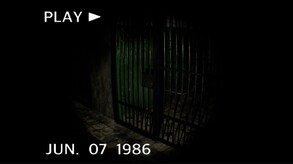
Final Outcry is a first-person horror game that centers on classified government found footage of an urban exploration trip gone wrong. As you venture further into an abandoned prison, do you have what it takes to face the horrors lurking within and reach the end of the V/H/S tape?
Modeled estimate, not a reported figure. How we estimate →
Media

About
Stats
All-time low is the lowest price we've recorded for this game since we started tracking it.
Languages: English**languages with full audio support
Engagement
Hours played at review time, across 22 reviews with recorded playtime.
Reviews
Very spooky Very scary Very good
Final Outcry is a first-person psychological horror game developed by Andrew Kendall and published by Anchorwatch Games that builds its experience around environmental tension, paranormal mystery, and found-footage storytelling. Rather than relying heavily on combat encounters or traditional survival systems, the game creates fear through uncertainty, atmosphere, and the slow unraveling of disturbing events hidden inside a forgotten location. Built using a presentation style inspired by analog horror and documentary-style recordings, Final Outcry focuses on immersion and psychological discomfort rather than constant action. The premise centers around a classified investigation involving unusual events connected to a mysterious government division responsible for handling unexplained phenomena. Players experience the story through recovered recordings tied to an explorer who entered an abandoned correctional facility during the mid-1980s and vanished without explanation. This narrative structure immediately establishes a sense of realism that strengthens immersion throughout the experience. Rather than presenting horror through cinematic storytelling, the game creates the feeling of discovering something players were never meant to see. The abandoned prison itself becomes one of the game's greatest strengths. Final Outcry understands that horror settings work best when they carry personality and history beyond visual appearance alone. Long empty hallways, deteriorating interiors, damaged facilities, and quiet abandoned spaces create a constant feeling of vulnerability. Exploration remains tense not because danger appears constantly, but because players never feel completely safe. The environment itself becomes a source of pressure. Atmosphere drives nearly every major strength found throughout the experience. The slower pacing allows tension to build gradually instead of relying entirely on sudden surprises. Empty spaces feel uncomfortable. Silence becomes meaningful. Moments where nothing appears to happen often become some of the most unsettling parts of progression because uncertainty remains constant. The game consistently understands that anticipation can create stronger fear than direct confrontation. The found-footage presentation becomes another standout feature. Visual distortion, recording imperfections, analog interference, and older recording aesthetics strengthen the illusion that players are watching recovered evidence rather than participating in a traditional horror game. The visual approach supports immersion exceptionally well because every design choice reinforces the larger atmosphere. The style helps Final Outcry establish a distinct identity rather than blending into more conventional horror releases. Environmental storytelling also deserves recognition. Information is not delivered entirely through direct exposition. Instead, players gradually uncover details through exploration and observation. The abandoned prison slowly reveals fragments of larger events tied to paranormal activity and government secrecy. The mystery expands naturally throughout progression, encouraging curiosity alongside fear. The game's use of Unreal Engine 5 contributes significantly to environmental quality. Lighting becomes especially important throughout progression, shaping atmosphere through darkness, visibility limitations, and environmental contrast. Smaller visual details help reinforce realism while strengthening immersion inside the prison setting. The facility feels believable enough that exploration maintains tension even during quieter moments. Sound design becomes equally essential to the horror experience. Audio consistently reinforces discomfort through subtle environmental effects and carefully placed sounds that create unease without constantly announcing danger directly. Distant noises, structural creaking, ambient effects, and carefully managed silence work together to create a persistent feeling that something may exist nearby even when nothing appears visible. One of Final Outcry's stronger qualities comes from its restraint. Many horror games depend heavily on repeated jump scares or nonstop intensity. Final Outcry often chooses patience instead. Fear develops gradually through environmental pressure and uncertainty rather than overwhelming players with immediate threats. The result creates horror that lingers psychologically rather than disappearing once a startling moment passes. The paranormal elements add another layer of intrigue beyond the abandoned facility itself. Government investigations, unexplained incidents, and mysterious forces slowly expand the larger narrative without revealing everything immediately. This slower information delivery strengthens curiosity while maintaining suspense throughout progression. The focused design naturally creates limitations depending on player expectations. Those seeking combat systems or survival-focused mechanics may find the experience lighter in gameplay variety. Final Outcry commits heavily to exploration and atmosphere rather than action-oriented horror design. The slower pacing may also feel deliberate for players who prefer constant escalation. However, those same choices ultimately define what makes the game effective. Andrew Kendall and Anchorwatch Games deliver an experience built around tension and immersion rather than spectacle. Final Outcry succeeds because it understands that psychological horror becomes strongest when players feel uncertain rather than powerful. For players who enjoy atmospheric horror, found-footage presentation, paranormal mysteries, and slower exploration-driven experiences focused on psychological tension, Final Outcry offers a memorable journey built around fear that grows steadily through atmosphere and mystery rather than relying solely on direct confrontation. Rating: 6/10
Related
Related
Trends
Modeled estimate over time, reconstructed from Steam's monthly review histogram.
Momentum
Pace estimated from the game's recent review growth (our daily snapshots) at its own sales-per-review ratio — a momentum signal, not booked sales.
Audience
Estimated from the language of this game's reviews — a proxy for where players are, not official Steam demographics.
Related
| Girls and Dragons | $340.5 | 55 | 76% | $0.99 |
| Forest and Girls | $340.5 | 55 | 82% | $0.99 |
| Cosmic Journey PC Live Wallpaper | $336.3 | 52 | 71% | $0.49 |
| Anime Sunset Ride | $334.4 | 54 | 67% | $0.49 |
| Work And Girls | $346.9 | 56 | 86% | $0.99 |
| Dances and Girls | $322 | 52 | 83% | $0.99 |