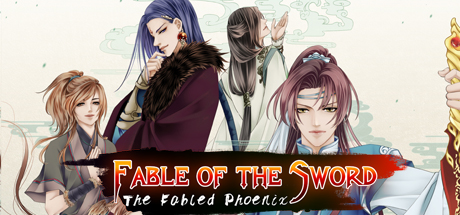
Fable of the Sword is a story-driven wuxia fantasy visual novel developed by 蔷薇千墨游戏组 and published on Steam by SakuraGame. Rooted in Chinese martial arts mythology and classical fantasy traditions, the game attempts to deliver an emotionally layered narrative centered on sect rivalries, legendary weapons, and the personal growth of young disciples stepping into a dangerous world. Unlike action-heavy RPGs that interpret wuxia through fast-paced combat, this title embraces the visual novel format, prioritizing dialogue, character relationships, and branching story paths over mechanical depth.
The story follows a young disciple named Lin who leaves the secluded mountains of his training sect and ventures into a wider world filled with intrigue, ancient conspiracies, and looming conflict. Early encounters hint at supernatural forces and sect politics, drawing Lin and his companions into disputes involving powerful organizations and the legend of a mythical sword forged in phoenix flame. The narrative leans heavily into traditional wuxia themes: loyalty between sworn brothers, moral dilemmas between righteousness and ambition, hidden masters with secret motives, and the weight of destiny tied to legendary artifacts. Character interactions drive much of the momentum, with supporting figures such as fellow disciples and enigmatic allies shaping both emotional tone and branching outcomes.
Structurally, the game unfolds through extended dialogue sequences accompanied by illustrated character portraits and scenic backgrounds inspired by classical Chinese painting. The art direction stands out as one of its strongest assets. Rather than adopting a standard anime aesthetic, the visual design embraces a softer, ink-wash-inspired style that evokes traditional Chinese landscapes and costume design. Flowing robes, detailed architecture, and muted natural palettes create an atmosphere that feels culturally specific and distinct within the broader visual novel space. Complementing the visuals is full Chinese voice acting, which adds authenticity and emotional nuance to key scenes. For players who understand Mandarin, the performances lend credibility and immersion that enhance the dramatic beats.
While primarily a reading-focused experience, Fable of the Sword includes occasional interactive elements in the form of mini-games. These segments—such as simple matching puzzles or memory challenges—break up long stretches of text and provide light engagement. However, these mechanics are relatively basic and do not significantly alter the overall trajectory of the story. The heart of the experience remains narrative choice. Decisions made during conversations influence character relationships and can lead to multiple endings, encouraging replayability for those interested in exploring alternate outcomes. The branching structure attempts to provide emotional weight to player agency, although the impact of some choices can feel subtler than expected.
Pacing is one of the game’s more divisive aspects. The story unfolds gradually, sometimes lingering on exposition or character introspection. For players who appreciate slow-burn storytelling and detailed world-building, this deliberate tempo can feel immersive. However, those expecting frequent dramatic climaxes or tightly condensed plot progression may find certain sections drawn out. The balance between political intrigue and personal drama occasionally leans heavily toward dialogue-heavy sequences without sufficient escalation, which can make the experience feel uneven across different routes.
Localization quality has been a notable concern among international players. While the original Chinese script carries cultural nuance and poetic phrasing, the English translation sometimes struggles to preserve clarity and tone. Awkward phrasing and inconsistent terminology can disrupt immersion for non-Chinese speakers, particularly in complex plot segments involving sect hierarchies or mythological references. This inconsistency affects accessibility, as the strength of a visual novel rests largely on the clarity and emotional resonance of its writing.
Despite these shortcomings, Fable of the Sword remains an earnest and ambitious project. Its dedication to wuxia storytelling, voice-acted presentation, and culturally grounded art design distinguishes it from many indie visual novels that rely on more generic fantasy tropes. The developers’ long development cycle is evident in the layered backstory and attention to thematic consistency, even if execution does not always match ambition. Moments of emotional sincerity—particularly those exploring loyalty, sacrifice, and the burden of inherited destiny—highlight the narrative’s potential when pacing and translation align effectively.
Ultimately, Fable of the Sword offers a niche but meaningful experience for players interested in Chinese martial arts fantasy told through a visual novel lens. It is less about high-stakes action and more about atmosphere, relationships, and unfolding legend. While technical and localization imperfections prevent it from fully realizing its potential, its artistic identity and thematic commitment make it a noteworthy entry in the growing catalog of Chinese-developed narrative games on Steam. For enthusiasts of wuxia lore and character-driven storytelling, it provides a thoughtful, culturally rich journey that stands apart from more conventional fantasy visual novels.
Rating: 6/10