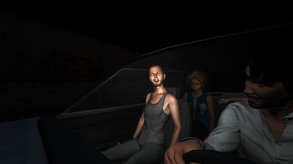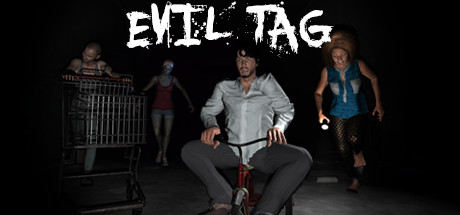
Four teenagers have to pass the rite of student initiation. To do this, they must read a spell from the ancient book in the basement of the abandoned house and spend a night there. They thought it would be fun...
Modeled estimate, not a reported figure. How we estimate →
Media

About
Stats
All-time low is the lowest price we've recorded for this game since we started tracking it.
Languages: English*, Russian**languages with full audio support
Engagement
Hours played at review time, across 40 reviews with recorded playtime.
Reviews
Themes across 40 recent reviews and how positive each mention is. A keyword signal, not full sentiment analysis.
positive critical· bar length = how often the theme comes up
Reviews
merece o goty, eu e meus amigos nos emocionamos jogando
YO THIS IS ACTUALLY FUN HOW 49 CENTS
giga sr@ka
разраб пидорас
Кроме меня об этой игре знают две калеки (Друзья. Даже разрабы думаю не в курсе). По цене напитка "Ягодная Поляна" из Ярче поугарать очень даже можно
seems like tag thats evil
Evil Tag is a small-scale cooperative horror game that centers its experience on tension between players rather than complex mechanics or cinematic presentation. Developed and published by HFM Games, it takes a familiar teen-horror premise and frames it as a multiplayer survival experiment where trust is fragile and danger can come from both the environment and the people beside you. The result is a game that relies heavily on atmosphere and social interaction, aiming to create unease through uncertainty rather than elaborate systems. The premise is simple but effective on paper. A group of teenagers enter an abandoned house as part of a reckless initiation ritual, only to unleash a supernatural evil that begins to spread among them. What starts as a shared attempt to survive quickly becomes a game of suspicion, as players can become possessed and turn against the rest of the group. This shifting dynamic is central to Evil Tag’s identity, turning cooperative survival into something closer to social horror, where players must constantly question whether their allies are still human or already corrupted. Gameplay revolves around exploration, evasion, and survival rather than direct combat. Players move through dark, claustrophobic interiors, hiding from threats, attempting to escape, or coordinating movement to avoid triggering deadly encounters. The house itself functions as a maze of narrow corridors and shadowy rooms, encouraging cautious movement and constant communication. The lack of complex mechanics keeps the focus on player behavior, voice chat, and shared decision-making, which is where much of the tension is intended to come from. The possession mechanic is the game’s most distinctive feature. When a player becomes infected, their role subtly shifts, introducing deception and unpredictability into what would otherwise be straightforward cooperative play. This can create memorable moments, especially when friends play together and lean into bluffing, misdirection, or sudden betrayal. At its best, Evil Tag feels less like a traditional horror game and more like an improvised horror scenario driven by player reactions rather than scripted scares. Visually, the game reflects its indie roots. Environments are functional and clearly laid out, prioritizing navigation and visibility over detailed textures or advanced lighting. While this simplicity helps performance and readability, it also limits the overall sense of dread, as the visuals rarely surprise or overwhelm. The abandoned house setting does its job atmospherically, but repetition and modest asset variety can make prolonged sessions feel visually flat. Sound design plays a more important role in maintaining tension. Ambient noises, distant creaks, and sudden audio cues help reinforce the feeling that something is always nearby, even if nothing is visible. These audio elements are used sparingly, which works in the game’s favor, as silence often becomes as unsettling as noise. Still, the audio presentation remains fairly basic, lacking the layered complexity found in more polished horror titles. Evil Tag is clearly designed with multiplayer in mind, and this dependence is both its strength and its biggest weakness. When played with a full group of friends, especially with voice communication, the game can deliver tense and unpredictable sessions driven by human behavior rather than scripted events. However, when the player base is low or matchmaking fails, the experience loses much of its impact. Solo play or sessions with uncoordinated players strip away the social tension that the game relies on, exposing the simplicity of its mechanics. Replayability largely depends on the players themselves. There are no extensive progression systems, unlock trees, or narrative variations to pursue. Instead, replay value comes from emergent moments created by different groups of players reacting to possession, fear, and betrayal in their own ways. For some, this open-ended structure is appealing; for others, the lack of structured goals or long-term incentives can make the game feel thin after a few sessions. Overall, Evil Tag is best understood as a modest multiplayer horror experiment rather than a fully fleshed-out survival horror game. It succeeds when its core idea—uncertainty among allies—comes to the forefront, and it falters when technical limitations or a lack of active players undermine that tension. For groups of friends looking for a low-commitment horror experience built around social interaction and shared scares, it can offer memorable moments. For players seeking deep mechanics, polished presentation, or a strong single-player experience, its limitations are more apparent. Rating: 6/10
Evil Tag (2017, разработчик и издатель — HFM Games) — мультиплеерный хоррор‑экшен для 2–4 игроков. Суть: четверо подростков проводят обряд в заброшенном здании — но случайно высвобождают зло. Оно вселяется в одного из них: он должен ловить остальных, чтобы передать проклятие. Выжившие ищут страницы книги заклинаний, чтобы изгнать зло и сбежать. Ключевые особенности: кооператив и PvP в одной игре; роли меняются динамически: можно быть жертвой или охотником; прятки и погони: можно прятаться в шкафах, убегать на велосипеде и т. д.; тёмные локации с ограниченным освещением (фонарь с разряжающимися батареями); русская озвучка и поддержка языка; коллекционные карточки Steam; платформа: PC (Steam). Минусы: только мультиплеер (нельзя играть в одиночку); технические баги (проблемы с сохранением, пропажа предметов); ограниченный набор карт и контента; неравномерный баланс ролей. Итог: весёлый асимметричный хоррор для компании друзей. Напоминает Phasmophobia или Dead by Daylight в упрощённом формате. Лучше брать по скидке
♥♥♥♥♥ ♥♥♥♥♥♥ верните 21 рубль
В игру нельзя играть в одиночку! А искать лобби невозможно, в игре онлайн 0 челвоек. 1.5 часа прождал и не нашел лобби! УЖАСНАЯ ИГРА
Related
Related
Trends
Concurrent players on Steam, sampled daily since tracking started.
Audience
Estimated from the language of this game's reviews — a proxy for where players are, not official Steam demographics.
Related
| Almost My Floor | $34.9K | 249 | 92% | $9.99 |
| The Strongest TOFU | $34.9K | 359 | 99% | $4.99 |
| Bakery | $34.9K | 138 | 80% | $7.99 |
| Dreadline: Net Quota | $34.9K | 229 | 70% | $5.99 |
| Arena Renovation | $34.9K | 285 | 65% | $4.19 |
| Chronomon | $34.9K | 92 | 85% | $9.99 |
Related
| 7 Days to Die | $425.3M | 403.6K | 87% | $44.99 |
| Mount & Blade II: Bannerlord | $309.8M | 294K | 88% | $49.99 |
| Palworld | $279.6M | 447.5K | 94% | $20.99 |
| The Forest | $254.8M | 678.6K | 96% | $19.99 |
| Ready or Not | $238.1M | 339K | 78% | $49.99 |
| Clair Obscur: Expedition 33 | $233.9M | 273.3K | 95% | $47.99 |