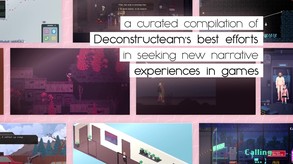
Essays on Empathy, developed by Deconstructeam and published by Devolver Digital, is a deeply introspective anthology that invites players to experience a series of compact, story-driven games centered on the human condition. Rather than a single narrative, this collection offers ten individual vignettes, each with its own tone, theme, and gameplay structure, united by a shared commitment to emotional depth and narrative experimentation. The anthology doesn’t just aim to entertain—it encourages reflection, discomfort, and connection, often exploring ideas that larger games shy away from. With stories that examine identity, vulnerability, loneliness, morality, and social pressure, Essays on Empathy is less about gameplay mastery and more about engaging with stories that feel intensely human, if sometimes unsettling.
The standout feature of this collection is its raw sincerity. Every entry, regardless of how surreal or grounded, seems to stem from a place of personal curiosity or emotional confrontation. Whether you're playing as a florist in a mysterious home, a woman attempting to prove her skeleton doesn’t belong to her, or a couple of aging comedians trying to keep their act alive, there’s always a palpable sense of purpose behind the weirdness. These characters aren't heroes or villains in the traditional sense—they’re flawed, complicated, and often struggling with invisible burdens. The brevity of each story works to the game’s advantage, allowing the developers to explore different perspectives without diluting their emotional weight. Some stories can be completed in ten or fifteen minutes, but the feelings they evoke can linger for much longer.
While the anthology leans heavily into narrative, it doesn’t abandon interactivity. Most of the games are minimal in terms of mechanics—simple point-and-click exploration, choice-based dialogue, or light puzzles—but what interaction is present is meaningful. These aren’t action-packed experiences; instead, they are designed to make you pause, consider, and feel. The lack of mechanical complexity is a deliberate choice, allowing the stories and characters to remain center stage. Occasionally, the stripped-back design might frustrate players looking for more engagement or challenge, but for those drawn to narrative-driven experiences, the simplicity enhances rather than hinders the immersion.
Visually, Essays on Empathy employs a consistent yet flexible art direction that reflects Deconstructeam’s signature style—muted color palettes, hand-drawn character portraits, and environments that feel both stylized and intimate. Each story has its own unique aesthetic, but they all feel part of a cohesive whole. The visuals often do a lot of the emotional heavy lifting, conveying mood and subtext through subtle shifts in expression, body language, or environmental detail. The music, composed by Paula Ruiz, adds another layer of atmosphere, providing melancholy, tension, or warmth exactly when it’s needed, without overwhelming the player. The result is a sensory experience that complements the emotional themes without resorting to manipulation or over-dramatization.
One of the more unique aspects of Essays on Empathy is its inclusion of behind-the-scenes content. After playing each game, players can access development notes, concept art, and candid reflections from the creators about the origin and evolution of each story. This meta-layer adds a surprising amount of value, transforming the collection from a set of short games into a documentary-like exploration of indie game development and personal storytelling. It becomes clear that these games weren’t made just to fulfill a commercial goal—they are expressions of curiosity, frustration, and lived experience. Seeing the creative process laid bare enhances the player's appreciation for what might otherwise be overlooked or dismissed as too abstract or niche.
However, the collection isn’t without its imperfections. Some stories end abruptly, leaving questions unanswered or arcs unresolved. A few games feel more like narrative sketches than complete works, and players looking for clear resolutions may find the ambiguity unsatisfying. There are occasional bugs or technical rough edges, understandable given the origins of some of these games in game jams or rapid prototypes. Yet, these flaws rarely detract from the emotional or thematic intent. Instead, they often serve to remind the player that these are hand-crafted experiences, more concerned with provoking thought than delivering polish.
Essays on Empathy is also relatively brief. Most players will be able to experience the full collection in under five hours, which might seem short by traditional standards. But this compact runtime allows for a concentrated, undiluted experience. The stories don’t waste time—they establish tone quickly, develop their themes with focus, and conclude with impact. For players interested in multiple playthroughs or who want to engage deeply with the commentary and extras, there is additional value, but the core experience remains a concise, emotionally rich journey through varied lives and points of view.
In a gaming landscape often dominated by spectacle and systems, Essays on Empathy offers a powerful counterpoint. It is a celebration of small stories, of quiet moments, and of the emotional potential of games as a medium. While not every entry will resonate equally with every player, the collection as a whole succeeds in its ambition to explore empathy through interactive storytelling. It may not be for everyone—its minimalist mechanics and experimental structure demand a certain openness—but for those willing to engage with its ideas and emotions, it offers a rare and memorable experience. It’s a quiet triumph of indie storytelling, and a compelling reminder of the power of games to speak to our most human concerns.
Rating: 7/10