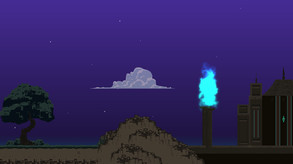
Eron is a 2D platform game that allows the player to actively switch between two parallel realms. The player will have to depend upon this power to finish each level.
Modeled estimate, not a reported figure. How we estimate →
Media

About
Genres
Stats
All-time low is the lowest price we've recorded for this game since we started tracking it.
Languages: English
Engagement
Hours played at review time, across 40 reviews with recorded playtime.
Reviews
Themes across 40 recent reviews and how positive each mention is. A keyword signal, not full sentiment analysis.
positive critical· bar length = how often the theme comes up
Reviews
ztuitzuzrtzrtrtz
Eron is a small-scale indie platformer that centers its entire identity around a single, clever idea and builds its experience outward from that foundation. Developed by David Mulder and published by SA Industry, the game presents itself as a traditional 2D side-scroller at first glance, but quickly distinguishes itself through its emphasis on dual-world traversal. Rather than relying solely on reflex-based jumping and enemy avoidance, Eron constantly asks the player to think spatially, planning movements across two overlapping realities that can be switched at will. This mechanic is not a gimmick used sparingly, but the backbone of the entire game, shaping level design, pacing, and challenge from beginning to end. The narrative framing is intentionally simple, placing the player in the role of a tribesman living on the alien planet of Eron. After a destructive attack wipes out your village, the journey becomes one of survival, discovery, and gradual understanding of the strange power hidden within the planet itself. Storytelling is delivered in a minimalistic fashion, relying more on atmosphere and implication than detailed exposition or dialogue. While the plot will not leave a strong emotional impact for players seeking deep narrative complexity, it serves its purpose by grounding the gameplay in a coherent world and providing a sense of motivation for pressing forward through increasingly hostile environments. From a visual standpoint, Eron adopts a retro-inspired pixel art style that prioritizes readability and function over spectacle. The environments are clearly structured, ensuring that platforms, hazards, and interactive elements are easy to identify even during demanding sequences. Backgrounds and environmental details reinforce the alien nature of the world without overwhelming the screen, and the restrained use of color helps distinguish between the two realms when switching between them. While the art direction does not push boundaries or aim for visual grandeur, it complements the game’s mechanical focus and reinforces its old-school design philosophy. The gameplay experience is where Eron both shines and stumbles. The realm-switching mechanic introduces genuinely interesting puzzles and traversal challenges, often requiring precise timing and careful observation. Successfully navigating a tricky section by flipping between worlds at exactly the right moment can be deeply satisfying, creating moments where problem-solving and execution align perfectly. At the same time, the game leans heavily into punishing difficulty. Checkpoints are sparse, and mistakes are often met with immediate failure and repetition, which can test the player’s patience. This design choice evokes classic platformers from earlier eras, but it also means that frustration can easily overshadow enjoyment for players who prefer smoother progression or more forgiving systems. Enemy encounters and hazards further reinforce this demanding approach. Spikes, moving platforms, and environmental dangers are placed with little margin for error, and mastery often comes through repetition rather than gradual onboarding. While some players will appreciate the uncompromising challenge and the sense of accomplishment that comes from overcoming it, others may find the balance uneven, especially when difficulty spikes occur without sufficient buildup. The game rarely holds the player’s hand, expecting them to learn through failure and persistence. Overall, Eron is a game that knows exactly what it wants to be and makes few concessions outside that vision. It is a focused, mechanically driven platformer that caters to players who enjoy precision, experimentation, and a more traditional sense of challenge. Its dual-world mechanic provides a solid foundation that elevates it above more generic entries in the genre, even if the execution occasionally feels rough around the edges. For those willing to accept its limitations and embrace its demanding nature, Eron offers a compact but memorable experience that rewards careful thinking and perseverance, standing as a clear example of how a single strong idea can define an entire game. Rating: 6/10
游戏玩法是可以的(虽然仍有较大的可挖掘空间),问题出在关卡设计上。无论是主角还是玩家,都无法通过体验这个游戏来变强。与落脚点对应的操作提示往往在一屏以外,这使得你唯一能做的事只剩下不断死亡以及「背板」。与蔚蓝和迈阿密热线不同,Eron 的难度不存在可与之应对的策略,你无法通过自我改进去适应它的难度,因此挫败感会更强。
The gameplay is incredibly basic, lacking any real depth or innovation. It seems the developers have little understanding of what makes a game fun. The mechanics are repetitive, and the graphics are nothing to write home about. I found myself yawning rather than engaged.
ok
Very cool game, Finally beat level 1.
Eron is not a bad platformer. It's pretty difficult and the controls are not the best. Give it a try, I think it deserves better ratings than it got tbh. Might re-visit it at some point.
foarte skibidi
COMMENT
я не понял игру ибо никакого обучения нет
Related
Related
Trends
Modeled estimate over time, reconstructed from Steam's monthly review histogram.
Momentum
Pace estimated from the game's recent review growth (our daily snapshots) at its own sales-per-review ratio — a momentum signal, not booked sales.
Audience
Estimated from the language of this game's reviews — a proxy for where players are, not official Steam demographics.
Related
| Try to survive Today | $2K | 79 | 68% | $1.09 |
| Juken Jigoku | 受験地獄 | $2K | 52 | 65% | $2.99 |
| Tiny Robots Recharged | $2K | 111 | 77% | $4.99 |
| Alexa's Wild Night | $2K | 52 | 83% | $4.99 |
| Mini Words: Top Games | $2K | 83 | 83% | $1.99 |
| Elder Chaos | $2K | 84 | 46% | $0.99 |