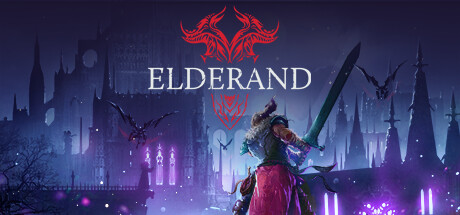
Only the strong will conquer this gruesome action platformer with RPG elements. Dismember demonic creatures and terrifying bosses by wielding brutal weapons in intense skill-based combat. Slay or be slain as you collect glory and treasure in this nightmarish 2D world.
Modeled estimate, not a reported figure. How we estimate →
Media
About
Stats
All-time low is the lowest price we've recorded for this game since we started tracking it.
Languages: English*, Portuguese - Brazil, French, German, Russian, Simplified Chinese, Spanish - Latin America, Korean, Traditional Chinese, Italian*languages with full audio support
Engagement
Hours played at review time, across 43 reviews with recorded playtime.
Reviews
Themes across 43 recent reviews and how positive each mention is. A keyword signal, not full sentiment analysis.
positive critical· bar length = how often the theme comes up
Reviews
Recommending this one but with caveats. Elderand is a 10-12 hour 'grimdark' aRPG Metroidvania with very deliberate combat - heavy swings that you commit to, where positioning, anticipation, and timing all play a role. It's not terribly challenging but there's plentiful tension as you scout for the next save room, conserve healing potions, etc. Bosses will usually kill you 3-5 times as you get the hang of them, though as the game goes on you are more and more likely to 1st-try everything. You level up pretty rapidly and each time you raise one of your four stats by a single point. However, the only real choice you have is between heavy/slower STR build, a speedy DEX build, or a distance mage. You will put about 75% of your stat gains into one of those three, and the remaining 25% into Vitality (for more health). Level-ups also fully heal you, and they are frequent enough that they play a big resource-management role as you explore. The experience is boosted by great pixel-art and reasonably good music. But, as it goes along, it does have a 'road to nowhere' quality - all of the translated English lore-text is pretty bad, and it's never really clear who the main character is, how he relates to "the cult" you encounter throughout the game, what you are trying to accomplish, etc. The epitome of 'good but not great.' More casual Metroidvania fans will bounce off and find it clunky. More experienced MV fans are even more likely to rush to judgment and misconstrue some of the choices here as dev-incompetence. Devoted MV fans will see how this fits into certain sub-niches and how the combat flavor etc sets it apart.
一念神魔
Elderand is not a good game. It's not a bad game either, but just boring. It is barely a Metroidvania, with a few movement powers sprinkled into an otherwise mostly-horizontal slog through enemy after enemy. The level design isn't very interesting. Having consumable healing items with a low capacity that drop infrequently from vases is just tedious; if you run out you either switch zones back and forth breaking pots to grind them or teleport back to the vendor to buy more. There's a reason why the Dark Souls style replenishing healing item has become prevalent. The art is the best part of the game.
Spin the wheel of sacrifice! My favorite part so far. I did not like this initially. I started 3x characters before moving past the first area. I hated that you stand still when you attack. It sucks. But then I gave it another shot and I really like it now. The attacks feel very weighty and there is decent enemy variety. The world is dark and funny and a joy to explore. I wish the combat was more fluid and that there was a bit more variety of weapons etc at the start, but once you pick up some items it opens up. Not the best gaym I have played, but still good.
Elderand, developed by Mantra and Sinergia Games and published by Graffiti Games, is a dark fantasy Metroidvania that draws heavy inspiration from the golden era of 2D action-adventure titles while carving out its own brutal identity. Framed within a grim, gothic world riddled with corruption and eldritch horror, the game places players in the role of a mercenary whose initial mission quickly spirals into a desperate struggle against ancient forces beyond comprehension. From the opening moments, Elderand makes its tone clear: this is a blood-soaked journey through a decaying world where survival hinges on skill, patience, and perseverance. The game’s world design embraces the interconnected structure that defines the Metroidvania genre. Players traverse a sprawling map composed of ruined villages, cursed forests, towering cathedrals, subterranean prisons, and floating sanctuaries suspended in the sky. Each region presents distinct visual themes and environmental hazards, encouraging exploration and careful observation. Progression is tied to unlocking movement abilities such as grappling hooks, double jumps, and other traversal tools, which allow players to revisit earlier zones and uncover hidden paths. This layered structure reinforces the satisfying loop of discovery and backtracking central to the genre. Combat in Elderand leans toward deliberate pacing rather than flashy fluidity. Attacks feel weighty and methodical, requiring careful positioning and timing. Unlike more modern, highly agile Metroidvanias, players cannot move freely while striking, creating a stop-and-commit rhythm to battles. This design choice makes every encounter feel calculated but can also introduce moments of stiffness. Boss fights, however, often shine under this system, rewarding players who learn patterns and adapt to distinct attack phases. Success rarely comes from button-mashing; instead, it emerges from reading enemy behavior and exploiting openings. Character progression incorporates light RPG elements that allow for build customization. Players level up and allocate points to attributes such as vitality, strength, dexterity, and magic-related stats. Weapons, armor, and accessories further influence playstyle, enabling experimentation with melee-focused builds, ranged attacks, or hybrid approaches. While the stat system provides some depth, it remains streamlined enough to avoid overwhelming complexity. Upgrading equipment with collected materials adds a layer of strategic resource management without dominating the overall experience. Visually, Elderand is defined by its detailed pixel art and moody color palettes. The environments are richly textured, blending traditional gothic architecture with grotesque, imaginative enemy designs. Blood effects and visceral animations enhance the sense of brutality, reinforcing the game’s grim tone. While the pixel aesthetic pays homage to classics of the genre, it incorporates modern lighting and animation touches that keep it from feeling purely nostalgic. The art direction succeeds in making each region distinct and atmospheric. The narrative unfolds primarily through environmental storytelling and scattered lore. Rather than presenting lengthy exposition, Elderand allows players to piece together the history of its cursed land through item descriptions, cryptic dialogue, and visual cues. This approach enhances immersion and gives the world a sense of mystery. Though the plot itself follows familiar dark fantasy tropes, the execution remains compelling due to the consistency of its atmosphere. Audio design complements the experience with a brooding soundtrack that shifts between somber ambient tracks and more intense battle themes. Sound effects emphasize the impact of combat, from the clash of steel to the unsettling cries of monstrous foes. Together, the visual and audio elements create a cohesive presentation that supports the game’s oppressive tone. Elderand’s challenge level sits comfortably in the realm of demanding but fair. Enemy placements and boss encounters require attention and practice, but checkpoints and fast-travel systems help reduce frustration during backtracking. The pacing encourages methodical progression rather than reckless exploration. While some players may find certain mechanics less fluid compared to genre contemporaries, others will appreciate the deliberate combat and retro sensibilities. Ultimately, Elderand stands as a solid and atmospheric entry in the modern Metroidvania landscape. It may not revolutionize the genre, but it successfully captures the spirit of classic side-scrolling action RPGs while delivering a distinct gothic identity. For players drawn to challenging exploration, weighty combat, and dark pixel-art worlds filled with monstrous adversaries, it offers a rewarding and immersive adventure that respects its influences while forging its own path. Rating: 7/10
这游戏也太大便了,不能在攻击过程闪避,太蠢了,纯挨打。
It's kinda good and its kinda bad - while I like the penalty system, I find the dash annoying. the dash invulnerability doesn't even last up until the end of the animation but only a couple of milliseconds during the first activation/frames. Which means if you want to dodge you really have to be close to the mobs/boss, not to mention you can't dodge ANY projectiles at all. Another one of the classic pixel perfect crap. I can't think of any other reasons than devs making this 'hard' by adding these unfavorable features. Getting hit in the middle of the dash animation? I don't know bout you dude but that's lame for me. You can't even use it to dodge projectiles. I don't see any point to adding dash if it's only for additional couple of pixels movement. You should've just stick to jumps/double jumps.
Bem divertido, um bom metroidvania para passar o tempo.
пока прикольно
not good, not terrible but plenty do it way better
Related
Related
Trends
Concurrent players on Steam, sampled daily since tracking started.
Momentum
Pace estimated from the game's recent review growth (our daily snapshots) at its own sales-per-review ratio — a momentum signal, not booked sales.
Audience
Estimated from the language of this game's reviews — a proxy for where players are, not official Steam demographics.
Related
| Outbreak Island | $312.5K | 1K | 79% | $8.99 |
| Disassembly 3D | $312.3K | 309 | 81% | $29.99 |
| SkyDrift | $312.7K | 1.2K | 88% | $9.99 |
| Sanitarium | $312.2K | 1.3K | 93% | $12.99 |
| 哎呦!这么多美女呀! | $312.2K | 690 | 92% | $18.99 |
| Idols of Ash | $312.2K | 3K | 98% | $2.99 |