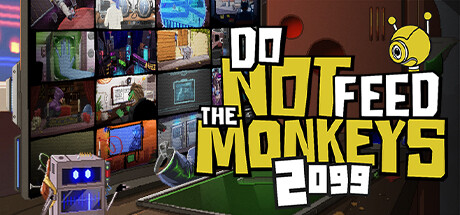
Spy on strangers through security cameras, invade their privacy and discover their secrets in this digital voyeur simulator. Welcome to the future of The Primate Observation Club. Even in 2099 the rule about messing with your unlucky subjects still remains in this sequel: DO NOT feed the monkeys!
Modeled estimate, not a reported figure. How we estimate →
Media

About

Genres
Stats
All-time low is the lowest price we've recorded for this game since we started tracking it.
Languages: English, Spanish - Spain, German, Korean, Russian, Simplified Chinese
Engagement
Hours played at review time, across 51 reviews with recorded playtime.
Reviews
Themes across 51 recent reviews and how positive each mention is. A keyword signal, not full sentiment analysis.
positive critical· bar length = how often the theme comes up
Reviews
ушли в будущее и потерялся весь вайб оригинальной игры...
Первая часть лучше раза в два
狗尾续貂,味同鸡肋,充满了不伦不类的赛博世界观,花里胡哨但不实用的界面,奇形怪状的剧情NPC,生搬硬套的推理词组和又臭又长的无用信息,完全击垮了1代短小但有趣的核心玩法,出2不如多出几个1代DLC,又不是一个传统意义上的文字推理游戏,搞那么多又复杂又没意义的剧情真的没必要,1代强烈的偷窥感和反乌托邦隐喻也被越来越多的玩家互动冲淡了,想互动我玩galagame不行吗我玩这个游戏?
[b] [h1]Cuando todo es extraño, nada es extraño[/h1] [/b] [hr][/hr] [i]Si ya jugaste la primera entrega, esta segunda entrega no es muy diferente. ¡El problema es justamente el cambio en la ambientación! Me voy a explicar mejor. El primero era un mundo en la actualidad en el que como observadores nos llamaba la atención cuando algo raro pasaba. En esta segunda Interacción, al ser futurista, todo se siente como raro, por lo que cosas que nos podrían llamar la atención como robots o aliens en realidad son normales y no un detalle que merezca atención. Y en su mayoría los problemas no son sobre naturales en el mundo como lo eran casi siempre en el primero, sino que son cosas mundanas (aunque ilegales o peligrosas). Personalmente recomiendo personalmente jugar al primero en vez de esta segunda entrega. [/i]
Уважаемые обезьяны на разработчиках, как у Вас так получилось? Я прошел первую часть на подсолнух она идеальна, к ней бы ДЛС или продолжение. И вот вышло продолжение с ДЛС. КАК ВЫ УМУДРИЛИСЬ СЛОМАТЬ УПРАЛЕНИЕ? Ну просто КАК? В первой части все лаконично. Хочешь повернуться к холодильнику, мышку к краю монитора. Повернулся. Ну как в Доте. Игра на ПК вышла, все в доту играют. Или как в шутере, как в Кал Оф Дюти, мышкой развернуться. ОТКУДА ЗАДЕРЖКА???? Как Вы умудрились сломать открывание холодильника. В первой части, повернулся, открыл. Тут добавили ручку, целиться в маленькую ручку, вместо того что бы нажать на весь холодильник как в первой части. В игре где все на времени завязано.... Пока еще не прошел её, но такое ощущение что диалогов меньше стало, но это не точно. Как так получилось сломать управление? Игра собиралась с нуля? А не из первой части?
played the prequel on 2019 i guess? and I was really expecting this one... honestly i thought it would be different but i think is perfect as it. so cyberpunk coded. highly addictive. recommended. one the most interesting non-horror point&click games i played tho :p
就那样,没有不要喂食猴子好玩
Игра норм, но намного хуже первой части, загадки перестали быть интуитивно понятны, а достижение с рандом предметами я ♥♥♥♥, десять ♥♥♥♥♥ игр подряд ♥♥♥♥♥ робот приносил, если брать игру то только по скидке
Do Not Feed the Monkeys 2099 is a science-fiction surveillance simulator developed by Fictiorama Studios and published by Joystick Ventures. Expanding upon the foundation established by its predecessor, the game places players inside a futuristic society shaped by advanced technology, corporate influence, and a culture where information holds tremendous power. Rather than focusing on combat, exploration, or traditional strategy mechanics, the experience builds itself around observation, investigation, and moral choice, creating a distinctive gameplay loop where curiosity becomes both the greatest tool and the greatest danger. Players step into the role of a member of the Primate Observation Club, an organization dedicated to secretly monitoring the lives of strangers through hidden surveillance systems. Every monitored target exists within isolated scenarios that slowly reveal personal stories, unusual situations, and hidden truths waiting to be uncovered. The organization promotes a strict rule against interfering with subjects being observed, but the game constantly challenges players to decide whether remaining silent is truly the right decision. Information becomes a form of influence, and every discovery creates new ethical questions. The gameplay revolves heavily around collecting details and connecting information. Small observations gradually develop into larger discoveries as players watch surveillance footage, take notes, search digital databases, and uncover hidden patterns. Individual conversations, routines, and behaviors slowly expose secrets that transform seemingly ordinary situations into something much more complicated. Progress depends on patience and attention to detail rather than reflexes or action-heavy mechanics. The satisfaction comes from slowly understanding mysteries piece by piece. The futuristic setting allows the game to introduce more imaginative scenarios than its predecessor while preserving the same underlying themes surrounding privacy, control, and personal responsibility. Society in 2099 feels technologically advanced but morally uncertain. Corporations hold enormous influence, alien life exists alongside humanity, and technological innovation has transformed everyday existence. This setting provides fertile ground for unusual situations that range from humorous and absurd to unsettling and emotionally impactful. One of the strongest aspects of the experience is its writing. Each surveillance target introduces unique personalities and storylines that rarely feel repetitive. Some situations lean toward satire, others explore darker themes, and many contain unexpected twists that reward careful observation. The game consistently creates a sense of unpredictability because players never fully know what lies behind the next surveillance feed. Small details that initially appear meaningless often become central pieces of larger narratives later. The balance between observation gameplay and personal survival mechanics adds another layer of complexity. Monitoring strangers is only part of daily life. Players must also manage finances, maintain personal stability, and survive within the same demanding society they spend their time observing. Time becomes a valuable resource, forcing difficult decisions about priorities. Chasing one mystery too aggressively can leave other responsibilities neglected, creating meaningful tension throughout the experience. Visually, the game continues embracing stylized pixel art that complements its retro-futuristic atmosphere exceptionally well. Rather than chasing visual realism, the presentation focuses on personality and atmosphere. Futuristic environments, surveillance interfaces, and distinctive character designs help establish a world that feels strange but believable within its own rules. The visual style also reinforces the feeling of operating from behind screens and hidden observation systems, strengthening immersion throughout the experience. Player choice remains central to the design philosophy. While passive observation represents the intended role, temptation constantly pushes players toward intervention. Choosing to interfere with monitored lives can dramatically alter outcomes, creating branching consequences that encourage experimentation and replayability. Few games make information itself feel so powerful. Knowledge becomes currency, responsibility becomes a burden, and every choice carries uncertainty. Beyond entertainment, Do Not Feed the Monkeys 2099 quietly explores larger ideas surrounding surveillance culture, privacy erosion, technological dependence, and human behavior under observation. These themes never overwhelm the gameplay, but they remain present throughout the experience, giving greater meaning to seemingly simple actions. The game encourages players to think carefully about how information changes relationships between people and institutions. Fictiorama Studios succeeds because it understands that compelling stories do not always require grand adventures or large-scale action. By focusing on observation, moral tension, and carefully constructed mysteries, Do Not Feed the Monkeys 2099 creates something unusual within modern simulation games. It is intelligent, darkly humorous, unsettling, and consistently engaging. Players who enjoy narrative-focused experiences, investigative gameplay, branching stories, and slower-paced strategy elements will likely find plenty to appreciate here. The futuristic setting enhances an already strong formula while deeper systems and expanded storytelling make the sequel feel like a meaningful evolution rather than a simple continuation. Do Not Feed the Monkeys 2099 transforms surveillance into something fascinating, creating an experience that lingers long after its final mystery has been uncovered. Rating: 7/10
不如一代,就当做一代的DLC来玩
Related
Related
Trends
Modeled estimate over time, reconstructed from Steam's monthly review histogram.
Momentum
Pace estimated from the game's recent review growth (our daily snapshots) at its own sales-per-review ratio — a momentum signal, not booked sales.
Audience
Estimated from the language of this game's reviews — a proxy for where players are, not official Steam demographics.
Related
| Let's! Revolution! | $178.7K | 393 | 93% | $19.99 |
| Virtual Hunter | $178.6K | 188 | 71% | $24.99 |
| Circuits | $178.6K | 2.1K | 89% | $4.99 |
| 👑Idle Calibur:Zero💕(选王之剑:零) | $178.5K | 500 | 82% | $10.99 |
| The Swindle | $178.8K | 502 | 64% | $14.99 |
| Monobeno-HAPPY END- Deluxe | $178.5K | 410 | 92% | $29.99 |