How *Depression: The Game* Took Me to a Darker Place
I wish I could say *Depression: The Game* was a game I simply stumbled upon, out of curiosity, or to pass the time. I wish I could say it was an innocuous experience, something I forgot about the next day. But instead, it dug its claws into me and left a deeper mark than I ever could have imagined. What started as a moment of idle curiosity quickly became something much darker. It was as if the game was less about playing and more about reliving my own personal nightmares.
It all began innocently enough. A friend had mentioned the game to me in passing, almost in a mocking way. "*You should try it,*" they’d said, "*It’s hilarious, in a dark way. It’s like the game literally *gets* depression.*" I figured I’d give it a shot. After all, who doesn’t like a good game? And maybe, just maybe, I could gain some insight into my own struggles by interacting with something that claimed to mirror them.
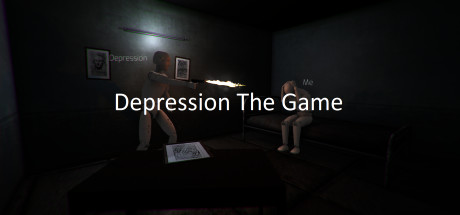
When I booted up the game, I didn’t expect much. The title screen was minimalist, just a gray background with faint, eerie music and the words *Start Game?* blinking in the center. The mood was heavy from the get-go, like being wrapped in a thick fog that you couldn’t escape. The game’s opening screen was barren, the virtual world consisting of a small, faceless character alone in a dim, lifeless room. There were no instructions, no directions, just the overwhelming sensation of emptiness.
"You feel tired," the first text box said. I clicked through it, not thinking much of it at first.
The game continued in this way, the text boxes popping up at intervals, echoing the same feelings I had struggled with for years. "You feel numb." "You don't want to get out of bed." "Why bother?" I stared at the words, almost hypnotized by their accuracy. It was like someone had tapped into the very core of my mind and put it on display for everyone to see.
At first, I was captivated. It felt strangely validating to see my internal monologue reflected in the game. It was like the game was an outsider looking in, understanding the feelings I could never fully express. But the longer I played, the more intense the experience became. It didn’t stop at just showing how I felt. The game started to push deeper.
"You can’t remember the last time you smiled," the next message read.
I froze. That was it, wasn’t it? That feeling. The one I’d been carrying for so long that I’d almost forgotten what it was like to feel anything else. The realization hit me harder than I expected. And with that realization came an overwhelming sense of loneliness. It was as if the game was amplifying every single sad thought I had ever had. I tried to shake it off, but the more I played, the more it gripped me.
By the time I’d been playing for a few hours, the game had become something I couldn’t shake off. The world in the game became more oppressive, more claustrophobic. The character’s movements were slower, more labored, mirroring the heaviness I felt in my own body. The text continued:
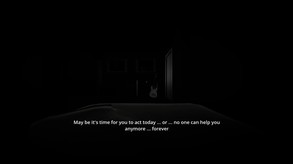
"You’re stuck. You’ll never leave this room."
And I believed it. For the first time in a long time, I felt *seen*. It felt like the game was speaking directly to me, telling me things I had never dared to admit out loud. But the deeper I got, the more I began to spiral.
I wasn’t just playing anymore—I was *living* inside the game. The boundaries between the virtual world and my own mind began to blur. It wasn’t just a game anymore; it was a mirror reflecting everything I’d been running from. The room in the game was my room. The loneliness of the character was mine. And the more I played, the more I started to feel a terrible weight inside me, pulling me deeper into that dark space.
In the middle of the game, I encountered a new feature: a “drug” option. I hesitated for a moment. It felt like the game was giving me permission to fall deeper into the abyss. The choice was there, plain as day: *Take a pill?* There was no judgment. No consequences. Just the option to feel something—anything—to numb the pain.
I clicked it.
The screen flashed briefly. The music grew louder and more dissonant. A sudden sense of detachment washed over me, both in the game and in real life. The character’s movements became erratic, the world around me blurred, and I felt like I was drowning in the noise. My heart raced. I wasn’t in control anymore.
I couldn’t help it. I needed to feel something. The game was showing me how easy it was to numb out, to escape the crushing weight of everything. It was a sick kind of relief, and I wanted more of it. And just like that, the game wasn’t just a reflection of my depression—it had become my *escape* from it. A perverse mirror, reflecting back my worst impulses, pushing me further down the rabbit hole.
I didn’t stop there. I kept playing, taking more pills, losing myself in the game. As my virtual character spiraled into madness, so did I. I went from using drugs in the game to using them in real life, hoping for the same numbing relief the game seemed to offer. I thought it would be a way to make the pain stop. But it never did. The more I took, the worse I felt, and the deeper the hole seemed to get.
The lines between the game and my reality blurred until I couldn’t tell where one world ended and the other began. The game’s relentless barrage of negative affirmations echoed in my head, drowning out everything else. I stopped talking to my friends, stopped responding to texts, stopped showing up to work. Every day, I retreated further into myself, playing the game over and over, trying to find some semblance of relief, something to make me feel *better*. But it never came.
One night, after an especially intense session of playing, I sat there staring at the screen. The text box read: "You’ve lost everything." It felt like the game was speaking directly to me. It was right, in a way. I felt like I had lost everything—my sense of self, my joy, my connection to the people around me. I was just a hollow shell of who I used to be, and I couldn’t see a way out.
I cried.
For the first time in weeks, I let myself cry. It wasn’t just from the game. It was everything—the numbness, the isolation, the drugs. I felt like I was drowning in it all, and the game had pushed me further into that darkness than I ever expected.
When I finally closed the game, I felt empty. The screen faded to black, and I was left in silence. The game had shown me a dark mirror of my own mind, and I wasn’t sure if I’d ever be able to escape it.
The worst part was, I wasn’t even sure I wanted to. I had become so tangled in the game’s reflection of my depression that I didn’t know how to get out. *Depression: The Game* didn’t help me understand my pain. It didn’t provide me with any answers. It just gave me a place to get lost—and in the end, I had no idea where to go next.
I wish I had known that sometimes, facing the darkness means stepping away from the things that drag you deeper into it. But at that moment, I felt trapped—and the game was just the beginning.