Defend the Rook is a tactical strategy game developed by One Up Plus and published by Goblinz Publishing together with Maple Whispering Limited. Released on Steam in 2021, the game blends several genres—turn-based tactics, tower defense, and roguelike progression—into a compact but surprisingly strategic experience. Instead of focusing purely on unit combat or base construction, the game asks players to manage a small team of heroes while simultaneously building defensive structures and protecting a central objective known as the Rook. This hybrid design creates a gameplay loop that emphasizes careful planning, positioning, and resource management.
The basic premise revolves around defending the Rook from waves of invading enemies. The Rook serves as the heart of the player’s defense and the most critical piece on the battlefield. If it is destroyed, the entire mission ends immediately, forcing the player to start the run again due to the game’s roguelike structure. The player assumes the role of a powerful tactician tasked with organizing the kingdom’s last defensive line. This setup may be simple, but it works effectively as a foundation for the tactical challenges that unfold across each battle.
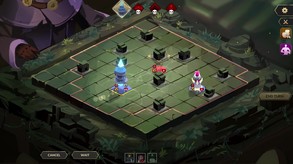
Each encounter takes place on a grid-based battlefield viewed from an isometric perspective. Players control a small group of heroes who can move across the board, attack enemies, and use special abilities during their turns. The turn-based nature of the combat encourages players to think several moves ahead, anticipating enemy movements and positioning units carefully. Unlike many traditional tactical RPGs, however, combat in Defend the Rook is not limited to character actions alone. Defensive towers, traps, and barricades can also be placed across the battlefield to slow enemies and deal automatic damage.
These tower defense elements significantly change the pacing of the strategy. Rather than relying solely on hero combat, players must construct defensive networks that funnel enemies into vulnerable positions. Traps can be used to damage enemies as they move through narrow pathways, while towers provide consistent ranged attacks that support the heroes. The challenge lies in balancing these static defenses with the active movements of the hero characters. A poorly placed tower or an exposed defensive line can quickly allow enemies to reach the Rook.
The heroes themselves represent familiar fantasy archetypes such as warriors, rogues, and mages, each offering different abilities and tactical roles. Warriors typically act as front-line defenders capable of absorbing damage and blocking enemy paths. Rogues excel at mobility, allowing them to move quickly across the battlefield to eliminate key targets. Mages provide powerful magical attacks and support abilities that can turn the tide of difficult encounters. Learning how to combine these strengths effectively becomes essential as enemy waves grow stronger.
One of the defining features of Defend the Rook is its roguelike progression system. Each playthrough consists of a sequence of battles that gradually increase in difficulty, culminating in powerful boss encounters. After each victory, players receive rewards such as new abilities, tower upgrades, or equipment improvements. Because these rewards are randomized, every run feels slightly different. Players must adapt their strategies based on the upgrades available to them, which keeps the gameplay fresh even after multiple attempts.
In addition to heroes and towers, players can use special spells and contraptions that introduce additional tactical possibilities. Some spells allow players to deal large bursts of damage across multiple enemies, while others provide defensive advantages such as shields or healing effects. Contraptions can modify the battlefield itself by creating barriers or redirecting enemy paths. These mechanics add a puzzle-like quality to the gameplay, encouraging players to experiment with creative defensive layouts.
Visually, the game uses a bright and colorful fantasy art style that prioritizes clarity over realism. The battlefield tiles, towers, and characters are all clearly defined, which is important in a strategy game where players must quickly assess enemy positions and plan their next move. While the graphics are relatively simple compared to large-scale strategy games, the visual presentation is polished enough to make the battlefield easy to read even during complex encounters.
The audio design complements the strategic atmosphere with subtle background music and satisfying combat sound effects. Each tower attack, spell cast, and enemy strike produces clear audio feedback that helps reinforce the impact of player decisions. Although the soundtrack itself is fairly understated, it maintains a steady sense of tension throughout battles without distracting from the strategic focus.
Despite its engaging mechanics, the game does have some limitations. Because the core gameplay revolves around defending the Rook across repeated encounters, players may begin to notice a degree of repetition after extended play sessions. Enemy types and environments are somewhat limited, which can make later runs feel familiar. Additionally, the roguelike upgrade system can occasionally produce situations where players receive less useful upgrades, forcing them to rely more heavily on skillful positioning rather than powerful abilities.
Even with these shortcomings, the core tactical gameplay remains satisfying. The constant need to balance hero actions, tower placement, and defensive planning creates a strategic puzzle that remains engaging throughout each run. Later encounters become especially tense as enemies approach from multiple directions and bosses introduce new mechanics that disrupt established strategies.
Ultimately, Defend the Rook succeeds as a clever blend of several strategy genres. By combining turn-based combat with tower defense mechanics and roguelike progression, it creates a gameplay experience that feels both familiar and refreshingly unique. Its accessible mechanics make it easy to learn, while its strategic depth encourages players to experiment with different tactics over repeated playthroughs.
While it may not offer the large-scale campaigns or narrative depth found in bigger strategy games, Defend the Rook delivers a focused and highly replayable tactical experience. Players who enjoy strategic puzzle-like battles and roguelike experimentation will likely find the game rewarding despite its modest scope.
Rating: 8/10