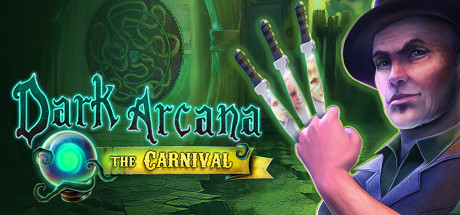
Find the missing woman lost in a mysterious Carnival of Horrors.
Modeled estimate, not a reported figure. How we estimate →
About

Stats
All-time low is the lowest price we've recorded for this game since we started tracking it.
Languages: English*, French, Italian, German, Spanish - Spain, Japanese, Korean, Polish, Portuguese - Brazil, Russian, Simplified Chinese*languages with full audio support
Engagement
Hours played at review time, across 40 reviews with recorded playtime.
Reviews
Themes across 40 recent reviews and how positive each mention is. A keyword signal, not full sentiment analysis.
positive critical· bar length = how often the theme comes up
Reviews
excellent
Je suis une grande fan des "artifex mundi" et celui dénote des autres par son côté lugubre. En effet, on passe de l'autre côté du mirroir pour retrouver la femme disparue, on arrive dans un canarval sombre et déroutant. Pour ma part j'ai trouvé ca assez plaisant mais ca pourrait effrayer les âmes les plus sensibles. Je voulais bien entendu faire les scènes d'objects cachés sans l'aide mais parfois il y a des mauvaises traductions et on se retrouve avec une assiète en guise de disque par exemple. L'autre bémol c'est que les bonus ne sont pas indiquer clairement on doit faire l'option supplément dans le menu. je le recommande quand même pour l'ambiance.
日,专家模式通关没成就。不然还是不错挺好玩的
Что за сигма момент Саша гей
Fun, kooky/spooky atmosphere for a Hidden Object game. Nice art and soundtrack, and none of the puzzles were overly obtuse.
I remember first playing this game back in the summer of 2013 on my cousin’s MacBook and being unable to get off of it. One of the best games in the genre, wish there was a sequel.
Dark Arcana: The Carnival, developed and published by Artifex Mundi, is a haunting hidden-object adventure that blends the macabre allure of a traveling carnival with the dark mysteries of a supernatural world. The story begins when a mother mysteriously disappears during a carnival visit, and the player assumes the role of a detective tasked with uncovering her fate. What initially appears to be a simple case quickly unravels into something far more sinister when a secret mirror world reveals itself—a distorted, evil reflection of the carnival that hides a terrible presence. From the opening scene, the game establishes an eerie tone, using its setting to full effect. The juxtaposition of cheerful carnival music and unsettling silence, the bright colors of tents and rides against dim shadows, creates an atmosphere of tension and curiosity that keeps players hooked from one location to the next. At its core, Dark Arcana is a traditional hidden-object puzzle adventure in the familiar Artifex Mundi style. Players navigate through static environments, gathering clues, collecting items, and solving mini-puzzles that help push the story forward. Hidden-object scenes are the backbone of the gameplay, asking players to locate specific items in richly detailed backgrounds. The challenge level is moderate, leaning toward accessibility rather than complexity. It’s designed to be enjoyed at a relaxed pace, offering hints and the ability to switch to an alternative mini-game if players wish to bypass a particular scene. This flexibility, combined with Artifex Mundi’s clean interface and logical puzzle design, makes the game ideal for both newcomers to the genre and seasoned fans who appreciate a smooth, uninterrupted experience. The gameplay loop is familiar but polished, ensuring that progression feels fluid and rewarding rather than repetitive. What truly defines Dark Arcana is its worldbuilding and atmosphere. The carnival setting is both enchanting and unnerving, filled with twisted attractions, broken rides, and a cast of characters who seem as much victims as performers trapped by their circumstances. The art style blends saturated colors with heavy shadows, emphasizing the contrast between the lively illusion of the carnival and the lurking corruption beneath it. This duality extends to the game’s mirror world—a dark dimension that mirrors the real one, where each location has a distorted counterpart. Exploring both realities provides a refreshing layer to the gameplay, and the transition between them gives the sense of uncovering hidden truths just beyond perception. The environments are lovingly detailed, from the eerie funhouse mirrors to the flickering lights of empty ferris wheels. Combined with a haunting musical score that alternates between melancholy and unease, the setting becomes one of the game’s most captivating elements. The narrative unfolds gradually, revealing a tragic story beneath the supernatural mystery. As the detective delves deeper into the case, the truth behind the mother’s disappearance and the connection to the carnival’s owner become clear. The villain, bound by a dark pact, manipulates the mirror world to trap souls and sustain his twisted domain. While the plot follows familiar beats typical of Artifex Mundi’s stories—loss, redemption, and confrontation with evil—it’s presented with enough care to keep it engaging. Short cutscenes and scattered notes flesh out the lore, offering glimpses of past events that shaped the current tragedy. The storytelling is direct but effective, relying more on mood and discovery than dialogue-heavy exposition. Though not groundbreaking, it achieves a balance between mystery and emotional weight, culminating in a resolution that feels satisfying and fitting for the tone it establishes. Puzzles and mini-games are another highlight, woven seamlessly into the flow of exploration. Each challenge fits naturally within the environment—a lock that needs picking, a carousel mechanism that must be repaired, a coded message that hides a crucial clue. These puzzles are generally intuitive, leaning toward logic and pattern recognition rather than abstract trial-and-error. The inclusion of the optional “Monaco” card mini-game as an alternative to traditional hidden-object scenes adds a bit of variety, offering players a choice in how they approach progression. This design decision shows Artifex Mundi’s understanding of pacing and accessibility, ensuring that the experience remains fluid for different playstyles. Dark Arcana’s presentation reflects the strengths and limitations of its era. While the artwork is beautifully drawn and atmospheric, the animations are minimal and occasionally dated. Character models and cutscenes rely on simple movements and static expressions, but the hand-painted environments make up for these shortcomings. The sound design is immersive, using soft ambient noises and subtle cues to heighten tension without becoming overbearing. The voice acting is functional rather than exceptional, contributing to the story without stealing focus from the visuals. Despite these minor technical shortcomings, the game maintains a cohesive identity that makes it easy to overlook its simplicity. The pacing of the game is brisk, spanning roughly four to five hours, which suits its narrative scope perfectly. There’s little filler, and each area introduces something new—either a fresh location, an additional puzzle type, or a clue that moves the mystery forward. The alternating exploration between the real and mirror worlds ensures a steady sense of progression. The hint and skip systems are well-balanced, providing assistance without undermining challenge, and the interface remains clear and unobtrusive throughout. Artifex Mundi’s consistency in these design elements is one of the reasons their games maintain such lasting appeal—they invite players into a world of mystery and problem-solving without unnecessary frustration or mechanical clutter. As a whole, Dark Arcana: The Carnival succeeds because it understands what its audience seeks: a richly atmospheric, moderately challenging, and emotionally satisfying hidden-object adventure. Its carnival setting is a perfect stage for a tale of illusion, deceit, and redemption, and the supernatural twist of the mirror world keeps the experience intriguing from beginning to end. While it doesn’t break new ground for the genre, it excels in delivering a well-paced and polished version of what fans expect from Artifex Mundi’s catalog. Its brevity and accessibility make it ideal for casual sessions, yet its haunting visuals and eerie undertones give it lasting charm. In the end, Dark Arcana is a reminder of why hidden-object games remain popular among players who enjoy immersive storytelling and relaxed puzzle-solving. It combines the familiar comfort of the genre with an inventive setting and a melancholy tone that lingers after the credits roll. The carnival’s dark corridors, the glimmer of fading lights, and the haunting melody that plays as you uncover the final truth all come together to form an experience that’s quietly captivating. For those who appreciate atmospheric mysteries with a supernatural edge, Dark Arcana: The Carnival offers a journey worth taking—a short but memorable dive into the strange, the sorrowful, and the unseen. Rating: 8/10
Not the best from them, but it's a okay-ish hidden object game.
Great hidden object/puzzle game. Reminds me of the ones I used to play. Fun story line and the puzzles were not too difficult but did have a little challenge. I really liked the fact that there is a bonus game after you finish which wraps up all loose ends.
Fun, twisty, dark find-it game that is really great! I really enjoyed it! :)
Related
Related
Trends
Modeled estimate over time, reconstructed from Steam's monthly review histogram.
Audience
Estimated from the language of this game's reviews — a proxy for where players are, not official Steam demographics.
Related
| Astrobuilder | $203K | 351 | 90% | $14.99 |
| Alwa's Legacy | $202.9K | 641 | 87% | $17.99 |
| World Ship Simulator | $203.1K | 268 | 21% | $19.99 |
| Kelipot | $202.8K | 824 | 85% | $13.99 |
| Gedonia 2 | $202.8K | 950 | 83% | $14.99 |
| Car Mechanic Simulator VR | $203.1K | 385 | 56% | $19.99 |