Crisis in the Kremlin is a global real-time political strategy about the Socialist world in its final decade. Shape the fate of the world as you manage economy, foreign relations, and domestic policy. Engage with countries across the globe, using diplomacy or even proxy wars to expand your reach.
Modeled estimate, not a reported figure. How we estimate →
Media

About
Crisis in the Kremlin: The Cold War is a global real-time political strategy game where you take command of the USSR in its final decade. Shape the fate of your nation as you manage critical elements like the economy, foreign relations, and domestic policy. Engage with countries across the globe, using diplomacy, or wield your influence through proxy wars to expand your reach.
Immerse yourself in both historical and alternate-history events, making pivotal decisions that will guide the USSR down various paths—from reigniting the flame of socialism to embracing Western democracy. With dozens of complex endings, every choice brings you closer to your unique vision for the USSR.
Crisis in the Kremlin offers a richly detailed simulation, where the fate of a superpower rests in your hands. Will you preserve the union or forge a new future?
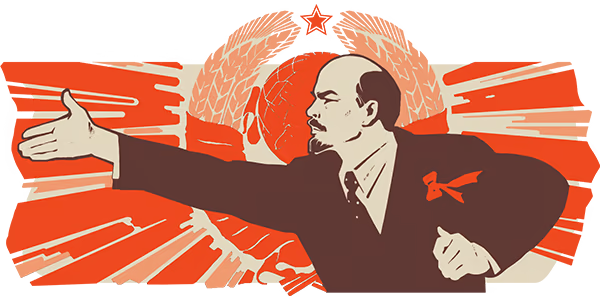
Crisis... Crisis has caught up with the Motherland of the Revolution and lurks in its very heart - the Kremlin.
The Soviet Union has stood still for too long, and now many different circumstances, groups and people are pushing it to change. Some see the future in a return to the past, some in cautious reforms, and some want radical change. The Crisis has taken deep roots in Kremlin towers, and the lurking traitors are just waiting for their moment in the spotlight.
Where will the blow of the Cheka officer's punitive sword be directed this time? Where will the knight of the Party in red armour point his finger? And where will the foot of the entire Soviet people step? Greatness? Communism? Reforms? Collapse?
Take command of the Soviet Union in the new, updated Crisis in the Kremlin. Lead the country through the most difficult times. Conduct scientific research, manage finances to bring the USSR out of a prolonged political crisis. Carry out social reforms, introduce free elections or, alternatively, roll back any liberal endeavours: fine-tuning legislation is in your hands. Make friends with the Western world or confront the US and bring about its collapse, follow the unusual path of neo-imperialism or carve your own path: "Crisis in the Kremlin" opens up huge prospects for you.
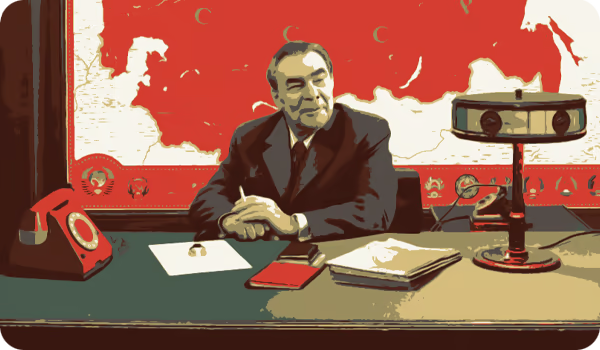
Here you will be able to:
Try on the chair of the General Secretary of the CPSU Central Committee
Start and successfully carry out Perestroika or not even to start it
Reorganise the USSR, build the legendary OGAS or establish a united world state
Bring about the world communist revolution dreamed of by the classics of Marxism-Leninism
Build a proper capitalism that will leave competitors from the West and East far behind
Fine-tune the laws of the Soviet Union, creating an entirely new state
Create your dream country or turn it into your nightmare
Control the state budget
Reach new scientific heights: build the Soviet Internet, continue the space race and win it, conquer the Moon and Mars
Conduct diplomacy with the whole world: hostility or friendship with the West, China and dozens of other states
Revive former states, liberate small peoples around the world, or create brand new unprecedented countries
Interfere in the course of international events and world history itself
Repress, reform, proclaim, intervene, perform, break and build....
Genres
Stats
All-time low is the lowest price we've recorded for this game since we started tracking it.
Languages: English, Russian
Engagement
Hours played at review time, across 43 reviews with recorded playtime.
Reviews
Themes across 43 recent reviews and how positive each mention is. A keyword signal, not full sentiment analysis.
positive critical· bar length = how often the theme comes up
Reviews
Why didn't Gorbachev play this a couple of times to figure out how to keep the Union together?
Симулятор развала страны
1.2.0版本抽象的战争系统 我叫穆罕默德,二十四岁,是阿富汗绿战者。每天早上我都要一脚踹飞苏联人扔过来的战术核武器,完美地在空中拦截苏联人丢下来的温压弹。然后硬抗着天基武器绑住三十个苏联特种兵。在疯狂转动双臂驱散苏联人排放的毒气。最后开枪打死五十个苏军无人机操纵员。我看着满仓库的苏联装备和其他华约国家的装备,不禁感慨:“毛子真是大聪明啊!”
我的评价是毛子先去学学历史了解一下,别跟个煞笔一样只有刻板印象
Поставил отрицательный обзор, чтобы разработчик прочитал: 1) есть серьезная проблема в игре с параллельностью событий важных - из-за того, что ты не можешь никак отследить, что у тебя накопилось много событий, которые будут происходить подряд каждый день - можно попасть в петлю, когда какие-то важные события пропускаются из-за малозначительных вроде дефицита кадров в Спецслужбах и т.д. Рекомендация: Сделайте возможность происходить нескольким событиям одновременно, или разнесите как-то события общего характера (которые происходят всегда от изменения параметров государства или предупреждают о волнениях в соцстранах) и события эпизодические (выбор гимна, поправки в конституцию и тд). 2) Дайте возможность сворачивать экран любого события, не снимая паузу. Кнопок с представителями партии и статистикой - недостаточно. Бывает нужно посмотреть доступность решений по отдельным странам на карте или глянуть какие доктрины доступны будут или нет. 3) Ползунки в экономике, где ты распределяешь бюджет - это неудобное решение старого геймдизайна. Сейчас все современные стратегии дают тебе либо разброс увеличения / уменьшения значений с зажатой shift или ctrl (+10, +100) или, что удобнее, тупо вводить любое значение (оно потом упирается в минимум или максимум автоматически) В остальном игра вроде как более менее. Но удобство управления в ней сомнительное
Crisis in the Kremlin: The Cold War is an ambitious political strategy game from Nostalgames that places players at the center of one of the most pivotal periods of twentieth-century history. Set during the final years of the Soviet Union, the game challenges players to navigate a nation facing economic stagnation, ideological conflict, social unrest, and growing international pressure. Rather than focusing primarily on warfare, the experience revolves around governance, political maneuvering, and long-term planning, offering a detailed simulation of what it might have been like to lead a superpower standing at the edge of transformation. The game's greatest achievement is how effectively it captures the complexity of leadership. Every major decision feels significant because no issue exists in isolation. Economic reforms influence political support, diplomatic actions affect internal stability, and ideological choices shape both domestic and international relationships. Players quickly learn that solving one problem can easily create another. This constant balancing act generates tension throughout the campaign and successfully conveys the challenges faced by governments attempting to manage large-scale change during uncertain times. Unlike many strategy games that provide straightforward paths to success, Crisis in the Kremlin: The Cold War encourages experimentation through its extensive range of political options. Players can attempt to preserve traditional Soviet policies, embrace gradual modernization, pursue radical reforms, or develop entirely new directions for the state. The game rarely forces a single "correct" solution, allowing alternate-history scenarios to emerge naturally from the decisions made during a campaign. This freedom is one of the title's most compelling features because it transforms historical events into dynamic possibilities rather than predetermined outcomes. Political management serves as the heart of the experience. Government officials, party members, reformists, conservatives, and other influential groups all compete for power and influence. Managing these factions requires careful attention, as neglecting key political interests can lead to instability or even threaten a player's position. The game excels at creating the sensation of operating within a complicated bureaucracy where alliances, rivalries, and personal ambitions constantly shape events behind the scenes. Success often depends as much on political skill as it does on economic expertise. The economic system is equally impressive in its scope. Players are tasked with maintaining industrial productivity, managing resources, addressing shortages, and determining the future direction of the Soviet economy. Decisions involving state planning, market reforms, social spending, and infrastructure development all carry meaningful consequences. The economy feels interconnected and believable, rewarding thoughtful planning while punishing short-sighted decisions. As a result, economic management becomes one of the most engaging aspects of the game rather than a simple collection of numerical adjustments. International relations add another layer of depth. The Cold War setting provides countless opportunities for diplomatic negotiations, geopolitical influence, and ideological competition. Players must monitor relationships with allies and rivals while responding to global developments that can dramatically alter the balance of power. Whether supporting friendly governments, improving foreign relations, or projecting influence abroad, diplomacy plays a critical role in determining the fate of the Soviet Union. The global stage feels active and responsive, helping create the impression that the player's actions have far-reaching consequences. One of the game's most enjoyable qualities is its emphasis on replayability. Different leaders, policy choices, and ideological approaches can lead to dramatically different outcomes. A campaign focused on preserving traditional communist structures may unfold very differently from one centered on democratic reforms or economic liberalization. Because there are numerous paths available, players are encouraged to experiment with alternative strategies and explore how different decisions reshape history. This flexibility ensures that multiple playthroughs remain engaging long after the initial campaign has ended. Visually, the game favors clarity and functionality over spectacle. Maps, reports, statistics, and political screens dominate the interface, reflecting the title's focus on decision-making rather than cinematic presentation. While it may not impress players looking for cutting-edge graphics, the user interface generally succeeds in presenting large amounts of information in an organized manner. The visual design serves the gameplay effectively by ensuring that critical data remains accessible during complex decision-making processes. The atmosphere is strengthened by a presentation that consistently reinforces the seriousness of its subject matter. The combination of historical themes, political intrigue, and strategic decision-making creates a sense of responsibility rarely found in more action-oriented strategy games. Every policy feels important because the future of an entire nation is at stake. This constant pressure helps maintain engagement and encourages players to think carefully about both immediate challenges and long-term consequences. The game's biggest obstacle is its complexity. Newcomers to grand strategy titles may initially find the abundance of mechanics overwhelming. Understanding how political factions, economic systems, diplomatic relationships, and social conditions interact requires patience and dedication. However, players willing to invest the necessary time will discover a rewarding simulation filled with meaningful choices and strategic depth. The learning curve is steep, but the payoff is substantial. Crisis in the Kremlin: The Cold War stands out as a thoughtful and highly detailed strategy experience that prioritizes politics, economics, and historical decision-making over conventional military conquest. Its rich systems, extensive player freedom, and strong alternate-history possibilities create a compelling simulation of leadership during a defining moment in world history. For strategy enthusiasts who enjoy managing complex political systems and exploring different historical outcomes, it delivers an absorbing and intellectually engaging experience that remains difficult to put down. Rating: 8/10
Когда-нибудь я смогу пройти эту игру на лёгком уровне сложности с читами и без утёка золотого резерва в -530, с превращением СССР в Зимбабве по всем параметрам и выходом я*учей Про*балтики из состава по скриптованным ивентам, когда на то не было предпосылок Баланса в этой игре ждать не стоит, но разрабы Носталгеймс постоянно что-то добавляют в игру, не забывая про свои старые проекты, благодаря чему радостно на душе и хардкорщикам, играющим в Холодную войну, и казуальщикам вроде меня, разваливающим Союз к 1996-ому году и возвращающимися гамать в Остальгии на ГДР
A step up from the original Crisis in the Kremlin game built in 1991. Bugs are gone, mechanics transparent, graphics much sharper, content expanded
How To Play: 1. Adjust yourself to the game and set budget 2. Economy goes up and you're happy 3. GDP is soaring and things can't get better 4. Budget suddenly plummets and your sinking into debt 5. All the state departments start to hate you because of the economy 6. You get an "oh ♥♥♥♥" moment when the Republics start demanding more rights 7. Either get an economic collapse or the republics secede 8. Rage quit 9. Come back and try another strategy 10. Repeat from 1 10/10 most fun I've had in a while :)
такое же говно как и первая часть , максимально перепичканное дерьмо рандомными механниками которые непонятно как работают , экономика постоянно падает сама по себе , недовольство растёт всегда чтобы ты не делал
Related
Related
Trends
Concurrent players on Steam, sampled daily since tracking started.
Audience
Estimated from the language of this game's reviews — a proxy for where players are, not official Steam demographics.
Related
| Bank Simulator | $202.5K | 378 | 73% | $14.99 |
| Dementium II HD | $202.4K | 1.3K | 50% | $5.99 |
| Hellslave | $202.4K | 3.3K | 85% | $2.99 |
| Double Dragon Gaiden: Rise Of The Dragons | $202.3K | 1.7K | 86% | $6.24 |
| The Settlers® : Rise of an Empire - History Edition | $202.3K | 748 | 77% | $11.99 |
| Sherlock Holmes - Nemesis | $202.2K | 767 | 71% | $9.99 |