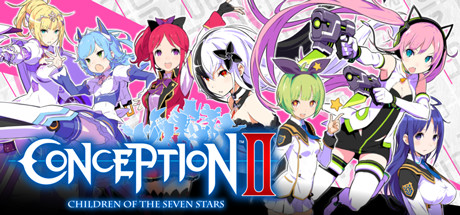
It's time for classmating! Monsters have invaded the world of Aterra, and only a few special individuals, imbued with the power of the Star God, are equipped to fight it. Combine your Star power to make magical Star Children to boost up your forces in battle!
Modeled estimate, not a reported figure. How we estimate →
Media
About
Genres
Stats
All-time low is the lowest price we've recorded for this game since we started tracking it.
Languages: English*, Japanese**languages with full audio support
Engagement
Hours played at review time, across 41 reviews with recorded playtime.
Reviews
Themes across 41 recent reviews and how positive each mention is. A keyword signal, not full sentiment analysis.
positive critical· bar length = how often the theme comes up
Reviews
ゲーム以下の存在 コントローラーが効かない steam入力をオンにするとメーカーロゴで固まる よってプレイ不可能。ライブラリのこやし なぜ普通に販売されているのだろう
This is, off the top of my head, possibly the worst RPG I have ever played next to the first Final Fantasy. Never have I seen a game where everything it is trying to do, from the mechanics to simply getting experience and even the turn order is so unbelievably flawed that it tends to all work against itself. If I went into detail, I would be writing far more than you would ever read, so trust me when I say it's bad. On top of that, it's miserably boring and the definition of tedious. The difficulty starts very easy, but gets pretty tough. I got stuck on a boss who, along with his constant respawning adds, just spams hurtful attacks and wipes me out in seconds. I don't even care to try to find a way to beat him, cuz that would mean having to go through at least 2 more insanely long labyrinths after that, and I can't find a reason why I would want to wade through like 20 more hours of garbage. I could try grinding levels, but that is folly. Once you hit level 30, it takes literal hours to level up, because despite fighting dozens of monsters, you get hardly any experience. Where I was at, you'd get about 150-350 experience per battle. And it takes, though I have never looked, probably 30,000, to 60,000 xp to level by my best guess. Do the math, that's like over 100 battles. Battles where I quit took 1-3 minutes. More math= hours. I could try making a powerful team or whatever, but that requires grinding and more annoying mechanics that don't work or I don't understand because the first hour or 2 of the game is them just throwing tutorials at you completely out of context. A good game would give you a tutorial when doing a specific thing and walk you through it. This just basically gives you the whole instruction booklet up front, then you gotta hope you remember things when you need to. Or look it up, because why not make it more tedious. I couldn't find some things in the tutorials themselves when looking back, so I had to use the internet, which was far more helpful. The dating sim is okay, but gets...get this...tedious as well. And the story's for each girl are pretty dumb. They build up a lot as you go along, and the resolve is so anticlimactic, it's sickening. See? I'm already writing too much, and this was being vague. I could go on for a lot longer, but I must stop myself. Good day, and may you never play this.
Well, after playing the remaster of the first game, this one does feel clunky, cluttered and unpolished, but once you get into it, the small setbacks kinda fade into the background, but it definitelly missing the QoL stuff to make it smooth. Gameplay wise, it's pretty much the same as the first game, it does mix some stuff up and is a bit more challenging but is a standard dungeon crawler. The item rewards and skills don't really feel as impactful as in the first game however. Story is a bit deeper then first game, but it's still pretty basic as you'd expect from the series, I'd argue it's a saving grace that it focuses more on combat then on the story as there are less characters then in the first game, so it doesn't feel as overwhelming, and those fewer stories there are do feel more interesting. Overall, I'd say it's a weaker entry then the remaster of the first game, but if you liked that one, this one isn't far off, it just takes a bit to get used to it, especially if you played it back to back with the first game. If I were to rate the first game as a 7, this one would be a 6.5
Conception II: Children of the Seven Stars is a distinctly unconventional Japanese role-playing game that blends traditional dungeon crawling, turn-based combat, and social simulation into a single, unabashedly anime-styled experience. Developed and published by Spike Chunsoft Co., Ltd., the game leans heavily into eccentric design choices and thematic boldness, positioning itself as a title that prioritizes character bonds and experimental mechanics over strict genre orthodoxy. Its identity is immediately apparent: this is a JRPG that is fully aware of its odd premise and commits to it with confidence, for better or worse. The story unfolds in the world of Aterra, where monstrous entities known as Dusk Circles threaten humanity’s existence. The player takes on the role of a male protagonist marked by the Star God, granting him the unique ability to combat these anomalies. Rather than fighting alone, he enrolls in a specialized academy alongside seven female disciples, each representing a different Star God and embodying familiar anime archetypes. While the overarching plot follows familiar “save the world” beats, the narrative focus is squarely placed on interpersonal relationships, character interactions, and the gradual deepening of bonds rather than on grand political intrigue or philosophical themes. At the heart of Conception II lies its most infamous and defining mechanic: classmating. Through strengthening relationships with the heroines, players can perform ritualized unions that result in the creation of Star Children, magical offspring who function as the game’s primary combat units. These children inherit traits based on both parents, allowing for a surprisingly flexible class and stat system beneath the surface-level absurdity. Mechanically, this system replaces traditional party recruitment and character growth, encouraging experimentation with different combinations to optimize combat effectiveness. While the concept may initially feel jarring or off-putting to some players, it becomes a surprisingly coherent progression system once its rules are understood. Gameplay alternates between academy life and dungeon exploration. Within the academy, players engage in dialogue, gift-giving, and bonding events that increase relationship levels and unlock new abilities. These segments serve as a lighter, more relaxed counterbalance to dungeon crawling, though they lack the depth and complexity found in more refined social-sim hybrids. Interactions are largely menu-driven and repetitive over time, but the charm of the character writing and voice performances often helps sustain interest, especially for players who enjoy character-centric narratives. Dungeon exploration adheres to classic JRPG conventions, featuring grid-based labyrinths filled with enemies, treasure, and environmental hazards. Combat is turn-based but incorporates positional elements, as players can gain advantages by initiating battles from specific angles. Star Children act as the backbone of combat, with diverse classes such as fighters, mages, and support units offering tactical variety. While the combat system is functional and occasionally engaging, it can become grind-heavy, particularly in later sections where dungeon layouts and enemy types begin to repeat with limited variation. Visually, Conception II presents a split personality. Character portraits, cutscenes, and event illustrations are vibrant, expressive, and distinctly anime in style, giving each heroine a strong visual identity. In contrast, dungeon environments and in-engine models are comparatively plain, emphasizing functionality over spectacle. This disparity can make exploration feel visually monotonous, even as character-driven scenes remain visually appealing. The soundtrack complements the experience well enough, delivering energetic battle themes and softer academy tracks, though it rarely rises to the level of memorability. The game’s tone oscillates between lighthearted fan service, earnest emotional beats, and occasional awkwardness. Humor is often derived from exaggerated character personalities and the sheer absurdity of the central premise, which will resonate strongly with some players while alienating others. Narrative pacing can feel uneven, as character events sometimes interrupt the momentum of the main plot, yet these same moments are often what give the game its most memorable emotional texture. Conception II is not without its shortcomings. Repetition in dungeon design, reliance on grinding, and occasionally shallow social mechanics prevent it from achieving the polish of top-tier JRPGs. Its themes and presentation also firmly position it as a niche title, unlikely to appeal to players uncomfortable with its core concept or anime tropes. However, these flaws coexist with genuinely creative systems and a clear sense of identity that many genre entries lack. Ultimately, Conception II: Children of the Seven Stars is a game that thrives on commitment to its ideas. It may not be elegant or subtle, but it is imaginative, mechanically curious, and unafraid to be strange. For players who enjoy anime-styled RPGs, relationship-driven progression, and offbeat mechanics, it offers a distinctive and memorable experience. Those willing to embrace its eccentricities will find a JRPG that stands apart from its peers, delivering a blend of dungeon crawling and character bonding that is as unconventional as it is earnest. Rating: 7/10
7/10
For a game originally released in 2013 it’s still a decent experience. You can feel the PSVita’s limitations, but if you enjoy anime-style dungeon crawlers and have already played more recently released titles like etrian odyssey this could still be worth trying, even if I wouldn’t consider it one of the best titles available on steam in 2025. For starters, I want to praise the gorgeous character designs and illustrations by Shinichirou Otsuka, they really enhance the visual novel sections of the game and make them more engaging. The game’s best feature is the child creation system, which lets you build a party of 9 characters chosen from 30 different classes. You will start with children who have low level caps and limited class options but, as the heroines level up, the cap gradually increases and more options become avaiable, this forces you to keep creating stronger children in order to tackle the harder dungeons. Another nice feature is that certain class combinations unlock special combo skills. Combat features an interesting positioning mechanic: you can place your party at the front, back, or sides of an enemy to gain advantageous attack angles, dodge special moves, or keep enemies separated to avoid stacking AoE attacks against your whole team. As a negative point I would say that the story is the usual saving the world full of overused trophies, the characters are a bit stereotypical but overall a fun bunch. The dungeons are randomly generated but pretty lazy: the only things changing are the enemies and the backgrounds, but it tends to get very repetitive very fast. The side quests are the typical “kill X enemies” or “find X items”, so they are pretty boring too. Another downside is that every time you create new children, they start again at level 1, so a bit of grinding is always necessary (though as the game progresses you will be able to gain exp quickly). In conclusion, this isn’t the best game in its genre, but it does have some interesting ideas, and it could be worth a try if you enjoy this kind of dungeon crawler.
I don't like it. It took me too long to finish.
very good game
great game
simplesmente um simulador de Mister Catra
Related
Related
Trends
Concurrent players on Steam, sampled daily since tracking started.
Audience
Estimated from the language of this game's reviews — a proxy for where players are, not official Steam demographics.
Related
| Dice Legacy | $324.4K | 1.1K | 68% | $14.99 |
| DuneCrawl | $324.4K | 631 | 75% | $19.99 |
| Glimmer in Mirror | $324.5K | 921 | 75% | $16.99 |
| Everafter Falls | $324.5K | 714 | 84% | $13.99 |
| Witch's Apocalyptic Journey | $324.5K | 1.2K | 85% | $8.99 |
| The Monster Breeder | $324.1K | 272 | 92% | $29.99 |