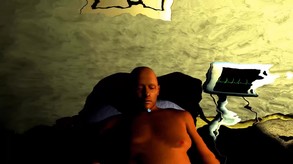
FPP puzzle game where the TIME is the COLOR. The colors you see are not just the art style, they represent the time in specific point on the level. Time and space are connected and moving through a level changes the time. Learn more about the unique mechanics from the second video.
Modeled estimate, not a reported figure. How we estimate →
Media
About

Stats
All-time low is the lowest price we've recorded for this game since we started tracking it.
Languages: English*, Polish, Hungarian*languages with full audio support
Engagement
Hours played at review time, across 40 reviews with recorded playtime.
Reviews
Themes across 40 recent reviews and how positive each mention is. A keyword signal, not full sentiment analysis.
positive critical· bar length = how often the theme comes up
Reviews
Clinically Dead is a great way to describe the popularity rating of this game. Jokes aside, this is a low quality amateur made experimental "art" puzzle game with a convoluted puzzle gimmick. The idea is that you're suffering a near death experience, something that seeing the price tag on this low quality game could cause, and during your near death experience your brain works at different speeds and thus you experience time differently. This isn't easy to express in a video game as perception of time is something outside of your normal 5 senses, so the developer rather cleverly used colour filters... one colour represents slow moving time areas, other colours represent areas where time moves faster. Solving the puzzles in the game requires understanding and using this mechanism. Now, I've said it before and I'll say it again, just because an idea is novel doesn't mean it's great... and the incredibly weak technical delivery of this game robs that gimmick of any potential it may have had. On the upside, the game does feature customisable controls and resolution, so at least some of the basic, minimum requirements have been met. Unfortunately there's a number of other technical defects and shortcomings which contribute to the game being difficult to recommend to gamers. The game assets are fairly mediocre/low quality which fits with the idea they weren't developed by the game creator... they look like they're "just reasonable enough" to go on sale as part of an asset pack. The issue of asset flipping aside, ultimately the quality of these assets is low and low quality always makes for a less than optimal gaming experience. They decided to use a bizarre, robotic and unnatural text-to-speech system for dialogue in the game. I'm sure the developer thought they were very clever to find a way around having to pay for a talented voice actor, but the awful robotic voices are [i]worse[/i] than no voices at all. The game itself is overall just a clunky, unpolished and amateur experience that doesn't play well or feel enjoyable to play. These technical defects push this game below acceptable standards for any modern PC game. The poor quality of this game is reflected by how many people spent time with it. At the time of this review, SteamDB shows the all-time peak player number was only 4 players. This is a remarkably low number, and now, the only player activity occurs once or twice a month, presumably someone loading it up to see what it is then quickly uninstalling it. Considering there's over 120 million gamers on Steam and well over 110,000 games for gamers to choose from, the overwhelming lack of interest in this low quality game is to be expected. So, should you buy this game? Is this one of the best of the 110,000+ games on Steam? Clinically Dead has the ridiculous, laughable price of $15 USD, for which you could easily get any number of older AAA games. Given the defects and quality issues with the game, coupled with the unrealistic price, this is impossible to recommend. For comparison, the $15 asking price for this game could get you games like "Divinity: Original Sin 2", "Remnant: From The Ashes" or "SCUM". Quality, professionally made games like those are frequently on sale cheaper than this.
анек вспомнился Сидят сумасшедшие во дворе клиники, на лавочке. Лето, жарко. Один из них говорит: — Парни, давайте я перелезу через забор и куплю пивка нам. — Круто, ждем, — отвечают ему парни. Он перелезает, идет к ларьку с пивом и говорит: — Мне 5 кружек пива. — А вам куда наливать то? — А давайте сюда, — снимая шляпу и подставляя её, говорит псих. Ну ему девушка наливает, уже полную налила, но место для пятой кружки не хватает. — Куда дальше то наливать? — спрашивает девушка. — А вот сюда давай, — переворачивая шляпу отвечает псих. Ну все, налила она ему пиво, он идёт обратно, перелезает через забор. Подходит к друзьям и показывает перевёрнутую шляпу с пивом в ложбинке. — А чего так мало? — Как мало, а во? — переворачивая шляпу, отвечает псих
Compelling concept with so-so execution. Although the time-changing mechanics are great and the puzzles (sometimes) challenging, the low quality assets and awful narration make it difficult to see the diamond hidden in the coal here. There were also a few spots I got stuck causing the need to reload from a checkpoint, and most of the maps feel pretty empty despite the unique lighting. Additionally, the colors and lighting of the game are giving me eyestrain. This isn't something you can play in a poorly lit room unless you're challenging yourself to a speedrun of losing your vision. Not a bad game, but not something I'd casually recommend.
Clinically Dead, developed by Mogila Games and published by Ultimate Games S.A., is a first-person puzzle adventure that builds its entire identity around a single, striking concept: the final seconds of a man’s life stretched into a surreal eternity. Rather than presenting a conventional narrative or action-driven structure, the game immerses players in a metaphysical exploration of consciousness, memory, and time as experienced by its protagonist, Mr. Samson, in the moments between life and death. The premise unfolds immediately after Mr. Samson suffers a fatal incident. While only seconds pass in reality, his perception distorts those fleeting moments into a prolonged psychological journey. The game visualizes this internal limbo through abstract environments where color itself dictates the flow of time. Different hues represent varying temporal intensities, transforming the act of movement into an interaction with time. Blue zones correspond to shorter temporal spans, while red areas indicate extended moments, effectively turning the environment into a shifting temporal landscape that players must learn to interpret. Gameplay revolves around manipulating this time-space mechanic. Movement through colored zones alters the protagonist’s temporal state, influencing access to pathways and objects. Puzzles are constructed around aligning oneself within the correct temporal context to trigger events, open doors, or progress through shifting spaces. Rather than relying on traditional inventory systems or complex physics objects, the core challenge lies in understanding how space and time interconnect. This system requires careful observation and experimentation, rewarding players who can think abstractly about cause and effect across different time states. The environments themselves reinforce the game’s introspective tone. Levels are surreal and symbolic, resembling fragmented dreamscapes rather than realistic locations. Floating structures, distorted geometry, and stark color contrasts create a sense of instability, mirroring the mental state of a consciousness grappling with mortality. The visual design does not strive for realism but instead embraces stylized abstraction to emphasize mood over clarity. This approach can be disorienting at first, but it strengthens the thematic cohesion of the experience. Sound design plays a subtle but important role in shaping the atmosphere. Ambient tones and minimalistic music underscore the solitude of the journey. Audio cues often signal changes in temporal states, reinforcing the connection between color, time, and movement. The overall presentation creates a contemplative ambiance that aligns with the game’s philosophical undertones. Narratively, Clinically Dead remains deliberately understated. Rather than delivering a linear story with explicit exposition, it conveys its themes through environmental symbolism and the gradual realization of Mr. Samson’s situation. The focus is less on character development and more on existential reflection. Players piece together the emotional weight of the experience through context rather than dialogue-heavy storytelling. This design choice enhances immersion for those receptive to interpretive narratives, though it may leave others seeking more concrete plot progression. The game’s duration is relatively concise, typically spanning several hours depending on puzzle-solving pace. Its brevity contributes to a focused experience but also limits long-term replay value. Once the mechanics are understood and puzzles completed, there is little variation to revisit. However, the conceptual novelty of the time-as-color system leaves a lasting impression that distinguishes it from more conventional puzzle adventures. Ultimately, Clinically Dead stands as a concept-driven indie project that prioritizes atmosphere and thematic ambition over mechanical complexity. Its innovative approach to visualizing time through color-coded space gives it a distinctive identity within the puzzle genre. While its abstract presentation and modest scope may not appeal to all players, those drawn to experimental design and introspective storytelling may find it a thought-provoking exploration of mortality and perception. Rating: 6/10
игра для умных с распрыжкой и физикой
Gameplay : ☑ Very good ☐ Good ☐ Okay ☐ Bad ☐ Terrible Graphics: ☐ Has It's own style ☑ Masterpiece ☐ Beautiful ☐ Good ☐ Will do ☐ Bad ☐ Awful Story : ☐ Lovely ☐ Good ☐ Average ☑ Lore ☐ Not great ☐ None Difficulty : ☐ Just press a bunch of buttons ☐ Significant brain usage ☐ Easy to learn / Hard to master ☑ Difficult ☐ Dark Souls Soundtrack : ☐ Masterpiece ☐ Great ☑ Good ☐ Average ☐ Bad ☐ Terrible ☐ None Game Time : ☐ Short ☑ Average ☐ Long ☐ Depends on you ☐ Endless Trade Card : No Average Score : ☑ 10 ☐ 9 ☐ 8 ☐ 7 ☐ 6 ☐ 5 ☐ 4 ☐ 3 ☐ 2 ☐ 1 Additional note : I played baba is you , the witness and a lot more puzzle games that some of them haven't been discovered by others even but this is the BEST PUZZLE GAME I'VE EVER PLAYED. First 10 minutes of this game really sucks but then it's going to be great, also the game has 2 endings.
Empfehlenswert: Ja (persönliche Wertung: 6/10) Errungenschaften: Ja (In einem Durchlauf leicht zu bekommen) Positiv: - Spielprinzip gut - Umgebungsveränderungen mit Zeitmanipulation gut gelungen - Sound in Ordnung - Story Okay - Schön bunt... Negativ: - ... manchmal zu bunt - Steuerung an einigen Stellen zu empfindlich - Grafik ist schlecht Fazit: Womit ich aufhören sollte, ist mir irgendwelche Spiele im Bundle zu holen und diese dann zu vergessen. Zumindest geschah das mit Clinically Dead bei mir. Zur Story: Zu beginn befinden wir uns in einem schäbigen Krankenhaus und erwachen dort nach einem schweren Unfall aus der Bewusstlosigkeit. Die Wachphase dauert jedoch nicht lange an und wir erleiden einen Anfall, wodurch wir schließlich Klinisch Tod sind (daher auch der Titel). Von nun an befinden wir uns in unserem Bewusstsein und werden von einem mysteriösen Kopf an der Wand, welcher sowas wie unser Sterbebegleiter ist, beraten... Das Spielprinzip ist gut aufgebaut. Mittels Zeitmanipulation können wir unsere Umgebung verändern und müssen dadurch Rätsel lösen. Diese Zeitmanipulation kann man nicht immer direkt steuern. Manchmal geht das nur wenn man auf der richtigen Farbe steht und dann die Zeit anhält. Die Rätsel sind kackig gestaltet und auch die grafische Farbenpracht kommt hier voll zur Geltung. Jedoch ist es an manchen Stellen auch zu bunt und damit unübersichtlich. Durch die empfindliche Steuerung kann es dadurch auch manchmal an einigen Stellen zu Frust kommen. Die Errungenschaften sind leicht während eines Durchganges zu erhalten. Clinically Dead ist es ein vernünftiges Spiel, welches man sich gerne im Bundle oder im Sale holen kann. Empfehlenswert!!!!
I'm halfway through a first playthrough. This game is bad, but its concepts and puzzles are good. It is unrefined, unpolished, and deserved more development time to iron out a lot of rough edges. The story is completely unnecessary and takes up far too much time to play out, the gameplay itself feels cheap, everything about the game screams trash but the gameplay/puzzle ideas presented are very much enjoyable and unique. If it had been given more polish, I would easily recommend this game to anyone who enjoys puzzle games, first person or not, but as it stands you have to have a large amount of patience and interest in time controlling mechanics for this game to be enjoyable.
This game have a very interesting concept and mechanics. Got pretty hard for me with all the weird graphics/psychodelic colors, if you can get over it and you like platformers you could try this game, especially bought on sale.
This game is very neat and I don't think there is anything quite like it, but it is pretty rough around the edges. Don't buy if you aren't willing to be patient when you lose 5 minutes of progress each time you die in the last level (or just remember to save/load because I sure didn't). I probably spent 50 minutes to an hour on that level.
Related
Related
Trends
Modeled estimate over time, reconstructed from Steam's monthly review histogram.
Momentum
Pace estimated from the game's recent review growth (our daily snapshots) at its own sales-per-review ratio — a momentum signal, not booked sales.
Audience
Estimated from the language of this game's reviews — a proxy for where players are, not official Steam demographics.
Related
| A Rogue Escape | $28.6K | 51 | 78% | $19.99 |
| Mosaic | $28.6K | 549 | 74% | $3.99 |
| Dracula 3: The Path of the Dragon | $28.6K | 189 | 32% | $7.99 |
| AI: Rampage | $28.6K | 543 | 40% | $1.99 |
| Lorena and the Land of Ruins | $28.6K | 98 | 73% | $14.99 |
| Ghostwriter Workshop | $28.6K | 138 | 95% | $10.99 |