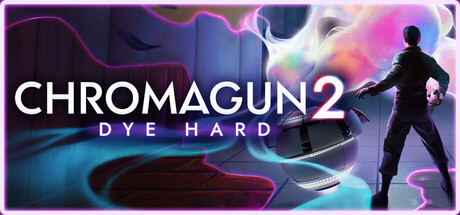
Shoot paint, mix colors, and solve puzzles in this adventure about friendship and redemption. Just don't enter that portal to another universe, and ᴇᴠᴇʀʏTʜɪɴɢ will 𝐛𝐞 ᴘEʀ𝐅𝓔ᴄᴛʟʏ 𝒇 𝔦 𝓃 ҽ . • °
Modeled estimate, not a reported figure. How we estimate →
Media

About
Genres
Stats
All-time low is the lowest price we've recorded for this game since we started tracking it.
Engagement
Hours played at review time, across 40 reviews with recorded playtime.
Reviews
Themes across 40 recent reviews and how positive each mention is. A keyword signal, not full sentiment analysis.
positive critical· bar length = how often the theme comes up
Reviews
ChromaGun 2 is a first person puzzle game where the player must solve test chambers by using a gun which shoots magnetic paint of different colours, to manipulate the position of objects within each room. There are similarities to other first person puzzle games such as Portal and ReThink, so players of those games will feel familiar with the basic gameplay mechanics. I also played the original ChromaGun for the first time just before playing this sequel. [h1]Gameplay (medium quality)[/h1] • The most common way to solve puzzles involves shooting walls, spherical drones, and other objects, to paint them a specific colour. Walls attract objects of the same colour towards them like a magnet. If there are multiple walls of the same colour nearby, the object will be positioned an equal distance between them. • You’ll often need to move drones on top of pressure plates to open doors or activate moving platforms. Sometimes objects blocking your path simply need to be moved out of the way. • After a short tutorial where your gun can only shoot one colour, you’ll eventually acquire an upgraded gun which can shoot red, yellow and blue. You can also mix colours by shooting already painted objects with a different colour, to create green, orange and purple. Hitting an object with all three primary colours creates black which is mostly an error state because black doesn’t magnetise, however this can be used tactically in some puzzles to prevent accidentally moving a drone which you’ve already correctly placed. • As you progress through the game, test chambers will gradually increase in complexity by adding forcefields to walls and drones to prevent colour changes, glass walls which can’t be shot through, bounce pads, electrified floor tiles which have to be disabled by moving a drone over them, and hostile drones which chase the player and hurt if they touch you. These hostile drones have to hit the player multiple times to kill you, and they can often by magnetised to a wall, so they’re usually more annoying than dangerous. • The first game had a significant design flaw because the player had no way to undo mistakes. If you painted something the wrong colour there was no way to change it, and when a drone was destroyed you couldn’t respawn it. This meant that it was very easy to trap yourself in a puzzle that was no longer solvable, at which point you had to reload the last checkpoint and try again from the start of the puzzle. This was especially frustrating on the larger puzzles which had multiple steps to complete. • The sequel has solved this problem, because the player now has the ability to reset any object back to its original colour (which doesn’t necessarily mean you can change it to white), and destroyed drones will either respawn automatically or you can press a button within the test chamber. This allows more of a trial and error approach to puzzle solving. • However, I think the puzzle design in the second half of the game gets overly complicated in an annoying way. Starting from the third chapter (there are five chapters), the test chambers become quite maze like, with multiple rooms connected by twisting corridors, elevators leading to multiple floors, switches in one room connected to an object in another room, objects activated by multiple pressure plates, etc. Often the biggest challenge is figuring out “where do I start?”. • This leads to another problem where the checkpoint saves are not frequent enough. Some of the later test chambers contain multiple smaller puzzles, and if I had to close the game before fully solving a test chamber, sometimes I would have to start it again from the very beginning. [h1]Story (low quality)[/h1] • Its not terrible, just quite basic. There are two test facility administrators who are both doing a poor imitation of Portal’s Glados, evil with dark humour. The player character is completely silent so it feels like you’re not really participating in the story. However, most puzzle games don’t have any story at all, so I suppose its better than nothing. • Doesn’t take full advantage of the multiverse concept. Every chapter could have had a different theme and different mechanics, but instead its only really explored during the final chapter for a series of one off jokes. I suppose I should be glad that we didn’t have an entire chapter where the colours in the room were constantly changing like we’re in a disco, because trying to solve that puzzle nearly gave me a headache. • Voice acting is fine. [h1]Technical (low quality)[/h1] • While it only took me 4 hours to complete the original game, the sequel took me almost 12 hours. • I didn’t have any problems with crashes or framerate, but unfortunately the game is very buggy. • While you won’t get stuck in an unsolvable situation because of the puzzle design, I still suffered from a couple of physics bugs. In one puzzle a swinging platform got stuck on a wall, and in another puzzle a droid got stuck on a door frame. Neither could be freed using the usual colour magnetism, so in both situations I had to reload the last checkpoint and start the puzzle again. • Rebinding movement to arrow keys does nothing. Even though the keys are shown in the menu, when pressing those keys in game I was stuck in place. • An important function relating to a story spoiler, which you have to use very frequently during the last two chapters, is bound to the R key. This cannot be rebound at all, because it doesn’t appear in the menu. Somebody asked the developer about this on the forum in February and its still missing. • At the end of chapter 4 you have to jump on top of a droid to solve a puzzle. This is a common method of solving puzzles throughout the game. However, in this puzzle, I was repeatedly told to hurry up and jump on top, even though I was already standing on top. The problem was that I’d rebound the jump key to my mouse thumb button. After resetting all keybinds to default, the default jump key (E?) appeared on screen like a QTE, and triggered a cutscene. • At the start of chapter 5, the main menu stopped working completely. I just wanted to customise my keybinds again and then close the game, but I couldn’t do either of those things. I had to kill the game through Steam. This was also reported on the forum in February but hasn’t been fixed. [h1]Recommendation[/h1] ChromaGun 2 is a fun puzzle game which fixes some of the major problems from the first game. However, the second half of the game has overly complicated puzzle design, poor checkpoint saves, and is also very buggy. Both games are worth playing, but I’d suggest waiting for a big sale.
This game is really good, but I still prefer the previous entry for its simplicity. There are a few aspects of this sequel that I didn’t particularly like: 1. Some of the levels, especially the later ones, feel too long. Many of the later levels feel like several smaller puzzles glued together; the checkpoint placement is not always ideal. Such levels would have benefited from being split into multiple shorter levels. 2. At times, the puzzle presentation is not clear enough. I often found myself walking back and forth through long hallways or rooms just to FIND an interactable object that happens to be the missing link. Rather than actually thinking through the puzzle and the solution, much time is spent searching. 3. Game makes it clear that puzzles do not require quick reflexes, which is great. However, that does not mean precise control is entirely unnecessary. Some puzzles and quite a few collectibles still require precise timing or positioning, which feels somewhat out of place in a logic puzzle game. Maybe I’m being a bit harsh, because the visuals, variety in puzzles, the story, are all significant improvements over the previous game. Still, the puzzling experience feels more distracting. The core mechanics is very simple, strong and solid, but there is too much going on around, which ends up diluting the flow of solving puzzles.
Гра є гарним продовженням першої частини. Це все той самий "портал на мінімалках", але з кольорами. Тим не менш воно вартує того, щоб в нього пограти, якщо Ви сумуєте за порталом, але грати в те саме не хочеться. Також є часткова підтримка української мови (лише інтерфейс), проте діалоги — англійською. ... ... Що я зараз і виправляю, працюючи над українізатором, який Ви можете знайти у посібнику, КУЛІ та LBK Laucnehr та нарешті повністю пограти в гру українською
[h1] ChromaGun 2: Dye Hard - что вы знаете о цветах? [/h1] [i] Внезапно, еще одни разработчики, которые когда-то выпустили свою первую игру головоломку, решили, что пора бы тоже сделать вторую часть, как однажды сделали разрабы Q.U.B.E. [/i] Первая часть вышла 10 лет назад. Игра представляла из себя типичную подделку на Юнити. Дизайн простой, все стерильно и ..да и что еще сказать? Ну как головоломка в целом не плохая но на любителя. И тут ПУВ и неожиданно анонс второй части...и я такая...чтооооооо? Не ожидала, как это было и с Q.U.B.E. 2 в свое время. Опробовав демку, решила, что стоит глянуть, что в итоге выйдет. [h1] Что в итоге вышло? [/h1] Головоломки. Несмотря на то, что принцип остался тем же а это смешивание цветов...в игру добавили хоть и не много новые элементы, которые помогают или мешают решению. В сравнении стало интереснее и местами бывало сложно. Также иногда приходиться подыматься вверх или вниз для решения, чего не было в первой. Хочется отметить главу 4..так как тут появляется неожиданный (по сюжету) компаньон. Что касается дизайна.. Ну..он все также белый и стерильный, местами это прям большие коробки..но потом по сюжету стилистика будет меняться. То оно будет более округлыми помещениями, но подсобки, то технические и..даже встречаются интересные с отсылками. О сюжете нечего не могу сказать, кроме как то, что мы зачем-то гуляем по другим мультивселенным. К сожалению сабы только на английском..почему не перевели..или это баг я не знаю, но по тону всего происходящего он явно забавный [h1] Какой итог? [/h1] Ну...честно не знаю. В целом игра вышла хорошей но вот дизайн местами... он был уж ну..оно и хоть на глаз приятный, но порой странный. Тут уже вкусовщна. Q.U.B.E. 2 - чек ChromaGun 2 - чек Теперь осталось дождаться второй части Antichamber))
The first half of this game is great, but the last few levels were just so bad. They had so many ways to get stuck and force a restart. In a game where you're supposed to experiment to figure out what to do, that's a pretty annoying thing. If you plan on only playing about half the game, I recommend it.
I was hesitant to try the second as the first was very dry in terms of feel and emotion, however the second really changed that for me. A much more fun and engaging story with good characters and a strong villain. lots of comedy and thankfully one of my main issues with the first game was finally sorted as you aren't soft locked and forced to restart all the time. massive improvement from the first and highly recommend even if you haven't tried the first
Fun game if it works, but the amount of glitches is crazy. Get stuck in a mine to go to the next level and it drops through to the void. Saves are useless. Game runs into a fatal error when turning down the narration volume. Forced to restart entire chapters is getting insane. This isn't ready yet
ChromaGun 2: Dye Hard es un juego de rompecabezas en primera persona en el que cada sala se resuelve manipulando color, atracción, distancia y orden de acciones. La base sigue siendo disparar pintura para teñir paredes y droides, de forma que los elementos del mismo color se atraigan entre sí, pero la secuela trabaja esa idea con mucha más profundidad. Aquí ya no suele bastar con pintar una pared y arrastrar un droide hasta ella. Las cámaras empiezan a pedirte mezcla de colores, borrado de pintura, recolocación de varios droides, uso de cajas, interruptores, superficies electrificadas y lectura del espacio en varios niveles, así que el rompecabezas deja de ser una ocurrencia rápida y pasa a ser una preparación completa del entorno para que una cadena concreta de reacciones ocurra en el orden adecuado. ⭐ CHROMAGUN 2: DYE HARD | ROMPECABEZAS DE COLOR, DROIDES Y DIMENSIONES EN PRIMERA PERSONA DESARROLLADOR / EDITOR – Pixel Maniacs / PM Studios, Inc. LANZAMIENTO – 12 de febrero de 2026 GÉNERO – Rompecabezas en primera persona, Estrategia, Aventura PLATAFORMAS – PC, PlayStation 5, Xbox Series X|S, Nintendo Switch 2 🧠 TRAMA | CHROMATEC SIGUE SIENDO UN DESASTRE, PERO AHORA EL JUEGO LO APROVECHA MUCHO MÁS La campaña retoma el universo de ChromaTec y vuelve a meterte dentro de un entorno de pruebas donde la empresa sigue funcionando con la misma mezcla de soberbia, negligencia y caos corporativo. La diferencia es que esta vez la historia no está solo para enlazar cámaras. Hay más continuidad, más sensación de estar avanzando por una instalación que se descompone y una presencia mucho más visible de los personajes, de los cambios de tono y de la propia lógica del laboratorio. La aparición de nuevas dimensiones es la pieza que más transforma la aventura. No solo amplía el marco visual; también cambia la forma en la que el juego presenta problemas y sostiene la sensación de progreso. Cada vez que la aventura se desplaza a una realidad distinta, la estructura de las salas, el tono del entorno y la manera de encadenar reglas gana aire. Eso ayuda mucho a que la historia acompañe mejor al diseño, porque el cambio de contexto se nota tanto en lo que ves como en lo que tienes que resolver. 🎨 APARTADO VISUAL | CADA SALA ESTÁ HECHA PARA QUE VEAS EL PROBLEMA ANTES DE TOCAR NADA Visualmente, el juego utiliza un 3D limpio y muy funcional. Las salas están montadas para que distingas al instante qué superficie admite pintura, qué droide entra en la solución, qué panel acciona una puerta y qué pieza solo está ocupando espacio. Esa claridad es una de las claves del diseño, porque la mayoría de cámaras no se resuelven por intuición rápida, sino por leer bien todas las relaciones posibles entre sus elementos. La secuela también mejora en variedad. El laboratorio sigue siendo reconocible, pero aparecen bloques con más profundidad, más volumen y más cambios de tono. No todo son cubos blancos con una puerta cerrada al fondo. Hay salas más altas, con cajas, rampas, interruptores en distintos niveles, zonas donde el espacio lateral importa y cámaras en las que la trayectoria de un droide es tan importante como su color. Cuando entran las dimensiones nuevas, esa variedad se nota todavía más porque cambian la composición y el tipo de problema que plantea cada bloque. 🎮 JUGABILIDAD | PINTAR, MEZCLAR, LIMPIAR, RECOLOCAR Y NO ROMPER LA CADENA FINAL La base jugable es muy clara: los elementos del mismo color se atraen. Pintas una pared, tiñes un droide y usas esa relación para moverlo, activar mecanismos o abrir un camino. Sobre esa idea, ChromaGun 2 mete dos cambios muy importantes: mezcla de colores y pintura removible. Eso altera por completo el tipo de rompecabezas. Ahora muchas cámaras no consisten en encontrar el color correcto, sino en fabricar el color correcto, aplicarlo al objeto correcto y eliminar relaciones anteriores que ya no te sirven. Una cámara sencilla puede pedirte teñir un droide, arrastrarlo hasta una pared concreta y abrir la salida. Las mejores cámaras, en cambio, exigen bastante más. Puede que primero tengas que usar un color para sacar un droide de una esquina, luego borrar esa pintura para evitar que vuelva al mismo sitio, después mezclar un segundo color en una pared intermedia, apartar una caja que bloquea la trayectoria y, solo al final, llevar el droide a su posición definitiva. En otras salas, el problema no es mover un droide hasta la salida, sino evitar que otro lo arrastre antes de tiempo, o usar un tercero como tope temporal para mantener una ruta abierta mientras preparas el resto del circuito. También entran en juego más variables físicas y espaciales. Hay interruptores que exigen una posición concreta, cajas que bloquean o redirigen trayectorias, rampas que cambian la forma en la que los droides se desplazan, cambiadores de color, droides de mantenimiento hostiles y baldosas de mantenimiento electrificadas que convierten una solución correcta sobre el papel en una mala solución si no has pensado la ruta completa. Esto hace que muchas cámaras se resuelvan entendiendo el rompecabezas como una estructura de varias piezas y no como una simple relación uno-a-uno entre color y pared. 🔥 CARACTERÍSTICAS PRINCIPALES | QUÉ LO HACE ESPECIAL – Rompecabezas en primera persona basados en color y atracción, con droides y superficies que reaccionan entre sí cuando comparten el mismo tono. – Mezcla de colores como parte real de la resolución de cámaras, no como adorno puntual. – Pintura removible, que convierte muchas salas en problemas de preparación, corrección y reconfiguración. – Droides de mantenimiento, cambiadores de color, cajas, rampas y baldosas electrificadas, que añaden más variables espaciales al sistema cromático. – Dimensiones nuevas, que cambian la presentación de las cámaras y aportan variedad visual y estructural a la campaña. 💥 DESAFÍO | DIFICULTAD, CURVA Y TIPO DE RETO La curva de dificultad está bien construida porque sube por densidad de variables, no por trampas ni por oscuridad. Las primeras cámaras fijan bien el lenguaje del juego. En cuanto entran la mezcla de colores, la pintura removible y varias piezas activas dentro de una misma sala, el reto se vuelve bastante más serio. 🎵 SONIDO | RESPUESTA MUY CLARA PARA SEGUIR LA LÓGICA DEL ROMPECABEZAS El sonido está muy bien usado como apoyo funcional. Pintar, limpiar, mezclar, atraer un droide, abrir una puerta o activar un mecanismo deja una respuesta sonora clara, y eso ayuda mucho a seguir cada paso de la solución cuando la sala ya tiene varias relaciones activas. La música acompaña el tono extraño del laboratorio y de las dimensiones sin comerse la concentración que pide cada cámara. ⏳ DURACIÓN Y REJUGABILIDAD | 10 A 15 HORAS PARA HACERLO ENTERO ChromaGun 2: Dye Hard tiene suficiente contenido como para irse a unas 10 horas en una partida centrada en avanzar y resolver cámaras a buen ritmo. Si decides completar el juego con más calma y apretar el 100%, la duración se mueve bien entre 10 y 15 horas. La rejugabilidad está sobre todo en volver a cámaras concretas ya con el sistema interiorizado. Ahí se aprecia mejor el diseño, porque muchas de las mejores salas ganan bastante cuando entiendes por qué cada pieza está colocada donde está y cómo la solución se apoya en secuencias muy medidas. 🌟 VALORACIÓN FINAL | UN ROMPECABEZAS MUCHO MÁS RICO, MÁS TÉCNICO Y MÁS TRABAJADO DE LO QUE PARECE TRAMA | 8,5 (⭐⭐⭐⭐✩) JUGABILIDAD | 9,5 (⭐⭐⭐⭐⭐) GRÁFICOS | 9,0 (⭐⭐⭐⭐✩) SONIDO | 9,0 (⭐⭐⭐⭐✩) 🎯 NOTA FINAL: 9,5 (⭐⭐⭐⭐⭐) ✅ RECOMENDADO Sí, ChromaGun 2: Dye Hard es un RECOMENDADO claro para quien busque un juego de rompecabezas en primera persona con más estructura, más detalle de sala y más recorrido real, donde el color no es un adorno, sino un sistema entero que el juego exprime muy bien. #ChromaGun2DyeHard #PixelManiacs #PMStudios #JuegoDeRompecabezas #IndieGame
Really nice puzzle game. It is one of the better ones and had some really nice ideas.
[h1]远超预期的类传送门佳作[/h1] 在接连玩了传送门2和1之后,打开色彩枪2的时候其实有些疑虑的。作为一款类传送门的游戏,它的实际水平到底如何。好在,抱着谨慎的心态玩下来,结论是:远超预期。 ChromaGun 2,在整体风格、环境塑造、氛围营造以及那种色彩枪上,都的的确确具足了传送门的风味。但它的三原色解谜机制非常有创意地打出了自己的核心玩法。游戏的引导和难度也是逐层递进的,一些具有挑战性的关卡主要是因为结构上的复杂,而这种复杂也是可以顺藤摸瓜的。最后一章则是更上一层楼的设计,很让人惊喜,也很有趣,一下子就拔高了整体表现。剧情方面虽谈不上多么惊艳,但好在完整而自洽。整体Bug较小,但后期仍然会出现意外的卡脚问题,好在影响不大。 游戏最大的问题在我看来是存档机制的设计,我不是很理解作为一个类传送门的游戏,它为什么没有采用传送门1和2都有的分时自动存档加玩家手动存档的机制,而是仅在检查点存档。这非常非常地——不方便。并且游戏不同于传送门的操作手法,色彩枪2实际上存在许多不可逆操作,因此就不得不返回上一存档点重开,这是最让人不耐的地方。我曾在游玩一个关卡47分钟后因走错路且理查德球颜色已被更改且无法复原时不得不重来。尽管收集品进度不会被重置,尽管知道如何解谜后很快就能解开,但这仍然让人十分恼火,为什么不能手动存档?我只需要返回上一分钟即可。 存档机制的不足让这款游戏的体验出现了噪音,但不失为一款佳作。 [b]我愿意向每一个喜爱传送门的玩家推荐色彩枪2。 [/b] PS:在传送门1和2的开头我都有轻微的晕3D,1比2更严重。但色彩枪2并没有出现同样症状,这点很舒服。 PPS:大概,等待色彩枪3会比传送门3更有盼头😏
Related
Related
Trends
Concurrent players on Steam, sampled daily since tracking started.
Audience
Languages: English*, French, Italian, German, Spanish - Spain, Japanese, Korean, Polish, Portuguese - Brazil, Simplified Chinese, Turkish, Bulgarian +15 more
Estimated from the language of this game's reviews — a proxy for where players are, not official Steam demographics.
Related
| Fling to the Finish | $81.6K | 1.4K | 86% | $2.99 |
| SHUFFLE! Episode 2 ~Kami ni mo Akuma ni mo Nerawareteiru Otoko~ | $81.6K | 186 | 87% | $29.99 |
| Natsuki Chronicles | $81.6K | 232 | 85% | $19.99 |
| Through the Darkest of Times | $81.5K | 1.1K | 84% | $2.99 |
| Frog Detective 3: Corruption at Cowboy County | $81.6K | 2.1K | 99% | $4.99 |
| Wing Breakers | $81.5K | 79 | 72% | $24.99 |