
Play as the mythological Chimera in this action-packed rogue-lite. Make your escape from a deadly tower filled with unrelenting enemies as you uncover its dark secrets. Enter this fantasy world and overcome intense challenges, find hidden lore, and discover the true reason behind your imprisonment.
Revenue comes from in-game items and microtransactions, which our price-based model doesn't estimate. Copies below reflect the player base, not paid sales.
Media
About
Genres
Stats
All-time low is the lowest price we've recorded for this game since we started tracking it.
Languages: English**languages with full audio support
Engagement
Reviews
it was fun and good and i liked the progression loop... i love bones. i love bones so much. i like geckos too.
Very good game, it can be challenging but this is what i have been looking for in a game. Lots of laughs, screams, and rages on my end
Would recommend this game to anyone who likes rogue-likes but also to most people. Fun and affordable. Pros: I playtested this game in development, and the dev team has shown solid commitment in addressing player feedback, prioritizing bug fixes, and making an enjoyable playing experience. Items are more balanced and I feel I can make viable builds with most grafts. The few grafts I avoid are usually due to skill issue or personal preference rather than inherent weakness or a "meta." Spike trap delays work well. Almost all enemy moves are clearly telegraphed, rewarding the player for paying attention and minimizing frustration from unavoidable deaths. Dialogue is now skippable. Statue for stats is a great addition. Consider adding a "favorite graft" and "most killed by" information. Areas for Improvement: Consider allowing the player to purchase the 30 HP boss shop item multiple times. 30 HP is quite minimal and its 15 bone cost is relatively small compared to the 200+ bone cost of boss shop grafts. As a player, I would like to go into a boss fight fully stacked (don't make the bosses easier). One instance of dashing through a closed dungeon door before clearing out enemies. I was able to hit enemies through the wall to clear the room, but this only worked because they were melee enemies (ranged enemies would have killed the run). I was sent to the next room immediately after clearing without picking up loot. Overall, bugs are minor, infrequent, and tied to specific/unencountered circumstances. Consider a rework or buff of the gecko arm. Its high spread is intended for multiple small enemies, but on higher floors where smaller enemies have more health, its damage does not seem to justify its worth compared to high damage, single target grafts. Possible rework is to make every shot fire in the same line instead of its current spread. Possible buff is to increase/add a slowing effect to enemies (utility > damage). Add a rusted and matte texture to the water fountain asset in the dungeon rooms. It is noticeably shinier than its environment. Fix plump mushroom so it consistently heals upon room entry.
Related
Related
Trends
Modeled estimate over time.
Hours played at review time, across 26 reviews with recorded playtime.
Fun and challenging rogue-like. The game-play is creative, making each play through different from the last.
This Game. This Game. Maaaaaaaaaaan I love it. its got spunk. and damn I want more games to understand that evolving and visual changes in the roguelike genre is 100% the best ♥♥♥♥ ever. I love also that it does a concept that I wish more game devs would do! You know, it brings me back to the days of Evolva. and I think constantly of it, literally I want to see someone do an 3d 3rd person Evolva roguelike, this is getting close, but its not 3d or really about mutation and how it gets lesser if you mutate too far for one thing.. Evolva has this thing where the game allows you to collect dna to evolve and change your characters weapons and form, as well as things such as speed and jumping.. HONESTLY... Evolva was 100% a roguelike and i gotta post that now. lol
UPDATE: They fixed the spike traps! They're now much more obvious and have a bit of delay on the trigger so you can react to them! Though honestly it might be a bit too much of a delay now, haha, but I think that's just because I've gotten good at the game by now. They're perfectly fine for a learning player to worry about. Thanks! And the other major concerns I highlight in my review are addressed as well! Much better overall! This game is good! OLD OPINIONS BELOW, ONLY VERY FEW CRITICISMS STILL APPLY AND THEY'RE BARELY AN ISSUE IF AT ALL: This is my review of the first hour of playing Chimera. I really want to put this review on a Thumbs Up, but I can't do that purely because of one thing: the Spike Traps. When I, the player who has not played this game at all and therefore is not good at the game and has not been testing and retesting and thinking about the game for months if not years, enter my very first room and try to get a grip on the controls, I really don't need a shadowy invisible spike trap chunking my vulnerable Core Healthbar every time I miss-judge how far my dash will take me. These spike traps are absolutely a "3rd region" kind of feature, where the player who reaches it has a solid grasp on how dodging and attacking works, they probably have all 4 part slots filled, and it's time to ramp up the difficulty. I will absolutely 100% change my review to Thumbs Up if these spike traps are addressed in some way, but I can't recommend the game to someone else knowing that they are in their current brutal state, completely massacring runs before they get a chance to really begin. The UI needs some work, but it doesn't get in the way of gameplay. It just looks like it was made by an amateur. This is forgivable and barely a problem. I'm sure it will get better with continued practice. Also Bones. Bones need to auto-scoop into your pockets, OR drop immediately on monster-kill instead of room-clear. I can't tell you how many times [i]already[/i] that I have ran to the next door without crawling around for the bone drops, or forgetting where I rhino-stomped that one turtle. Also Doors. Doors shouldn't open until you've processed the loot from the room. I killed a monster near a door, it dropped its stuff, and instead of pressing the "interact", I pressed dash, sending me through the door, making me miss out on the rewards. Annoying. Also since I'm using a ps4 controller, and it only has UI for Xbox, I keep messing up X and Square, which is why I dashed in the first place. That last part I can adjust for, but instead of adding the PS4 symbol option, just put in a check for the door that cares about the loot grab. That's all it needs. Also, second thing about Doors: In the Second Region, after a room clear, the doors do not need to be so far away from each other. In Hades, which this game is clearly inspired by, the pathways for the rooms were next to each other and the camera was much more zoomed out than it is here. It's minor, but important for replayability (which is what roguelikes/lites are all about), that the exits for each room are close to each other so I can decide at a glance where to go instead of having to trek back down the room until I can find the second door before I can make my decision. Overall, I really do like this game, it's definitely a fascinating take on the "Hades-like" genre and I think you've got a really special concept that can go very far with the right polish. Keep making this game, whether through updates to Chimera or through spiritual successors. I'll keep playing and maybe come back with more to add to my review, but I think the Spike Traps and Door-Loot-Checks are really the only glaring concerns, everything else is my own skill issue.
As of writing, haven't quite managed to defeat the second floor boss yet. Gameplay loop is pretty fun and the grafting system is really neat to swap out abilities on the fly. Each Major creature (there is one to defeat per room) requires different tactics to take care of them. Some intriguing lore drops can be found randomly around different rooms which hint towards a deeper story. Clean graphics and art style, and some catchy music. It's a little bit buggy - I once somehow softlocked myself into the menu with none of the buttons working properly, and I got trapped outside the collision boundary of a room once. But overall pretty smooth, and being a roguelike, it's easy to start over and get back into the gameplay loop. Might be annoying for a run to end on higher floors due to bugs though. One more thing - it's too easy to accidentally skip dialogue when fast-forwarding text. Might need some tweaking there. Or possibly add an option to go back a line. For the price, I've every reason to recommend it. It's a fun time!
Braydon Leamer? his real name is Brandon buddy... but i digress, grafting? tell me you wanna be elden ring WITHOUT telling me you wanna be elden ring... but i digress, you start in a dungeon? alright bud, dark souls 1 did it first... now is this game the Hades killer? am i contractually obliged to say yes? now since ive played this game for about 200 hours or so, made 50 builds, killed all 106 bosses and of course slain all 500 mini-bosses.. i think i can say this game is skibidi duke cenat rizz. not like league of legends tho, so is it perfect? is the mona lisa perfect? is elden ring perfect? nothing is
Chimera is an indie action roguelite developed and published by Croc Pot Games that places players in the unusual role of a legendary monster rather than the typical hero. The game revolves around the mythological Chimera, a powerful creature imprisoned inside a mysterious tower filled with hostile enemies and ancient defenses. Instead of following a traditional fantasy narrative where the player ascends as a noble adventurer, Chimera reverses the perspective by casting the player as a creature fighting its way out of captivity. The result is a fast-paced dungeon-crawling experience built around experimentation, procedural combat encounters, and a roguelite structure that encourages repeated attempts to escape. The story itself is deliberately understated but intriguing. Players awaken within a towering prison where the Chimera has been sealed away for reasons that are not immediately clear. As the creature struggles to escape, it encounters strange enemies and remnants of forgotten civilizations that hint at the tower’s long history. The narrative is delivered gradually through environmental details, scattered lore, and occasional discoveries during exploration. Rather than presenting long cutscenes or direct exposition, the game allows players to piece together fragments of the world’s history over time. This approach works well with the roguelite structure, as players may uncover different elements of the story across multiple runs while climbing higher through the tower. Gameplay focuses on fast and reactive combat within a series of dungeon floors populated by enemies, traps, and valuable upgrades. Each attempt to escape the tower begins with the Chimera facing off against waves of creatures while navigating narrow corridors and dangerous environments. The combat system emphasizes mobility and positioning, requiring players to dodge attacks while delivering their own strikes. Enemies become progressively more dangerous as the player advances, forcing players to refine their tactics and learn the behavior patterns of different opponents. Death is expected and even necessary as part of the learning process, since each failed attempt provides valuable knowledge about enemy mechanics and dungeon layouts. One of the most distinctive elements of Chimera is its unique ability system. Instead of equipping traditional weapons or unlocking fixed character skills, the Chimera acquires new powers by grafting body parts from defeated enemies. This mechanic allows players to transform the creature during each run, effectively creating a new combat style every time they play. For example, defeating certain enemies may allow players to attach limbs that grant powerful melee attacks, ranged abilities, or mobility skills that alter how the Chimera moves through combat. Because these abilities are acquired dynamically during each run, players must adapt to whatever powers they obtain, leading to a constantly changing gameplay experience. The grafting system also introduces a high level of experimentation. Each enemy type offers different abilities that can be combined in creative ways, and some combinations create powerful synergies that dramatically change how the Chimera fights. A player might build a creature that focuses on heavy area damage and aggressive attacks in one run, while in another attempt they might prioritize mobility and ranged abilities to avoid direct confrontation. This system ensures that the character build is never fixed, encouraging players to experiment with different approaches as they progress. In addition to grafted abilities, players can discover various relics and trinkets scattered throughout the tower. These items further enhance the Chimera’s capabilities by modifying attacks, improving survivability, or providing passive bonuses. Some relics increase damage output or attack speed, while others introduce entirely new effects that influence how battles unfold. When combined with the grafting mechanic, these items create a layered progression system where players continuously adjust their strategy depending on the powers and upgrades they encounter. The tower itself serves as the main environment for exploration and combat. Each level contains enemies, environmental hazards, and hidden areas that reward players who explore carefully. Traps such as spikes, narrow pathways, and environmental obstacles add an additional layer of challenge, forcing players to remain aware of their surroundings during combat. As players advance higher into the tower, enemy encounters become more complex and the difficulty steadily increases. These escalating challenges maintain a sense of tension and encourage players to refine their skills with every run. Visually, Chimera adopts a dark fantasy aesthetic that reinforces the eerie and mysterious atmosphere of the tower prison. The environments are filled with shadowy corridors, ancient architecture, and unsettling creatures that create a sense of danger throughout the dungeon. The Chimera itself evolves visually as new abilities are grafted onto its body, reflecting the creature’s changing form over the course of each run. While the graphical fidelity is modest compared to larger roguelike titles, the visual design effectively communicates the oppressive and mysterious nature of the world. The sound design complements the atmosphere with subtle ambient effects and combat sounds that emphasize the intensity of battles. Enemy attacks, ability activations, and environmental interactions provide clear audio feedback that helps players react quickly during combat. The music tends to remain atmospheric rather than dramatic, maintaining a constant sense of tension that reflects the dangerous environment of the tower. Replayability is one of the game’s strongest aspects. Because abilities, relics, and enemy encounters vary between runs, no two attempts to escape the tower feel exactly the same. Players are encouraged to experiment with new combinations of powers while gradually mastering the mechanics of combat. This unpredictability helps keep the gameplay engaging, as each run presents new opportunities to discover powerful builds or explore different strategies. However, Chimera’s relatively small scope can sometimes limit the experience. The tower environment, while atmospheric, does not feature a large variety of distinct biomes or drastically different visual themes. Enemy diversity is somewhat limited as well, which can make repeated runs feel slightly repetitive over time. Players accustomed to larger roguelike games with expansive worlds and extensive enemy rosters may find the scale of Chimera comparatively modest. The game’s difficulty curve may also present a challenge for newcomers. Because the roguelite structure relies on repeated failure as a learning tool, players who prefer steady progression or narrative-driven gameplay may find the experience demanding. Success often requires careful observation of enemy patterns and thoughtful use of abilities, which may take several attempts to fully master. Despite these limitations, Chimera stands out for its creative premise and innovative ability system. The concept of playing as a mythological creature that evolves by grafting abilities from defeated enemies gives the game a unique identity among action roguelites. The combination of fast combat, experimental builds, and a mysterious dungeon setting creates a compelling gameplay loop that rewards both skill and curiosity. Overall, Chimera is a focused and inventive roguelite that delivers an engaging dungeon-crawling experience built around transformation and experimentation. While it may not offer the vast scope of larger roguelike titles, its distinctive mechanics and challenging combat provide plenty of replay value for players who enjoy mastering new builds and adapting to unpredictable encounters. Rating: 7/10
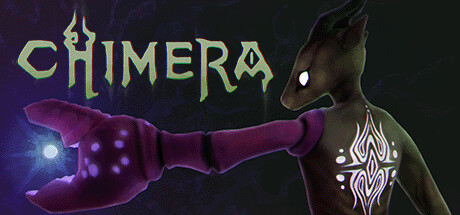
Bu aksiyon dolu roguelite oyununda mitolojik Chimera olarak oynayın. Acımasız düşmanlarla dolu ölümcül bir kuleden kaçın ve karanlık sırlarını ortaya çıkarın. Bu fantastik dünyaya girin, yoğun zorlukların üstesinden gelin, gizli bilgileri keşfedin ve hapsedilmenizin gerçek nedenini bulun.
Momentum
Pace estimated from the game's recent review growth (our daily snapshots) at its own sales-per-review ratio — a momentum signal, not booked sales.
Audience
Estimated from the language of this game's reviews — a proxy for where players are, not official Steam demographics.
Related
| House Flipper | $65.8M | 110.8K | 94% | $24.99 |
| Rhythm Doctor | $13.9M | 26.7K | 98% | $19.99 |
| Awesomenauts | $8.3M | 26.9K | 85% | $19.99 |
| Brotato | $7.4M | 116.7K | 96% | $4.99 |
| Shatterline | $6.9M | 29.1K | 73% | $9.99 |
| The Spell Brigade | $4.7M | 16.2K | 81% | $12.99 |