![[Chilla's Art] Night Security | 夜間警備](https://shared.akamai.steamstatic.com/store_item_assets/steam/apps/2367230/header.jpg?t=1687580673)
Night Security | 夜間警備 is a Japanese psychological horror game about night security.
Modeled estimate, not a reported figure. How we estimate →
Media

About
Genres
Stats
All-time low is the lowest price we've recorded for this game since we started tracking it.
Languages: Japanese*, English, German, Hungarian, Korean, Portuguese - Brazil, Russian, Simplified Chinese, Spanish - Latin America, Traditional Chinese, Vietnamese, Lithuanian +1 more
Engagement
Hours played at review time, across 44 reviews with recorded playtime.
Reviews
Themes across 44 recent reviews and how positive each mention is. A keyword signal, not full sentiment analysis.
positive critical· bar length = how often the theme comes up
Reviews
The way you only stay because someone said they'd dislike you if you would've quit 😭 I'd be out of there so fast.
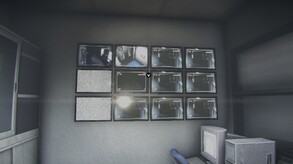
Night Security is another atmospheric horror release from Chilla’s Art, the Japanese independent studio responsible for numerous psychological horror experiences built around realism, tension, and environmental storytelling. Serving as both developer and publisher, Chilla’s Art continues refining its recognizable formula by transforming an everyday profession into an unsettling nightmare. Instead of depending entirely on aggressive jump scares or survival-heavy mechanics, Night Security builds fear gradually through silence, isolation, and a growing sense that something is dangerously out of place. The game casts players as a night security guard working inside a commercial building after hours. The responsibilities initially appear simple enough. Patrol hallways, inspect rooms, secure areas, and ensure everything remains in order during the overnight shift. The ordinary nature of the work becomes central to the horror experience. Chilla’s Art understands that believable situations often create stronger fear than exaggerated horror concepts, and Night Security uses that understanding effectively. The routine slowly unravels as strange events begin emerging around the building, replacing familiarity with uncertainty. The office environment becomes one of the game’s greatest strengths. Rather than placing players inside elaborate haunted mansions or supernatural ruins, Night Security relies on a realistic location many people can imagine themselves working in. Empty workstations, quiet corridors, fluorescent lighting, and lifeless office spaces create an atmosphere that feels uncomfortably authentic. The building feels normal enough to lower players’ defenses before slowly becoming increasingly hostile. Small environmental changes carry enormous impact because the world initially feels grounded in reality. Chilla’s Art has consistently demonstrated an ability to create atmosphere through restraint rather than spectacle, and Night Security follows that philosophy closely. Much of the horror comes from anticipation. Walking through silent hallways becomes stressful. Entering rooms alone creates hesitation. Players begin questioning harmless sounds and ordinary details because the game carefully conditions them to expect danger at any moment. This slow escalation creates a persistent tension that remains effective throughout much of the experience. The visual presentation contributes significantly to immersion. Like several previous Chilla’s Art titles, Night Security embraces a VHS-inspired visual style designed to resemble older recordings. Grainy textures, analog distortion, and subtle visual imperfections create an unsettling aesthetic that strengthens the psychological horror elements. The presentation gives the experience an almost documentary-like quality while adding uncertainty to what players think they see. The visual filter does not simply exist for style; it actively contributes to discomfort. Japanese horror influences remain deeply embedded throughout the experience. Rather than constantly forcing players into direct danger, Night Security embraces quieter horror principles built around discomfort and suspense. Fear grows naturally through atmosphere rather than nonstop confrontation. The game demonstrates confidence in allowing players’ imaginations to become part of the horror itself. Moments where nothing immediately happens often become some of the most stressful sections because tension constantly lingers beneath the surface. Audio design deserves particular recognition because sound carries enormous responsibility in creating Night Security’s oppressive atmosphere. Empty spaces rarely feel truly silent. Small noises become increasingly unsettling over time. Footsteps echo through hallways with uncomfortable weight. Background sounds quietly reinforce the feeling that players are not completely alone. The game frequently uses silence itself as a weapon, allowing anticipation to generate fear more effectively than sudden noise alone could accomplish. Gameplay focuses heavily on exploration and routine security responsibilities rather than complex mechanics. Players patrol different floors, investigate abnormalities, observe environmental details, and slowly uncover disturbing events tied to the building. The straightforward structure works in the game’s favor because it allows players to remain immersed without distractions. Horror remains the central focus rather than becoming secondary to gameplay systems. Narrative progression unfolds naturally through environmental storytelling and player observation. Chilla’s Art avoids overwhelming players with excessive explanations or lengthy exposition. Instead, information emerges gradually through exploration and subtle details scattered throughout the environment. Strange discoveries slowly reveal darker truths hidden beneath the building’s seemingly ordinary exterior. The storytelling approach rewards attention and encourages players to actively engage with the mystery rather than simply receiving answers directly. One of Night Security’s strongest qualities lies in how effectively it manipulates familiarity. Office buildings represent ordinary environments associated with routine work rather than fear. Chilla’s Art skillfully twists that expectation, turning ordinary spaces into sources of anxiety. Elevators become uncomfortable. Empty work areas feel threatening. Hallways players previously walked without concern slowly become intimidating. The horror succeeds because it changes how players perceive spaces that initially felt harmless. The pacing may not appeal equally to every audience. Players looking for nonstop action or frequent jump scares may occasionally find the progression methodical. Night Security prioritizes atmosphere and psychological tension over speed. However, players who appreciate slower horror experiences focused on immersion and emotional discomfort will likely find the pacing highly effective. The deliberate structure allows tension to develop naturally rather than exhausting players through constant intensity. Replay value receives support through multiple possible endings, encouraging additional playthroughs and rewarding players willing to explore further. While not an especially lengthy game, Night Security uses its runtime efficiently and avoids unnecessary filler content. The shorter format ultimately benefits the experience by preserving momentum and maintaining tension. Night Security further reinforces why Chilla’s Art has become one of independent horror gaming’s most recognizable names. The studio continues proving that effective horror does not require enormous budgets or complicated systems. Through atmosphere, environmental realism, strong audio design, and psychological discomfort, Night Security delivers an unsettling experience capable of lingering long after completion. Players who appreciate atmospheric horror, Japanese psychological influences, slow-building suspense, and immersive environmental storytelling will likely find Night Security highly rewarding. It may not reinvent horror design, but it executes its ideas with confidence and precision. The result is another memorable entry in Chilla’s Art’s growing collection of horror experiences and a reminder that some of the most effective nightmares emerge from places that initially seem completely ordinary. Rating: 8/10
SCHLIMM
"where did that come from?!" and "ok that wasn't there before dammet!" was said during this. Chilla's Art did it again with the jump scares. Recommended!
I love chillas art games! this game was storywise on the lower end as i've been speculating a little about it but it's still a solid indie-horror-game with a scary atmosphere!
its a nice game to play
Ich fand Night Security extrem gut. Die Stimmung ist durchgehend düster und es ist eines der wenigen Spiele, die ich wirklich richtig gruselig fand.
Все хорошо Ток слишком коротко... Слишком( Растаривает тенденция к хоррорам на 5 минут.
Night Security ist mein absolutes lieblings Chillas Art Game und eines der gruseligsten Spiele aller Zeiten. Eine mega simple Form von Horror, welche einen dennoch richtig in den Bann ziehen kann,
SCARY
Related
Related
Trends
Modeled estimate over time, reconstructed from Steam's monthly review histogram.
Audience
Estimated from the language of this game's reviews — a proxy for where players are, not official Steam demographics.
Related
| HER TREES : PUZZLE DREAM | $114.7K | 1.8K | 98% | $3.99 |
| DOG WITCH | $114.7K | 413 | 91% | $9.99 |
| Abandoned Archive | $114.8K | 756 | 94% | $5.99 |
| The Withering | $114.8K | 372 | 49% | $9.99 |
| Vessel | $114.8K | 830 | 88% | $4.99 |
| BORE BLASTERS | $114.6K | 757 | 81% | $6.99 |
Related
| [Nightmare Files] Clap Clap | $0 | 5.2K | 96% | Free |
| DON'T SCREAM | $1.3M | 4.9K | 65% | $7.99 |
| The Bathhouse | 地獄銭湯 Restored Edition | $345.7K | 1.3K | 90% | $7.99 |
| Conrad Stevenson's Paranormal P.I. | $344.6K | 855 | 93% | $9.99 |
| Who's at the door? | $258.5K | 1.6K | 90% | $4.99 |
| [Chilla's Art] Shinkansen 0 | 新幹線 0号 | $170.8K | 1.1K | 86% | $6.99 |