Catyph: The Kunci Experiment
CATYPH is a First Person Adventure game (Myst-like), part of a sci-fi series named The Black Cube (ASA: A Space Adventure...). Visit Tytaah, a moon of Catyph divided into 7 regions, and try to save your home planet Terra by solving the challenging puzzles of the mysterious Germinal.
Estimated lifetime revenueLow confidence
$6.1Kgross
$1.8Klow → high range$18.2K
Net to developer$4K
Modeled estimate, not a reported figure. How we estimate →
Est. copies sold
933
mid estimate
About
About the game
About
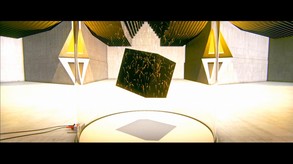
"In 2062, Men from Terra have access to a new technology from a mysterious Black Cube they found 5 years before. With this new power, they decide to explore their solar system, in search for signs of intelligent life. They send you at the discovery of planet Catyph and its moon Tytaah." CATYPH: The Kunci Experiment is Another Space Adventure reminiscent of Myst and Rhem, and you can absolutely play it without knowing anything about the first Black Cube game, ASA. With the help of the data that you collect on Tytaah, you must attempt to access the 7 regions of this moon. Your main mission: understand what the Kunci is. The whole game relies on observation, discovery and exploration.
CATYPH is an independant and self-funded game, mainly created by one person. It has been envisaged as an experience, an interactive story based on exploration and logical puzzles. This prerendered 3D game is made of static pictures with video transitions.
Gameplay
Point & Click. Visit the regions of Tytaah, take notes on a piece of paper, and solve the puzzles!
Hotspots description:
- blue circles: action/examine
- blue arrows: turn head/view to look around you
- red arrows: walk to next/preview node/view
- blue dots at the bottom of the screen: turn view 180°
Features
The soundtrack of CATYPH was composed by KARREO. Several artists joined their forces to create a unique OST (Stélian Derenne, Jeff K-Ray, Antoine Vachon, Pol Desmurs and Cécile Cognet).
Check out the Black Cube site to discover other related projects:
- ASA, Myha
- Catyph Artbook
- Original Soundtracks
- Self-published DVD
- ANTERRAN comic
and maybe more?
"In 2062, Men from Terra have access to a new technology from a mysterious Black Cube they found 5 years before. With this new power, they decide to explore their solar system, in search for signs of intelligent life. They send you at the discovery of planet Catyph and its moon Tytaah." CATYPH: The Kunci Experiment is Another Space Adventure reminiscent of Myst and Rhem, and you can absolutely play it without knowing anything about the first Black Cube game, ASA. With the help of the data that you collect on Tytaah, you must attempt to access the 7 regions of this moon. Your main mission: understand what the Kunci is. The whole game relies on observation, discovery and exploration.
CATYPH is an independant and self-funded game, mainly created by one person. It has been envisaged as an experience, an interactive story based on exploration and logical puzzles. This prerendered 3D game is made of static pictures with video transitions.
Gameplay
Point & Click. Visit the regions of Tytaah, take notes on a piece of paper, and solve the puzzles!
Hotspots description:
- blue circles: action/examine
- blue arrows: turn head/view to look around you
- red arrows: walk to next/preview node/view
- blue dots at the bottom of the screen: turn view 180°
Features
- Visit the vast moon of Tytaah (7 regions: desert, snow, alien forest, mercury seas and more)
- Around 15 hours of gameplay
- Over 800 transition videos and 2000 background images
- OST: 18 tracks composed by the artists of KARREO
- Immersive story: try to save Terra with the support of General Lantier, and learn more about the mysterious "god" of Tytaah: Germinal
- Play in HD 1920x800
- Unlock bonuses (minigames and films)
- Developed with Visionaire Studio (Deponia...)
- Choose a difficulty level: Normal/Hard, or also Story/Classic modes
- Benefit of useful icons over the hotspots
- Available for Windows in full English
The soundtrack of CATYPH was composed by KARREO. Several artists joined their forces to create a unique OST (Stélian Derenne, Jeff K-Ray, Antoine Vachon, Pol Desmurs and Cécile Cognet).
Check out the Black Cube site to discover other related projects:
- ASA, Myha
- Catyph Artbook
- Original Soundtracks
- Self-published DVD
- ANTERRAN comic
and maybe more?