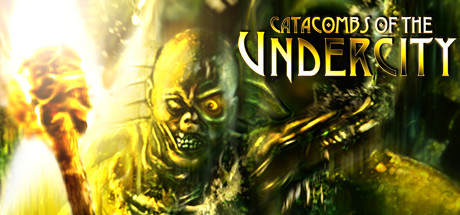
Catacombs of the Undercity, developed and published by Tin Man Games, is a digital gamebook that embraces the traditions of classic choose-your-own-adventure storytelling while layering in light role-playing mechanics to create a tense, decision-driven journey. Rather than presenting a conventional gameplay structure with direct control over movement and combat, it invites players to experience a narrative shaped almost entirely by choice, consequence, and chance. It feels less like navigating a world in real time and more like unfolding a dangerous story where every decision carries weight.
The premise places you in a grim subterranean labyrinth beneath a sprawling city, a setting that immediately establishes a sense of danger and isolation. With limited resources and little guidance, your objective is to survive the depths, navigate its many branching paths, and ultimately reach a form of escape or resolution. The underground world is filled with hazards, strange encounters, and fleeting opportunities, and the game wastes no time in making it clear that survival is never guaranteed. This constant tension becomes one of its defining features, shaping every decision you make along the way.
What truly drives the experience is its branching narrative structure. At nearly every turn, you are presented with choices—whether to explore a suspicious passage, interact with a potentially hostile character, or conserve supplies for an uncertain future. These decisions often lead to entirely different outcomes, including unexpected deaths or alternative storylines, giving the game a strong sense of unpredictability. The design encourages multiple playthroughs, as discovering new paths and outcomes becomes a core part of the experience. Each run feels like a different version of the same journey, shaped by the risks you are willing to take.
The role-playing elements are implemented through a system of stats, items, and dice-based encounters. Combat and certain challenges are resolved through randomized rolls, which introduces an element of chance that can both enhance and frustrate the experience. On one hand, this unpredictability mirrors the feel of tabletop role-playing, adding tension to every encounter. On the other, it can lead to situations where success or failure feels less tied to decision-making and more to luck. This balance between strategy and randomness is central to the game’s identity, and how enjoyable it feels will depend largely on the player’s tolerance for uncertainty.
The writing is one of the game’s strongest assets. Descriptions are vivid and atmospheric, effectively conveying the oppressive nature of the underground setting. Encounters are varied, ranging from hostile confrontations to moments of uneasy cooperation, and the tone maintains a consistent sense of danger throughout. While the narrative is not deeply complex, it is engaging enough to sustain interest, especially when combined with the branching structure that allows players to uncover different facets of the world with each playthrough.
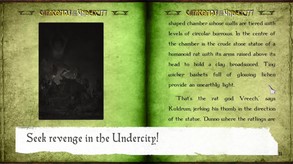
Visually, the game complements its text-driven design with illustrated artwork that enhances key moments without overwhelming the narrative. The style is simple but effective, providing just enough detail to anchor the player’s imagination while allowing the written descriptions to remain the primary focus. The interface is clean and easy to navigate, which is important in a game where managing choices, stats, and progression is central to the experience.
However, the same elements that define the game’s strengths also contribute to its limitations. The reliance on text and choice-based interaction means that players looking for more direct or action-oriented gameplay may find the experience lacking. Additionally, the need to replay sections after failure can become repetitive, particularly when outcomes are heavily influenced by chance. While the branching paths add variety, not all routes feel equally developed, and some may lead to abrupt or less satisfying conclusions.
Despite these drawbacks, Catacombs of the Undercity succeeds in delivering a cohesive and immersive gamebook experience. It captures the essence of traditional tabletop adventures, where imagination, risk, and decision-making take precedence over mechanical complexity. The combination of strong writing, meaningful choices, and replayable structure gives it a lasting appeal for those who enjoy narrative-driven experiences.
In the end, Catacombs of the Undercity stands as a well-crafted example of interactive storytelling, offering a journey defined by uncertainty and exploration. It may not appeal to everyone, particularly those seeking more active gameplay, but for players who appreciate branching narratives and the tension of choice-based design, it provides a rewarding and memorable experience.
Rating: 8/10