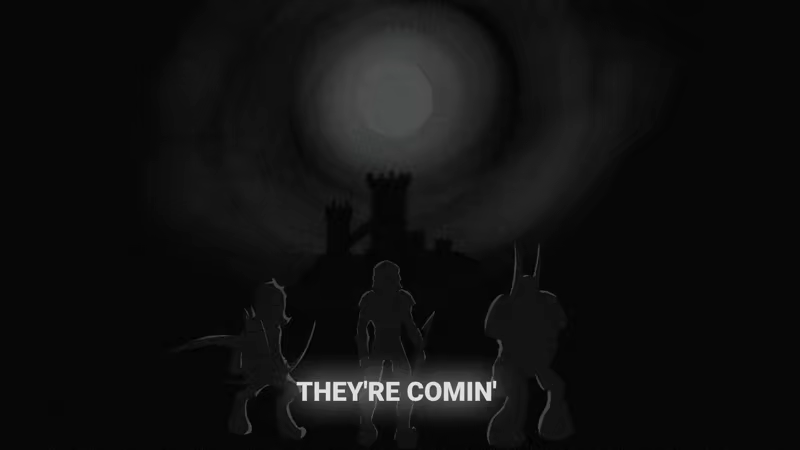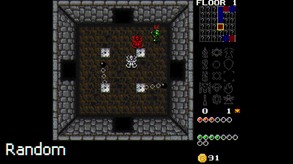
Explore 6 x 6 x 6 = 216 rooms of randomly generated hazards and enemies while collecting the necessary artefacts. Hundreds of monsters are roaming inside, guarding the sword shards — the last known thing to be capable of defeating the demonic castle owner.
Revenue comes from in-game items and microtransactions, which our price-based model doesn't estimate. Copies below reflect the player base, not paid sales.
Media

About


Genres
Stats
Languages: English, Russian, Ukrainian, Portuguese - Brazil, German, Spanish - Spain, Portuguese - Portugal, Italian, French, Greek, Simplified Chinese, Traditional Chinese +20 more
Engagement
Reviews
Themes across 40 recent reviews and how positive each mention is. A keyword signal, not full sentiment analysis.
Reviews
overall alright.
[h1] NES like experience. Feels like a fart. [/h1]
peanut would love some pets and treats :) 🌸> フ | _ _ l /` ミ_xノ / | / ヽ ノ │ | | | / ̄| | | | | ( ̄ヽ__ヽ_)__) \二つ
Related
Related
Trends
Concurrent players on Steam, sampled daily since tracking started.
Hours played at review time, across 40 reviews with recorded playtime.
positive critical· bar length = how often the theme comes up
Гeймеры из 90х оценят, для других самый настоящий проходняк. Любишь 8 бит и ретро рогалик, играй)
Castle of no Escape 2 is a retro dungeon crawler that feels completely dedicated to recreating the harsh and mysterious atmosphere of old-school fantasy games from the 8-bit era. From the moment the game begins, it becomes obvious that modern conveniences and accessibility were never part of the design philosophy. Instead, the game embraces brutal difficulty, cryptic mechanics, limited guidance, and constant danger in a way that feels intentionally nostalgic. For players who enjoy classic roguelikes and unforgiving dungeon exploration, this commitment to retro design creates a surprisingly addictive experience. For others, the same qualities may feel frustratingly outdated and unnecessarily punishing. The game places players inside a cursed castle filled with monsters, traps, hidden rooms, merchants, and dangerous bosses. The objective revolves around collecting magical sword fragments powerful enough to defeat the evil ruler hidden deep within the dungeon. Each run takes place inside procedurally generated floors that constantly rearrange room layouts, enemy placement, and item locations, ensuring that no two attempts feel completely identical. Exploration quickly becomes tense because every room carries the possibility of treasure, disaster, or sudden death. The roguelike structure works well because the game constantly pushes players to take risks while reminding them that failure can happen at any moment. One of the game’s biggest strengths is its atmosphere. The pixel art presentation captures the look and feel of forgotten NES-era fantasy adventures remarkably well. Environments are simple but full of personality, featuring dark hallways, dangerous traps, flickering hazards, and strange enemy designs that help the castle feel unpredictable and hostile. Combined with the retro-inspired chiptune soundtrack, the game creates a strong sense of nostalgia even for players who never actually grew up with those older consoles. The developers clearly understand classic dungeon-crawling aesthetics and fully commit to recreating them without modernizing the experience too heavily. The dungeon design itself becomes surprisingly engaging once players learn how the systems work. Rooms are filled with traps, environmental hazards, enemies, treasure chests, and hidden mechanics that constantly force adaptation. Some areas focus on movement and hazard avoidance, while others become chaotic combat arenas filled with multiple threats at once. The unpredictability of room layouts and enemy combinations creates constant tension because players never fully know what kind of challenge waits behind the next door. Successful runs feel rewarding largely because survival requires caution, experimentation, and gradual mastery of the game’s systems. Another strong feature is the variety of playable characters available. Different heroes offer unique stats, attack styles, and abilities that significantly change how runs feel. Some characters are faster and more agile, while others are built around survivability or stronger attacks. Unlocking new characters encourages experimentation and gives players additional reasons to keep returning after failed runs. The differences between playstyles help maintain replayability even though the overall gameplay structure remains fairly simple. The game also handles resource management surprisingly well within its retro framework. Merchants, gambling systems, armor upgrades, consumable items, and treasure collection all create meaningful decisions throughout each run. Players constantly decide whether to save resources for future floors or spend them immediately for survival. The balance between greed and caution becomes a central part of the gameplay loop, especially during longer runs where a single poor decision can completely ruin progress. However, the game’s dedication to old-school design creates several major frustrations. Combat often feels awkward and imprecise, especially during crowded encounters involving traps and multiple enemies. Character movement lacks the smooth responsiveness expected from modern action roguelikes, and there are moments where taking damage feels unavoidable due to awkward hit detection or enemy placement. Some fights become frustrating not because they are strategically difficult, but because the controls and movement systems struggle to support the chaos happening on screen. The difficulty can also feel unfair at times. While challenging gameplay is clearly intentional, certain enemy combinations and trap placements occasionally create situations that seem heavily dependent on luck rather than skill. Ambushes happen frequently, and some rooms can overwhelm players before they even have time to properly react. Players accustomed to more balanced modern roguelikes may find the game’s harsher design philosophy exhausting after extended play sessions. The lack of proper tutorials or explanations may also alienate newcomers. Many mechanics, item effects, and hidden systems are barely explained, forcing players to learn primarily through trial and error. While this cryptic design style fits the retro atmosphere, it can occasionally cross the line into unnecessary confusion. There are moments where players fail not because they made poor decisions, but because the game never clearly communicated important information in the first place. Despite these flaws, Castle of no Escape 2 succeeds because of how focused and confident its identity feels. It never tries to become a modern cinematic roguelike filled with endless progression systems or excessive handholding. Instead, it delivers a stripped-down dungeon-crawling experience centered entirely around survival, exploration, and learning through repeated failure. The simplicity of the design actually works in the game’s favor because every run feels immediate, dangerous, and unpredictable. For fans of retro-inspired roguelikes, difficult dungeon crawlers, and classic fantasy adventures, Castle of no Escape 2 offers a surprisingly rewarding experience hidden beneath its rough edges. It can feel clunky, unfair, and brutally punishing at times, but its atmosphere, replayability, and commitment to old-school game design give it a unique charm that helps it stand out within the crowded roguelike genre. Rating: 7/10
Gerekli eserleri toplarken, rastgele oluşturulmuş tehlikeler ve düşmanlarla dolu 6 x 6 x 6 = 216 odayı keşfedin. İçeride yüzlerce canavar dolaşıyor ve şeytani kale sahibini yenebilecek son bilinen şey olan kılıç parçalarını koruyor.
норм
i know i am a day late, apolocheese...
Too long to farm cards
Игра не для Графонорожденных, но могу сказать одно.. она лучше чем The Binding of Isaac, а это хоть что-то да значит. А Здесь будет кошка, люди, которые будут пролистывать страницу, могут погладить ее. /> フ | _ _ l /` ミ_xノ / | / ヽ ノ │ | | | / ̄| | | | | ( ̄ヽ__ヽ_)__) \二つ
Momentum
Pace estimated from the game's recent review growth (our daily snapshots) at its own sales-per-review ratio — a momentum signal, not booked sales.
Audience
Estimated from the language of this game's reviews — a proxy for where players are, not official Steam demographics.