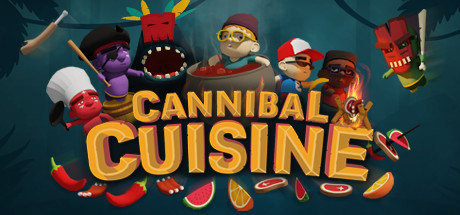
The god Hoochooboo is hungry… for you. But serving is better than being served in this co-op cook 'em up! Chop up vegetables, fruits and tourists and serve your divine delicacies in arcade style with up to 4 chefs!
Modeled estimate, not a reported figure. How we estimate →
Media

About
Genres
Stats
All-time low is the lowest price we've recorded for this game since we started tracking it.
Languages: English, French, German, Dutch, Japanese, Portuguese - Portugal, Russian, Simplified Chinese, Spanish - Latin America
Engagement
Hours played at review time, across 40 reviews with recorded playtime.
Reviews
Themes across 40 recent reviews and how positive each mention is. A keyword signal, not full sentiment analysis.
positive critical· bar length = how often the theme comes up
Reviews
AMAZING Overcooked Alternative! Genuinely tricky levels that kept me and my friends replaying for hours!
lf
Got the max ranking in every level with a friend and it was a lot of fun! We didn't have any issue aside from a couple of bugs in the expansion. Not too easy nor too hard, it's perfect to chill together for a few hours!
jeffrey dahmer would oove this game
love this game. a bit hard. very sweaty
Gives the same type of chaos vibes as overcooked but with human body parts. Felt best played on a controller. Recommend playing with at least 3 people if you want to get 3 stars on every level.
this game got me sweating my ahh
Cannibal Cuisine, developed and published by Rocket Vulture, takes the familiar chaos of cooperative cooking games and gives it a macabre, tongue-in-cheek twist. Instead of serving friendly diners, players are cast as cannibal chefs worshiping the gluttonous island god Hoochooboo. The goal is as absurd as it is darkly humorous: feed the deity by gathering ingredients, preparing dishes, and offering meals that often require freshly harvested “meat” from unlucky tourists. Beneath this outrageous premise lies a fast-paced, team-oriented game that blends cooking mechanics with light combat and platforming challenges. It’s a game that never takes itself seriously, thriving on absurdity and frantic energy, yet it also struggles with balance, repetition, and precision—issues that keep it from reaching the heights of its genre’s best. The first impression Cannibal Cuisine makes is one of color and contrast. Despite its grim theme, the art direction is playful and cartoonish, softening the potentially grotesque premise into a lively, over-the-top spectacle. Each level is set in a tropical paradise filled with bright jungles, temple ruins, lava flows, and exotic beaches, all presented with vibrant hues and exaggerated animations. The characters are stubby, expressive, and ridiculous, turning acts of chaos into slapstick comedy. Tourists collapse in puffs of smoke rather than blood, and the game relies on humor rather than shock value. This makes the tone less about gore and more about absurd, party-style mayhem. The soundtrack complements this energy with tribal beats and upbeat rhythms that keep the tempo high, while the overall presentation ensures that the game remains approachable even with its cannibalistic premise. Gameplay is a blend of cooperative cooking and mild action combat. Each level challenges players to fulfill Hoochooboo’s demanding appetite by collecting ingredients scattered across the environment. Fruits and vegetables are easy enough to find, but the most valuable ingredient—meat—must be gathered from hapless tourists who wander into the chefs’ territory. Players must attack, dodge, and defeat these NPCs to harvest what they need before rushing back to the cooking stations to prepare and serve dishes. The core loop involves constant movement and coordination: gathering resources, preparing meals, managing timers, and avoiding hazards such as collapsing bridges, fire pits, or moving platforms. Every level introduces new obstacles, forcing teams to divide roles and adapt quickly. The inclusion of special abilities—such as a dash, healing totem, stun attack, or fire breath that can ignite food—adds a minor layer of strategy and variety. These powers help differentiate playstyles, especially in multiplayer sessions where teams can complement each other’s abilities. The cooperative nature of Cannibal Cuisine is its greatest strength. When played with friends, the game captures the frantic, comedic tension that defines great party games. Communication and teamwork are vital, as players must balance gathering ingredients, defending themselves, and cooking efficiently. The added combat layer means you’re not just racing against time, but also managing threats and limited health. Moments of chaos—such as two players falling into lava while trying to deliver meals—can be infuriating and hilarious in equal measure. The game’s best moments arise when coordination breaks down, and the kitchen turns into a battlefield of flailing chefs and burning meals. It’s in these bursts of unfiltered disorder that Cannibal Cuisine feels most alive, fulfilling its promise as a humorous and challenging co-op experience. However, the game’s mechanical execution often undermines its creativity. The controls can feel loose, particularly during movement-heavy levels that require jumping between platforms or navigating narrow paths. It’s easy to miss a step or slip into hazards, and these mistakes can feel punishing when the clock is ticking. The cooking itself, though entertaining in short bursts, lacks complexity. Players simply gather and combine ingredients with minimal variation in preparation steps, making the process feel shallow over time. Combat, too, while a novel addition, devolves into repetitive button-mashing with limited depth or feedback. The challenge sometimes shifts from satisfying to frustrating, as random ingredient drops or unlucky environmental hazards can ruin otherwise well-coordinated runs. Difficulty spikes across certain levels feel uneven, demanding near-perfect execution or luck to achieve high scores. While these issues don’t break the experience, they add an undercurrent of frustration that contrasts with the game’s intended fun-loving chaos. In terms of structure and replay value, Cannibal Cuisine offers a campaign divided into themed worlds, each containing several stages and culminating in mini-bosses or unique challenges. The levels are short and designed for replayability, encouraging players to chase higher ratings and perfect runs. However, the total content is modest, and while expansion packs like Curse of the Scarab King add more stages and visual variety, the core gameplay loop remains largely unchanged. For solo players, the experience loses much of its charm, as the mechanics and pacing clearly prioritize multiplayer coordination. Online and local co-op support helps, but the lack of deeper progression or customization means the appeal wanes after a few hours unless you’re determined to perfect every level. Despite its flaws, Cannibal Cuisine’s personality and humor carry it a long way. The developers embrace the absurdity of their concept, and the result is a game that feels distinct even when it borrows from established formulas like Overcooked. The cannibalism theme, though provocative, is handled with a level of cartoonish restraint that keeps it funny rather than grotesque, and its chaotic energy makes it a great pick for parties or casual sessions with friends. When everything clicks—when the team’s rhythm flows, the deliveries are rapid, and the kitchen is buzzing with panic—the game delivers moments of real joy. Ultimately, Cannibal Cuisine is a game of extremes: equal parts entertaining and aggravating, inventive and repetitive. Its best qualities lie in its humor, cooperative spirit, and unapologetically silly concept, while its weaknesses stem from imprecise mechanics and shallow systems. Rocket Vulture’s effort results in a creative, chaotic experience that shines brightest in multiplayer but struggles to maintain depth over time. It’s a flawed yet memorable experiment—a spirited, cannibalistic carnival of culinary madness that proves even the most unhinged chefs can make teamwork both fun and utterly disastrous. Rating: 8/10
Ooga Booga
特價打到非常便宜,居然那麼剛好就被我看到,然後直接就買了XDD 第一次打開就跟三個朋友直接玩到戰役第4關火山03,整個過程非常歡樂好笑~ 如果喜歡煮東西,又不介意可愛中帶點血腥的朋友可以來嘗試一下這款遊戲。 2026年3月連線的部分(中華電信300MB),1拉1遠端同樂第1次就很順利(連鍵盤), 畫質選中(不用選低真是太好了),第1次遠端連線,不會累格也可很好連線。 目前剛玩,看到畫面選項是有2個故事,1個對戰。 一直在買類似煮東西的遊戲,但是因為不是沒有多人,就是畫面風格不是很中意… 有看到這款真是太好了(遊戲性也滿豐富的),希望可以持續有新場景故事出現~ ================= 2026/3/4更新 第2次拉人不知道為什麼控制器連不到可能需要再嘗試,因時間短暫,暫時用鍵盤連是沒有問題 以上心得供大家參考~
Related
Related
Trends
Concurrent players on Steam, sampled daily since tracking started.
Audience
Estimated from the language of this game's reviews — a proxy for where players are, not official Steam demographics.
Related
| Damned Daniel | $6.5K | 107 | 95% | $2.99 |
| A Bloody Night | $6.5K | 107 | 81% | $2.99 |
| Magic Borderless | $6.5K | 150 | 67% | $2.99 |
| CROSSBOW: Bloodnight | $6.5K | 519 | 75% | $0.74 |
| Iron Soul | $6.5K | 57 | 19% | $4.99 |
| Six Sides of the World | $6.5K | 57 | 86% | $4.99 |