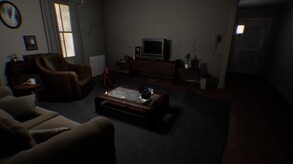
Can't revert is a first-person psychological horror game. You repeatedly find yourself in a house where your wife and son are dead. Discover hidden clues in the house and uncover the secrets of their deaths. Experience the constant tension and fear in the repetitive space.
Modeled estimate, not a reported figure. How we estimate →
Discounts
Every price cut of more than 20% we have observed, in each market that quoted one, with this game's chart position on either side of it. These are episodes, not a model: a sale is one event, and one event cannot tell you what the next one will do.
Reviews, worldwide (the counter carries no country): 0/day in the week to Aug 22 → 0.29/day in the week after.
For scale, across Steam · Top Sellers · Brazil over the last 30 days: the 26 chart moves that followed a price cut of more than 20% went a median of 7 places towards #1, and the 2,400 moves with no price cut behind them went 2 away. One store, one chart, one country — it is the only place we have enough observations to say even that.
Prices outside the United States have been collected since 6 August 2026 and chart positions since 19 July 2026, so a cut older than that has no market to compare and a market that joined later has no history yet. Nothing here is converted between currencies.

About

Genres
Engagement
Reviews
Themes across 46 recent reviews and how positive each mention is. A keyword signal, not full sentiment analysis.
Reviews
good
의외로 생각보다 괜찮음.
Can't Revert is an indie psychological horror experience developed and published by Metaphor and released on Steam. The game presents a narrative-driven horror scenario centered around a troubled protagonist trapped within a disturbing cycle of memory, guilt, and hallucination. Rather than relying on traditional survival mechanics or action-oriented gameplay, the title focuses primarily on atmospheric exploration and storytelling, placing players inside a confined environment that slowly reveals fragments of a tragic past. The story follows a man named Jonathan who repeatedly awakens inside a house connected to a devastating personal tragedy involving the loss of his wife and child. At first, the setting appears to be a typical suburban home, but as the player begins exploring, subtle disturbances start to appear. Objects are not where they should be, rooms shift in unsettling ways, and strange sounds echo through the empty halls. The protagonist’s dependence on medication and his fragile mental state introduce uncertainty about whether the horrors encountered are supernatural events or manifestations of his deteriorating mind. This ambiguity becomes one of the game’s defining narrative strengths, as players are left to question what is real and what exists only within Jonathan’s fractured perception. Gameplay revolves around slowly navigating the house while interacting with objects and uncovering clues hidden throughout the environment. Instead of solving complex mechanical puzzles, players primarily engage in investigative exploration—examining items, reading notes, and triggering events that gradually reveal pieces of the underlying story. The progression structure encourages careful observation, as seemingly minor details can hint at larger narrative developments. As players revisit areas of the house, they may notice subtle changes in the environment, reinforcing the idea that the setting itself is influenced by Jonathan’s psychological turmoil. The house serves as the central stage for the entire experience, and the developers use its confined layout to create a strong sense of claustrophobic tension. Hallways that once felt familiar begin to feel threatening as the atmosphere becomes increasingly oppressive. The repetition of returning to the same spaces creates a feeling of entrapment, as though the protagonist is unable to escape the memories haunting him. This design approach works particularly well in psychological horror, where the fear often comes from anticipation and unease rather than immediate danger. Visually, the game adopts a realistic first-person perspective that emphasizes environmental detail and lighting. The interiors of the house are rendered with muted colors and dim illumination, creating a persistent sense of gloom. Small environmental details—such as flickering lights, shifting shadows, and subtle distortions—help reinforce the unsettling tone. Although the game does not rely on large-scale environments or elaborate set pieces, the careful use of lighting and sound allows the relatively small setting to feel constantly unpredictable. Sound design plays an equally important role in building tension. Rather than overwhelming the player with loud music or constant jump scares, the game often relies on silence and ambient noises to create discomfort. Footsteps echo through empty rooms, distant sounds suggest unseen movement, and occasional distorted audio cues signal moments when reality begins to break down. This restrained use of sound helps maintain a slow, creeping sense of dread that grows stronger as the story unfolds. The pacing of the experience is deliberately measured. Players are given time to explore the environment, reflect on the clues they discover, and gradually piece together the story behind Jonathan’s tragedy. While this slower pace helps strengthen the psychological elements of the narrative, it may feel somewhat uneventful for players who expect more traditional horror gameplay involving enemies or survival mechanics. However, the game’s focus on narrative immersion ensures that the tension remains rooted in emotional storytelling rather than action sequences. Despite its relatively small scope, Can't Revert succeeds in delivering a memorable psychological horror experience that explores themes of guilt, denial, and grief. By centering the narrative around a deeply personal tragedy and presenting the horror through the lens of a disturbed mind, the game creates an atmosphere that feels both intimate and unsettling. The limited environment becomes a metaphor for the protagonist’s inability to escape his past, reinforcing the emotional weight of the story. Overall, Can't Revert stands out as a focused indie horror project that prioritizes atmosphere and narrative over mechanical complexity. Its unsettling house setting, slow-burn storytelling, and strong psychological themes combine to create an experience that lingers in the player’s mind even after the game ends. While the lack of varied gameplay systems may limit its appeal for some players, those who enjoy atmospheric horror and introspective storytelling will likely find the journey through Jonathan’s fractured reality both disturbing and compelling. Rating: 8/10
Media

Related
Related
Price dynamics, follower growth, revenue and sales trajectories with interactive tooltips
This and every other Pro feature is free until October 20, 2026. A free account is all it takes.
Stats
All-time low is the lowest price we've recorded for this game since we started tracking it.
Languages: English*, Korean, French, Italian, German, Spanish - Spain, Japanese, Portuguese - Brazil, Russian, Simplified Chinese, Turkish*languages with full audio support
Hours played at review time, across 46 reviews with recorded playtime.
positive critical· bar length = how often the theme comes up
старой добрый P.T. На сколько тогда в 2015 эта была генеральная идея, особенно после той игры Silent Hill
CLASS GAME WE ENJOYED THAT ONE. WERE SAYING W HORRAH.
短小精悍
top
점프스케어 1번. ㅋㅋ 플레이타임이 엄청 짧네요..
i am the master of reverting
Güzel..
Players by region
Where this game's players are, estimated from review languages.
Related
| Game | Estimated lifetime revenue | Reviews | Review score | Price |
|---|---|---|---|---|
| $11.3K | 108 | 54% | $4.99 | |
| $11.7K | 52 | 75% | $5.99 | |
| $9.6K | 48 | 92% | $9.99 | |
| $8.9K | 58 | 95% | $5.99 | |
| $7.2K | 109 | 93% | $3.99 | |
| $5.5K | 57 | 77% | $4.99 |
Related
| Game | Estimated lifetime revenue | Reviews | Review score | Price |
|---|---|---|---|---|
| $15.2K | 122 | 63% | $6.99 | |
| $15.2K | 66 | 100% | $9.99 | |
| $15.2K | 53 | 62% | $6.99 | |
| $15.2K | 64 | 47% | $9.99 | |
| $15.2K | 98 | 86% | $4.99 | |
| $15.2K | 676 | 62% | $0.99 |