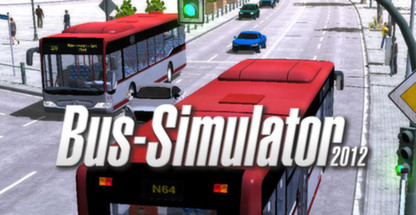
Bus-Simulator 2012, developed by TML-Studios and published by astragon Entertainment, is an early attempt to capture the everyday rhythm and responsibilities of operating a public bus line within a living city. It stands as one of the formative titles in the long-running series, offering an experience that sits somewhere between realism and accessibility. Rather than focusing solely on driving, the game seeks to simulate the broader experience of being part of an urban transport network—following schedules, serving passengers, maintaining mechanical systems, and navigating traffic under pressure. Though its technology and presentation now appear dated, its ambitions were noteworthy for the time, aiming to turn an ordinary profession into a detailed interactive experience.
The essence of Bus-Simulator 2012 lies in its respect for the routine. You are not a hero or a racer but a professional trying to meet the expectations of a timetable and a community. Every shift begins with preparation—checking your vehicle, ensuring that it’s fueled and functioning properly, and plotting your route across the sprawling city. Once you start driving, the simulation quickly reveals its layered complexity. The game requires attention not only to the road but to the many small systems within the bus itself. Engine temperature, air conditioning, oil pressure, and even windshield condensation can affect performance and passenger comfort. You must regulate the heating and ventilation, handle ticket sales, and manage the flow of passengers boarding and disembarking. These details, while sometimes overwhelming, build a sense of authenticity that many driving games of its era lacked. The act of simply getting from one stop to another becomes a quiet test of patience, consistency, and multitasking.
The cityscape you drive through is dense with traffic, pedestrians, and urban life. There are hundreds of bus stops scattered across a large map, giving the illusion of a fully operational network. The environment may not be especially dynamic by modern standards, but it does convey the feeling of traversing a genuine urban grid. Cars obey traffic lights, pedestrians cross at intersections, and other buses share the roads. Every stop requires you to slow down, open the doors, greet passengers, and issue the correct tickets—all while keeping an eye on the clock. If you drive too recklessly, passengers will complain, and your performance rating will drop. This constant balance between efficiency and care turns each route into a form of time management. The game rewards drivers who are smooth and punctual rather than fast, reinforcing the theme of professionalism over thrill-seeking.
One of the game’s strongest elements is its mechanical fidelity. The buses themselves feel weighty and deliberate, with controls that encourage respect for inertia and precision. The dashboard brims with buttons, gauges, and indicators that you’ll gradually learn to monitor. The physical sensation of driving—a mixture of torque, suspension, and braking—adds to the immersion, especially for those using steering wheels or other control peripherals. TML-Studios took inspiration from real European bus models, and the attention to detail in their operation reflects that effort. However, the underlying physics and AI systems are not without their quirks. The handling can feel stiff at times, and other road users occasionally behave unpredictably. Traffic lights can be too rigidly timed, and pedestrians occasionally clip through obstacles or freeze in place. These imperfections don’t ruin the experience but do remind you of the game’s technical limitations, particularly when compared to more modern simulations.
Visually, Bus-Simulator 2012 bears the marks of its era. The environments are functional rather than beautiful, composed of repetitive textures and static lighting that flatten the city’s sense of scale. Buses are well-modeled but stand out against bland streets and simplified architecture. There’s little sense of weather beyond the fogging of windshields or the glow of headlights in evening routes. Despite these shortcomings, the visual design succeeds in clarity—everything is readable and purposeful. The same can be said of the sound design, which emphasizes practicality. The low hum of engines, the hiss of doors, the chatter of passengers, and the whine of brakes form a steady audio tapestry that mirrors the monotony and realism of an actual workday. The atmosphere is subdued but convincing, immersing the player in a believable, if unremarkable, city routine.
In terms of structure, the game gives you both freedom and responsibility. You can plan your routes, choose your stops, and optimize how you serve your area. This autonomy adds a mild strategic layer, especially when trying to improve efficiency or handle high-demand zones. The city’s size and the sheer number of stops create a sense of scope that keeps the experience from feeling claustrophobic. However, over time, repetition sets in. The missions, while structured around realistic timetables, begin to blur together after several hours. The same streets, same stops, and same interactions recur without much variation. Without a deeper management or progression system, the game lacks long-term motivation. Once you’ve mastered the mechanics and mapped the city’s layout, the only remaining challenge is to maintain perfection across increasingly familiar routes.
Community response to Bus-Simulator 2012 has always been divided. For casual players, it offers a relaxing and oddly meditative experience—a way to lose oneself in the rhythm of routine. For simulation enthusiasts, however, it often feels too shallow compared to deeper titles like OMSI, which deliver more advanced physics and AI systems. Many players have noted the game’s bugs and performance inconsistencies, from pathfinding errors to sudden frame drops. Despite patches and updates, its underlying engine shows its age. Yet, for all its flaws, there’s a charm in its earnestness. It captures a specific kind of satisfaction—the quiet pleasure of doing a simple job well. The ability to greet passengers, follow schedules, and complete a shift without incident gives a subtle sense of accomplishment that few games manage to evoke.
Bus-Simulator 2012 is a product of both ambition and limitation. It aspired to recreate the daily life of a city bus driver in a way that balanced simulation with accessibility, and it mostly succeeded for its time. Its systems are intricate enough to feel authentic but forgiving enough for newcomers to grasp. It may lack the polish and realism of its successors, but it laid the groundwork for them, establishing the tone and structure that later entries in the series would refine. Today, it serves as a snapshot of an earlier era of simulation design—one where passion often outpaced technology. For those who appreciate the slower, procedural pleasures of transport simulators, it remains an interesting, if imperfect, experience. Driving through its streets is not exciting in a traditional sense, but that’s the point: Bus-Simulator 2012 finds meaning in the mundane, transforming the everyday act of public service into something quietly immersive and deeply human.
Rating: 5/10