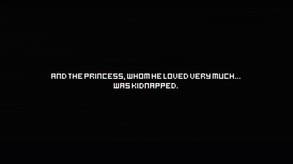
You awaken in your mansion and discover that your love is missing. She has been kidnapped but it's unclear by whom.
Modeled estimate, not a reported figure. How we estimate →
Media

About
Stats
All-time low is the lowest price we've recorded for this game since we started tracking it.
Languages: English*, Russian*languages with full audio support
Engagement
Reviews
Themes across 40 recent reviews and how positive each mention is. A keyword signal, not full sentiment analysis.
Reviews
74分钟通关死亡200多次,一款黑暗风的游戏,剧情没有没有看(所以我这个憨批玩通关都不知道这个讲了啥)。 给刚玩的萌新提醒:[spoiler]这个游戏是没有跳跃键的(我这个憨批瞎折腾了半天才发现),是奔跑到一定速度自动跳跃 [/spoiler]
Great game, at times it can be very frustrating but it helps take your mind off things as well as it was fun to play with such unique movement mechanics.
ставь лайк если ты больной на голову угольный человек который ищет свою телку-шлюху которая подсыпет что-то тебе в бокал
Related
Related
Trends
Concurrent players on Steam, sampled daily since tracking started.
Hours played at review time, across 40 reviews with recorded playtime.
positive critical· bar length = how often the theme comes up
While with an neutral option I'd probably go for that, with Steam you do need to choose, and after weighing the positives and negatives, this one uncontroversially lands on the negative side of things, even if I didn't hate my time with it. Burn It Down is a, let's say, unusual game. Calling it "weird" is probably overselling it, because at its core it's just a slightly "gimmicky" platformer. You only (auto)jump is you have enough momentum currently, and you can't turn mid-air. There's a few other minor elements, but the core of the game is figuring out how to navigate through the levels and around the obstacles given those limitiations. That seems fairly standard, right? But around the aforementioned core it's a bunch of other things: it's a semi-cryptic narrative with some levels containing tiny bits of narration/commentary from the protagonist, and while the ending isn't as cliché as you might imagine, it's extra flavour that never quite coalesces. There's a ticking one hour timer to the run (persistent across game sessions, so you can take your time), and that's probably enough for most gamers (mine was about fifty minutes and I played several levels quite badly). It's also a bit of a horror game, with your wife appearing sometimes as a spectrum to move in your direction and kill you if she touches you. These are all (or mostly) at scripted points in the levels, and the game apparently has a mercy counter where she stops spawning after you've died (to her?) enough times in a level. While sometimes she does add tension, her direct tracking makes her sometimes certain death in some levels. This [i]almost[/i] fits to the fact this is also a bit of a troll platformer. No invisible blocks or fake terrain, but several design aspects are there to kill you unexpectedy (some because you weren't paying attention, but others seemingly out of sadism by the developer). And while it never gets pixel perfect, many of the needed timings are rather tight, so you can expect to replay some levels at least once (probably quite more). Furthermore, while timings of the various elements are consistent, most levels aren't calibrated for immediate action, so you might need to wait for things to line up - just a few seconds per try, but those add up. [h3]In short, it's a mishmash of things which doesn't really gel.[/h3] There's nothing in it that I can point and say "oh, it's a terrible game because of this", just that it tries to do many things and none of them particularly shine, with the total experience being less than sum of its parts. Finally, if you go by the achievements, the developer hopes you replay this short game several times. There's obviously the issue of the timer so whether you succeed or fail, you must play at least twice to view both endings (one demanding an hour, which maybe you can get just by idling). There's also several speedrun ones, even one for a 10 minute run. There's a couple of level-specific feats. And if you're masochistic and are blessed with a great memory, a no death achievement. But instead of doing the reasonable thing, the dev doesn't include a level select, not even after clearing the game. So if you're an achievement hunter, expect to repeat levels a lot.
T_T
I thought this is not horror game. :) Fuuuuuu....
Burn It Down, developed by Tapinator in collaboration with Max Ignatyev and published by K Bros Games, is a compact yet emotionally charged puzzle-platformer that builds its identity around minimalism, atmosphere, and psychological tension. On the surface, it appears deceptively simple: a side-scrolling game where the protagonist awakens in his mansion to find his partner, Heather, missing. However, what unfolds is far more than a straightforward rescue narrative. Through stripped-down mechanics and carefully constructed environmental storytelling, the game transforms into a moody descent into mystery and inner turmoil. One of the most striking aspects of Burn It Down is its control scheme. The player can only move left or right—there is no dedicated jump button in the traditional sense. This limitation defines the entire experience. Instead of relying on complex movement mechanics, the game forces players to manipulate momentum, gravity, and environmental triggers to navigate obstacles. Each level becomes a carefully arranged puzzle where timing and positioning are everything. The absence of typical platforming tools creates tension, as every action feels deliberate and consequential. The level design gradually escalates in complexity. Early stages introduce hazards and mechanical concepts in a straightforward way, allowing players to acclimate to the unconventional movement system. As progression continues, traps become more intricate and layouts more deceptive. Rotating platforms, shifting floors, and hidden triggers demand observation and experimentation. Failure is frequent but informative, encouraging players to analyze patterns and refine their approach. A visible death counter reinforces the trial-and-error structure without punishing experimentation too harshly. Atmosphere plays an equally significant role in shaping the experience. The pixel art style, while retro in presentation, conveys a haunting and oppressive tone. The mansion’s dark corridors, flickering lights, and ominous architectural details create a sense of isolation and unease. The muted color palette enhances the psychological weight of the journey, while subtle visual cues hint at deeper narrative layers. Despite its relatively simple graphics, the game succeeds in crafting a mood that lingers beyond individual levels. Narratively, Burn It Down unfolds gradually through environmental details and fragmented storytelling. Rather than relying heavily on dialogue, the game reveals its themes through contextual clues and the evolving structure of the mansion itself. The initial goal of finding Heather becomes intertwined with more abstract and surreal elements, suggesting that the protagonist’s journey is as internal as it is physical. The ambiguity of the story invites interpretation, and multiple endings provide further incentive to reflect on the events that transpire. Sound design complements the visual tone with understated yet effective audio cues. Ambient sounds and sparse musical elements heighten tension without overwhelming the player. Silence is used strategically, amplifying moments of uncertainty. The restrained audio design aligns with the minimalist gameplay, ensuring that nothing distracts from the core experience of navigating each room’s hazards and uncovering narrative hints. While the game’s simplicity is its greatest strength, it can also be a source of frustration. The restrictive control scheme occasionally leads to moments where solutions feel unintuitive, particularly in later puzzles that rely on precise timing. However, for many players, this challenge is integral to the design philosophy. Burn It Down is less about reflex-based mastery and more about thoughtful problem-solving within constraints. Replayability stems from the branching conclusions and the desire to uncover hidden story elements. Although the overall runtime is relatively short, the density of its design ensures that each playthrough remains engaging. Players who pay attention to environmental nuances may uncover details missed during earlier attempts, deepening their understanding of the narrative’s subtext. Ultimately, Burn It Down distinguishes itself through its commitment to minimalist mechanics and psychological storytelling. It does not rely on flashy systems or expansive worlds to captivate players. Instead, it delivers a focused and atmospheric experience that challenges conventional platforming expectations. For those who appreciate puzzle-platformers with narrative depth and emotional undertones, it offers a memorable journey that lingers well after the final screen fades. Rating: 7/10
Игра прикольная но на один раз достижения это отельный разговор :3
Some fun, but hitboxes and timing of the obstacles is not always right.
That Game Was Fun But Difficult As Damn!
Audience
Estimated from the language of this game's reviews — a proxy for where players are, not official Steam demographics.
Related
| The King's Heroes | $1.3K | 58 | 64% | $0.79 |
| Tales of Isenberg | $1.3K | 55 | 100% | $1.04 |
| Luster | $1.3K | 52 | 54% | $1.99 |
| 101 Cats in Tokyo | $1.3K | 85 | 91% | $0.99 |
| Lover's Trophy | $1.3K | 50 | 94% | $1.99 |
| MineSweep | $1.3K | 80 | 59% | $0.69 |