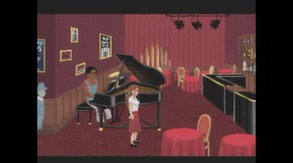
The year is 1973. The sound of a lone, ethereal saxophone drifts over the Roosevelt Island promenade, while a series of accidents plague a midtown construction site. The citizens of Manhattan take no notice of these events, let alone think they are connected.
Modeled estimate, not a reported figure. How we estimate →
About
Genres
Stats
All-time low is the lowest price we've recorded for this game since we started tracking it.
Add-ons
Each DLC is estimated with the same model as a game, then summed — a modeled figure, not reported DLC sales.
Engagement
Reviews
Themes across 50 recent reviews and how positive each mention is. A keyword signal, not full sentiment analysis.
Reviews
玩完第一部接這完系列第二部 ( 這部時間上是第一部前傳 ) 不管是主角、劇情、解謎、遊玩性都更勝前作! 不得不說我更喜歡這部女主的性格,厭世感莫名有魅力,講話也很不客氣做事俐落 還加入新玩法 : 可以切換男、女主操作遊戲,可玩性上升許多 喜歡片尾曲,但結合劇情有點小悲傷..... 一樣有優秀的配音、用詞中等,推薦給學習英語的人 ( 一樣有開發者模式可以聽作者碎碎唸,練英聽的最好時機啊! ) 依然很用心的製作組,期待下一作 ! [spoiler] 不過這次有很多謎題要靠查電話簿解決,一次很新奇但後面很多到要靠這個工具推進會有點膩 [spoiler] [spoiler] 另外玩過前作已經知道女主的結局,玩到最後男主說著"我不會讓你一個人,我保證一直陪著你 " 讓人看了心酸 [spoiler]
la historia es genial
This game fixed absolutely everything I disliked about the first one. It was honestly wonderful. I learned something about Blackwell Legacy in the time between playing these games that probably explains the weird 'this is the bad one' thing: the original version of Legacy was a 2003 freeware game called Bestowers of Eternity released in 2003. That the 2006 version was a reworking of a first project makes so much more sense than this guy writing Shivah, doing something awful, and then writing Unbound -- Legacy absolutely tracks as a first big, independent project. That said, I'm very glad I played Shivah first, because if I had started with Legacy I probably wouldn't have continued with Wadjet Eye's catalogue, which would have been a shame. The first big change this game makes is sending us back to an in media res night with Lauren, Rosa's aunt, and Joey. It's clear that Lauren is bitter and miserable and she and Joey are struggling to get along. That Lauren gives as good as she gets and is just as hostile is a huge change in the game's tone, and it has the immediate effect of making both characters sympathetic. The sarcasm and sniping is no longer one-sided, which means it's not just this annoying dude berating a frightened girl, but two people forced to work together who are unravelling under the stress. It also has the effect of making it clear the game knows their behavior is unkind and antagonistic, an element which immediately stops it from feeling directed at the reader. And even though Joey is snippy at Lauren, he's also just way less of an ♥♥♥♥♥♥♥ this time -- no more terrorizing dogs or telling the protagonist her problems are stupid, or being a ♥♥♥♥ to the other ghosts; he's genuinely just a very stressed guy in an awful situation. The other big change the game makes is twofold -- one, it actually cares about Lauren as a character and two, it does that in ways that give the game thematic resonance. This game is fundamentally about Lauren breaking under the pressure of the situation she's in. It opens with a scene of her at the afterlife crossroads thinking about how seeing so much death has made her stop caring about anything, or even feeling anything, and the game is about her quiet desperation. At the end -- [spoiler] -- when she volunteers to sacrifice herself to have the culprit come after her, it really reads as a suicide attempt, and the game knows this, and it really works. The game mirrors Lauren's struggle by focusing on two hauntings about people whose own struggles isolated and eventually killed them, leaving the people they abandoned hurt and angry. The question becomes if Lauren can avoid the same fate. Without the stupid psychiatric hospital setting the game can tell a story about depression and desperation with far more pathos and I found it to be really affecting. One thing I liked a lot about the suicide sequence is Joey's shock at what she's doing -- to me, it really does read as if he's realizing for the first time just how bad a state she's in, and realizing she wasn't just being difficult. [/spoiler] My big complaint is it is kind of unclear at the end why he's still against her contacting her brother -- as with a lot of these things, I'm not sure why the masquerade is necessary, what the stakes of it are. Surely the better sequence here is Joey finally okaying her reaching out to her family, even though it worries him, because he realizes the isolation is breaking her? Either that or I need it to be clearer where his worry is coming from, because right now it's out of nowhere in a way that makes his last couple lines feel OOC considering everything that just happened. I also think the implied sequel hook here is far better than the plethora of major unanswered questions from the first game. We see what happened to the Countess and knowing Lauren's fate can intuit what must have happened to her at some point, but still don't know how or why, giving us something to look forward to in the next game without leaving huge holes in the logic of the story. Oh, and the gameplay here was really good! No walkthrough necessary, compelling investigation and solid puzzle design. My nitpick is that I wish there's been a refresher on the controls, since I forgot that it was left-click-for-interact, right-click-for-inspect and got stuck at once point because I hadn't been right-clicking things. I am a bit worried that when the story switches back to Rosa for the next game the old problems will crop up again, but just the quality of the storytelling here was so many eons better than the first one that there's really only so far I think it can backtrack. Though, I mean, famous last words.
Media

Related
Related
Price dynamics, follower growth, revenue and sales trajectories with interactive tooltips
This and every other Pro feature is free until October 20, 2026. A free account is all it takes.
Languages: English**languages with full audio support
Hours played at review time, across 50 reviews with recorded playtime.
positive critical· bar length = how often the theme comes up
A really memorable, engrossing, and special point & click game. I loved the art style, story, and characters. Great puzzles too.
I see Wadjet Eye game, I play.
Me encanta la saga entera
The whole Blackwell series is awesome!
yotop
I still love these games.
Blackwell Unbound, developed and published by Wadjet Eye Games, is a thoughtful and emotionally charged point-and-click adventure that deepens the world established in the Blackwell series while serving as an atmospheric prequel to the original title. Set in 1973 New York City, it follows Lauren Blackwell, a tough, chain-smoking medium, and her ghostly partner Joey Mallone as they work together to help lost spirits find peace. Though modest in scope, the game stands out for its rich writing, sharp characterization, and melancholic tone that blends noir sensibilities with supernatural mystery. It’s a story about compassion, frustration, and the unseen burdens of those who mediate between life and death. From its opening scenes, Blackwell Unbound establishes a world that feels both grounded and otherworldly. The game’s retro pixel art evokes the gritty texture of 1970s New York, but beneath the city’s surface lies a ghostly realm filled with regret and lingering emotion. Lauren, weary yet determined, is one of the most memorable protagonists in indie adventure gaming. Her sharp wit and vulnerability make her instantly compelling, and her partnership with Joey—a sardonic ghost tethered to her family’s legacy—forms the emotional backbone of the narrative. Their banter feels authentic, balancing humor and pathos, and their evolving relationship gives the story emotional resonance that elevates it beyond a standard paranormal detective tale. Gameplay stays true to the classic adventure structure while introducing mechanics that enhance its narrative depth. Players alternate between controlling Lauren and Joey, each offering unique abilities that complement one another. Lauren interacts with the physical world, gathering information, speaking with witnesses, and piecing together clues, while Joey can pass through walls, investigate ghostly phenomena, and communicate with spirits unseen by the living. This duality encourages players to think creatively, using both characters’ perspectives to unravel each case. The notebook system, which allows you to combine clues to form new deductions, remains one of the series’ cleverest features—it captures the feeling of real investigation without bogging down the pacing. The cases Lauren and Joey take on seem simple at first: a ghostly saxophonist haunting a construction site, a lost soul tied to a crumbling apartment building. But each mystery unfolds into something deeply human, dealing with themes of neglect, addiction, and the small tragedies that define ordinary lives. Every spirit has a story, and it’s never just about death—it’s about the echoes of living that linger after people are gone. The writing is poignant without being heavy-handed, and it’s in these quiet moments—when Lauren listens to a ghost’s final confession or Joey reflects on the passage of time—that the game achieves real emotional power. Visually, the game embraces the minimalist pixel-art style that Wadjet Eye has made its trademark. The art direction may be simple, but it’s effective in building atmosphere. The muted palette and subtle lighting evoke a smoky, melancholic vision of New York—lonely streetlights, fading apartment walls, and nightclubs humming with jazz and sorrow. The animation, while limited, conveys character through small gestures and expressions. The game’s soundtrack complements the mood perfectly, blending ambient melodies and somber saxophone notes that heighten the sense of noir melancholy. The voice acting, though somewhat uneven in quality, adds life to the dialogue and helps ground the emotional tone of the story. If there is one consistent criticism of Blackwell Unbound, it’s its brevity. The game can be completed in just a few hours, and while the pacing feels deliberate, some players may wish there were more mysteries to solve or more time to spend with Lauren and Joey. A few puzzles verge on being too straightforward, and occasional interface quirks—such as pixel hunting or limited pathfinding—remind you of the game’s small-scale production. Yet, these flaws are easily forgiven in light of the game’s strong sense of purpose. Every moment feels intentional, and the short runtime contributes to its sense of intimacy. It’s less about grand adventure and more about quiet reflection, about fleeting connections in a city full of ghosts. As a prequel, Blackwell Unbound enriches the larger series mythos by showing the toll that Lauren’s work takes on her over time. It gives context to her character’s exhaustion and sets the emotional stage for the later entries, where her niece Rosa continues the family’s legacy. This generational storytelling—an exploration of duty, mental health, and the inheritance of burdens—becomes one of the Blackwell series’ defining themes, and it begins here with remarkable subtlety. Lauren’s struggles with isolation, guilt, and self-doubt lend the story a tragic weight that lingers long after the credits roll. Ultimately, Blackwell Unbound succeeds because it understands that the most haunting ghosts are not always supernatural. It’s a quiet, deeply human story about empathy and exhaustion, set against the backdrop of a city that never sleeps but is filled with unseen suffering. Wadjet Eye’s craftsmanship shines through in every conversation, every haunting, every small moment of connection between the living and the dead. For fans of narrative-driven adventures, it’s a short but unforgettable experience—one that captures the melancholy of being a medium between worlds and the loneliness of carrying others’ pain. Despite its age and modest production, it remains a standout example of indie storytelling done with heart, atmosphere, and unflinching emotional honesty. Rating: 9/10
Selling now
See how fast this game is selling right now — estimated copies and revenue per day from recent review growth.
Players by region
Where this game's players are, estimated from review languages.
Players also reviewed
The games this title's players most often review too — audience affinity.
Related
| Game | Estimated lifetime revenue | Reviews | Review score | Price |
|---|---|---|---|---|
| $128.4K | 649 | 96% | $9.99 | |
| $1.1M | 3.6K | 92% | $19.99 | |
| $146.2K | 1.6K | 89% | $4.99 | |
| $829K | 2.6K | 96% | $14.99 | |
| $667.7K | 4K | 92% | $9.99 | |
| $0 | 640 | 87% | Free |
Related
| Game | Estimated lifetime revenue | Reviews | Review score | Price |
|---|---|---|---|---|
| $70.2K | 184 | 88% | $14.99 | |
| $70.1K | 223 | 83% | $7.79 | |
| $70.2K | 133 | 47% | $19.99 | |
| $70.2K | 114 | 64% | $19.99 | |
| $70.2K | 1.1K | 89% | $2.99 | |
| $70.2K | 315 | 93% | $9.99 |