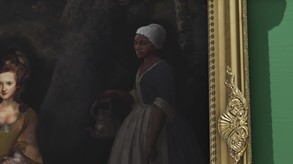
Blackhaven is a first-person narrative game that follows Kendra Turner, a college intern at Blackhaven Hall, a historic mansion burned during the American Revolution. Working alone on a holiday, Kendra uncovers a trail of secrets and misdeeds that spans centuries and may determine her future.
Revenue comes from in-game items and microtransactions, which our price-based model doesn't estimate. Copies below reflect the player base, not paid sales.
Media

About
Genres
Stats
Languages: English**languages with full audio support
Engagement
Hours played at review time, across 40 reviews with recorded playtime.
Reviews
Themes across 40 recent reviews and how positive each mention is. A keyword signal, not full sentiment analysis.
positive critical· bar length = how often the theme comes up
Reviews
Let me start off by saying that I think the message this game is trying to spread is excellent. The sanitization of history, especially when it comes to colonial American history, is a major problem. As someone from Virginia, this game also hit close to home for me. I've actually visited a lot of museums and historical sites that are very similar to Blackhaven. My issue with this game is frankly just the presentation. The game ran horribly for me, and I have a decent computer. Every time a new area would load, there would be a huge lag spike. The controls were always wonky. The mouse sensitivity was very finnicky. And the biggest issue, at least for me, was the voice acting. It felt like all of the VAs were just reading off of a script. The main character was talking the same way that the Museum Audio Tour was, and that just really took me out of it. I also didn't really like how they put everything in your face. Don't get me wrong, though, I don't mean that in the "why did these gosh dang liberals have to shove their agenda in my face!" type of way. I mean that every single time there was something even minorly important, the camera would literally zoom in on it and the main character would fully explain what you were looking at. I think that that actually dilutes the message they were trying to spread, because instead of the player realizing themselves how bad things were or how Blackhaven was covering things up, they were explicitly told, which doesn't connect or impact the player nearly as much. My last critic, although much more of a minor one, was that I actually feel like they didn't go far enough with showcasing how bad slavery was. Some examples of the horrors of slavery in this game include a journal entry of a slaveowner describing how he whipped one of his slaves because her daughter stole a few cabbages, and a letter from a confederate soldier detailing how he shot and killed some innocent black folk. After reading these, the main character is surprised at these horrific accounts, except (at least to me) these things happening should be fairly common knowledge. I think the game should have gone into some of the even more horrific things that happened, that people are still scared to talk about. For example, slave owners used to make leather out of the skins of slaves. All that being said, I still think this game spreads an excellent message. The sanitization of history needs to end, especially because the sanitization actively hurts black communities to this day. I think because of that, I'm still going to recommend this game, despite its issues.
It's a charming game that does a good job at addressing a lot of the issues with the commodification and glorification of plantations. It's well written and handles the subject matter in a mature and realistic way. I'm excited to see what Historiated ends up making in the future.
Blackhaven by Historiated is a focused narrative experience that uses the structure of a first-person exploration game to examine how history is presented, interpreted, and sometimes quietly distorted. Rather than building itself around traditional gameplay systems, it centers on investigation, observation, and reflection, placing the player in the role of a student intern tasked with reviewing exhibits inside a historical museum built on the grounds of a former plantation. What begins as routine archival work gradually shifts into something more layered and unsettling, as the official story presented by the institution begins to conflict with the evidence uncovered behind the scenes. The gameplay is intentionally minimal, revolving around moving through the museum, interacting with displays, reading documents, and listening to recorded materials. There are no traditional puzzles or challenges in the mechanical sense; instead, the act of piecing together information becomes the central form of engagement. Progress depends on how closely the player pays attention and how willing they are to question what they are being shown. Each new piece of information adds context, often reframing earlier discoveries and encouraging a deeper level of scrutiny. This creates a slow but steady sense of progression that is driven entirely by understanding rather than action. What makes Blackhaven stand out is the way it frames its narrative through contrast. The museum itself is polished and carefully curated, presenting a version of history that feels controlled and reassuring. Behind that surface, however, are documents and details that suggest a more complicated and uncomfortable reality. The tension comes not from dramatic events, but from the growing realization that the story being told is incomplete. This approach turns the player into an active participant in the process of reinterpretation, encouraging critical thinking rather than passive consumption. The protagonist’s perspective plays a key role in shaping the experience. Through her internal commentary, the player is given insight into how each discovery is processed emotionally as well as intellectually. This adds a personal dimension to the investigation, grounding the broader themes in individual reactions. The tone remains quiet and reflective throughout, but there is an undercurrent of unease that builds as contradictions become more apparent. The narrative does not rely on dramatic twists or overt conflict, instead allowing its impact to emerge gradually through accumulation and context. Visually, the game adopts a clean and modern aesthetic that reinforces its setting. The museum environment is designed to feel authentic, with exhibits that are both informative and carefully arranged to guide interpretation. This attention to detail helps create a believable space, making the act of exploration feel grounded even as the underlying narrative becomes more complex. The contrast between the orderly presentation and the darker implications of the content is one of the game’s most effective elements, subtly reinforcing its themes without needing explicit explanation. The pacing is deliberate and unhurried, encouraging players to take their time and absorb the material. This works well for the type of experience the game is trying to deliver, but it also means that engagement depends heavily on the player’s interest in the subject matter. There is little in the way of mechanical variety, and the experience is relatively short, which may leave some players wanting more depth or interaction. However, the concise length also ensures that the narrative remains focused and does not lose its impact. One of the more notable aspects of Blackhaven is its sense of purpose. It is clearly designed not just as entertainment, but as a way to explore and question historical narratives. The game does not present itself as a definitive account, but rather as an invitation to think critically about how stories are constructed and whose perspectives are prioritized. This gives it a weight that extends beyond its runtime, encouraging reflection even after the experience is over. The main limitation lies in its narrow scope. Players looking for complex mechanics, varied gameplay, or extended content may find it lacking, as it remains firmly rooted in exploration and narrative. Its reliance on reading and listening also means that it demands a certain level of patience and attention, which may not appeal to everyone. However, these choices are consistent with its goals and contribute to its overall identity. In the end, Blackhaven succeeds as a thoughtful and quietly powerful narrative experience that uses interactivity to explore themes of history, perspective, and interpretation. It may not offer traditional gameplay depth, but it delivers a meaningful and memorable experience for those willing to engage with its ideas. It stands as an example of how games can be used to examine complex subjects in a way that feels both personal and impactful. Rating: 8/10

"Muh racism" "Muh slavery" "Muh White derangement" Much original Such brave Wow 1/10 The South was right. Thanks for the free achievements, though!
Blackhaven, Amerikan Devrimi sırasında yanan tarihi bir konak olan Blackhaven Hall'da üniversite stajyeri olan Kendra Turner'ı konu alan birinci şahıs anlatımlı bir oyundur. Tatilde tek başına çalışan Kendra, yüzyıllara yayılan ve geleceğini belirleyebilecek sırların ve kötülüklerin izini ortaya çıkarır.
Really enjoyed this! This got recommended by Sin Vega over on Rock, Paper, Shotgun and it was really worth it!
Despite the clunky controls and a few typos here and there, I would highly recommend taking the time to experience Blackhaven. Having grown up around tourist-oriented historical plantations, nothing in the game is exaggerated. I look forward to seeing more from the Historiated team and always appreciate the creativity of using games as media to explore important discussions and history.
I played this game back in 2022 and I still always check my wish list to see when Cassius will come out, I generally love walking sims like this but this one was really good.
A very interesting and informative game that highlights the subtle (and not so subtle) racism inherent in colonial institutions and the complicity that museums and heritage organizations are potentially guilty of in perpetuating revisionist history and the awkward position that this often places people who are overlooked by these histories. The story depicted here is a strong reminder that modern museums and heritage sites and organizations need to work harder to present more inclusive and complex narratives in order to educate their visitors, and should be played by more students in these fields
一个探索美国历史与谎言的步行模拟器。当今历史修正主义回潮,更有现实意味。 参观博物馆的感觉挺有意思。文本呈现出很强的双重性:表面上的伟光正与背后的黑暗不断冲突,每句话都该读两遍。当然作为步行模拟器节奏会偏慢,也有大段的英语阅读要做。 不过我觉得主角可能有点没必要,或者是介入太多了,情绪表达有时显得刻意。让玩家自己发掘真相可能会更有趣些。制作上有点粗糙,我怀疑这是某个大学历史系的小组作业hhh
Related
Related
Trends
Steam followers (game-group members) tracked daily from when we started recording.
Momentum
Pace estimated from the game's recent review growth (our daily snapshots) at its own sales-per-review ratio — a momentum signal, not booked sales.
Audience
Estimated from the language of this game's reviews — a proxy for where players are, not official Steam demographics.
Related
| House Flipper | $58.4M | 92K | 94% | $24.99 |
| Soulmask | $17.8M | 22.1K | 77% | $23.99 |
| Awesomenauts | $16.5M | 26.9K | 85% | $19.99 |
| Rhythm Doctor | $13.9M | 26.8K | 98% | $19.99 |
| Brotato | $7.4M | 117.1K | 96% | $2.99 |
| Soundpad | $5.3M | 103.1K | 96% | $4.99 |