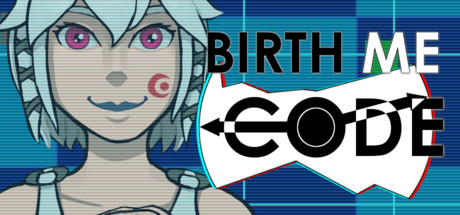
The second entry of the Abime Series. Play as the mastermind in a death game where you must find the traitor while concealing your identity. Six hours, one school, six deaths. Nine participants fight for survival: it's kill or be killed, trust or deceive, escape or die.
Modeled estimate, not a reported figure. How we estimate →
Media

About

Stats
All-time low is the lowest price we've recorded for this game since we started tracking it.
Languages: English
Engagement
Hours played at review time, across 40 reviews with recorded playtime.
Reviews
Themes across 40 recent reviews and how positive each mention is. A keyword signal, not full sentiment analysis.
positive critical· bar length = how often the theme comes up
Reviews
A straightforward narrative with reasonable characters and easy puzzles that will make you feel secure about the nature of the universe and the meaning of your existence.
A nice little game to scratch that Uchikoshi itch. Fans of the Zero Escape games and more recent AI: The Somnium Files are gonna enjoy this game, as well as its prequel, Head AS Code. It's a step down in writing quality though, so temper your expectations. My favorite mechanic is definitely its streamlined timeline flowchart. To play a new route, not only can you pick the fork to the new branch you wanna continue, but also the relevant choices from previous nodes that can unlock the branch.
Absoultely amazing game cant wait to play the others
good
.
great VN. fun escape rooms. tricky puzzles.
Birth ME Code, developed and published by Miracle Moon, is a psychological mystery visual novel that reshapes the familiar “death game” formula by placing the player in an unusual and morally complex position. Instead of being one of the trapped participants struggling to survive, you assume the role of the hidden orchestrator, known as Pandora, guiding events from behind the scenes while attempting to identify a traitor within the group. Set inside a sealed school where nine individuals are forced into a life-threatening scenario, the game builds its tension not only through the danger of the situation but through the constant need to balance control, secrecy, and deduction. The narrative is the centerpiece of the experience, unfolding through branching paths that gradually expose layers of mystery and deception. The story thrives on its dual perspective: you are both observing the participants and subtly influencing the outcome, which creates a constant sense of tension. Dialogue plays a crucial role, often carrying clues, misdirection, and philosophical undertones that explore themes such as trust, manipulation, and human nature under pressure. The writing aims for complexity, weaving together multiple threads that reward careful attention, though at times it can feel dense, requiring players to actively piece together meaning rather than being guided clearly from one revelation to the next. Gameplay blends traditional visual novel storytelling with puzzle-solving and light strategy elements. One of the more notable features is the inclusion of deduction segments, where players must analyze situations and solve problems to progress. These sections add a layer of interactivity that helps break up the narrative flow, making the experience feel more dynamic than a purely text-driven novel. Alongside this, the game incorporates a relationship or trust system that influences branching outcomes, encouraging players to consider how their decisions affect the behavior and survival of other characters. A flowchart system tracks these paths, offering a way to revisit different routes, though its implementation can be somewhat restrictive and unintuitive, especially when choices are tied closely to specific playthroughs. The puzzles themselves vary in quality and design. Some are well-integrated into the story, providing satisfying moments where logic and narrative intersect, while others can feel overly abstract or unclear, disrupting the pacing. When the puzzles work, they enhance the sense of involvement and reinforce the game’s investigative tone. When they don’t, they risk pulling players out of the experience, particularly if progress depends on solutions that are not immediately intuitive. This inconsistency is one of the more noticeable weaknesses, as it contrasts with the otherwise thoughtful structure of the narrative. Characterization is a strong point, with each participant given a distinct personality and role within the group dynamic. The cast is built around contrasting traits and motivations, creating a tense social environment where alliances shift and suspicions constantly evolve. The use of symbolic naming and thematic elements tied to moral concepts adds an extra layer of depth, reinforcing the game’s exploration of human behavior under extreme conditions. Interactions between characters feel purposeful, often revealing subtle changes in trust or intent that contribute to the unfolding mystery. While some dialogue may feel uneven at times, the overall cast remains engaging and central to the game’s appeal. From a presentation standpoint, Birth ME Code adopts a modest but effective visual style. Character art and environments are functional rather than elaborate, but they support the tone of the story without distraction. The soundtrack stands out as a key component, helping to establish tension during critical moments and providing a reflective backdrop during quieter scenes. The overall audiovisual design may not be particularly ambitious, but it succeeds in reinforcing the atmosphere the game aims to create. One of the more significant drawbacks lies in the pacing and structure of the narrative. The story builds intrigue gradually, but its later sections can feel rushed, with major revelations delivered in quick succession. This can make the conclusion feel less impactful than it might have been with more space to develop its ideas. Additionally, as part of a larger narrative arc, the game leaves certain elements unresolved, which may leave players feeling that the experience is incomplete rather than fully self-contained. In the end, Birth ME Code offers a compelling and unconventional take on the psychological mystery genre, combining narrative depth with interactive elements in a way that feels both ambitious and occasionally uneven. Its unique perspective, strong thematic focus, and engaging character dynamics make it stand out, even if its pacing issues and inconsistent puzzles prevent it from reaching its full potential. For players who enjoy complex, thought-provoking stories and are willing to navigate its rough edges, it provides a memorable and intellectually engaging experience. Rating: 7/10
mid, Head AS Code was better
Cool mystery/escape room game!
This game is so convoluted that I'm stunned there was even a rewrite to make it more cohesive. What was the ending like before? Game could have been better if it didn't try to do too many at once. There are tons of massive twists at the end that really complicate everything, and the game should have honed in on one or two of them and work on those exclusively and make those twists better. Also, the ending feels like you're playing a completely different game. Not in a "woah this makes everything make sense/be better", but in a way that makes the ending and what came before feel like literally two different games. Other than that, pacing is weird, I wish the characters were more fleshed out, the plotholes ironed out, and the concept worked on more. This game feels like it tried to replicate Zero Escape, but it missed what made that series so special while focusing on the negative aspects of the series (long exposition dumps and convoluted plotline). I will say that I admire [spoiler]the twist that there was nothing supernatural going on on the flowchart, and that both game's paths are just two simultaneous groups[/spoiler] because generally people try to do the opposite, but I feel like that concept could be done better (like in AITSF... edit three years later: i actually don't really think ai:ni did it particularly well either nowadays).
Related
Related
Trends
Modeled estimate over time, reconstructed from Steam's monthly review histogram.
Momentum
Pace estimated from the game's recent review growth (our daily snapshots) at its own sales-per-review ratio — a momentum signal, not booked sales.
Audience
Estimated from the language of this game's reviews — a proxy for where players are, not official Steam demographics.
Related
| Incredible Dracula: Chasing Love Collector's Edition | $13.8K | 50 | 86% | $9.99 |
| Beyond The Edge Of Owlsgard | $13.8K | 398 | 96% | $2.49 |
| Crystal Caves | $13.8K | 122 | 86% | $4.99 |
| //SNOWFLAKE TATTOO// | $13.8K | 122 | 37% | $4.99 |
| 7 Mages | $13.8K | 122 | 61% | $4.99 |
| Lofi aquarium | $13.8K | 144 | 78% | $2.99 |