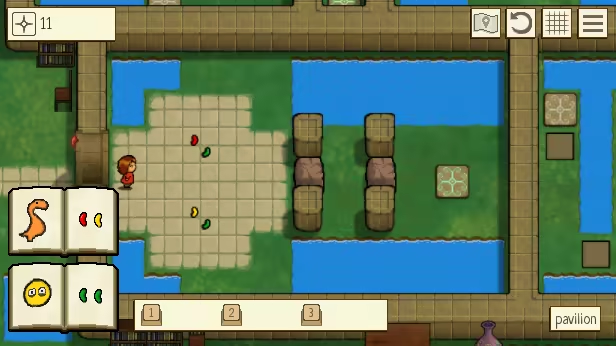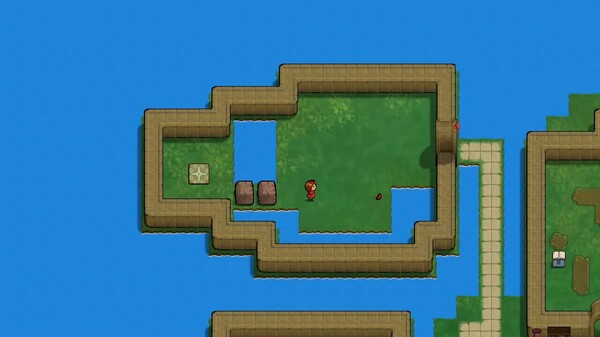
A difficult tile-based puzzle game about turning beans into monsters -- and monsters back into beans.
Modeled estimate, not a reported figure. How we estimate →
Media

About

Stats
All-time low is the lowest price we've recorded for this game since we started tracking it.
Engagement
Reviews
Themes across 41 recent reviews and how positive each mention is. A keyword signal, not full sentiment analysis.
Reviews
[h2]豆学学士毕业,目前最喜欢的逻辑解谜,相见恨晚[/h2] 耗时约一个半个月(1.1~2.18)无攻略通关,2026新年第一款100%游戏。 [b]★Tip: 创意工坊有非常精良的汉化,订阅后在游戏主菜单设置里开简体中文[/b] https://steamcommunity.com/sharedfiles/filedetails/?id=2792696812 网格式,不是推箱子,但完全是我心中完美解谜的模样,还能有力地反驳网友到处流传的“解谜的终点是推箱子”这句话。童话般的豆子和小怪物,主线9个岛+1个可选岛,共195个出色的谜题,很有挑战性。带有贴近学术人实际的剧情文本,通过每个岛屿后都有一段鼓励文字,让人心喜、解谜动力十足。QOL方面也更是贴心。 初始的“学徒之岛”有这样一句让我感受颇深的提示文字: [h3]“魔法的屏障正如学徒自身思维的屏障:在一个方向上完全无法通过,但所有其他方向都可以自由通过。”[/h3] 这句话支撑了我整个解谜之旅直到通关结束。总体的解谜感受确实如此话所说,几乎很多谜题都有“第一直觉上的不可能”,大多数时候脑海中构想的初方案很快就被关卡作者打脸推翻,谜题的“问题之处”是很清晰的,有时候不能过于执拗在“这怎么可能呢”之上,而是要多探索寻找其他方向的“巧思”。这是我梦想中好谜题的样子。 最终谜题是综合大考,很有挑战也很过瘾,第一次解逻辑谜题玩出大决战boss的感觉。像极了毕业小论文,相当值得静心钻研,花了两天用3000多步解决后,成就感无可比拟。 [h3]+++++最值得一夸的当然是它的QOL:[/h3] 1.每个谜题都有自带的难度标注,1~6豆,可让玩家量力而行,不用担心难度曲线的问题 2.解法回放功能,对健忘解谜人来说是伟大创新,值得推广 3.即时保存谜题状态的“书签”功能,手动保存,不用担心解谜会出现365里路的重开 4.地图可以随时随地传送到去过的地方,点到哪里去哪里,类银都不敢这么玩 5.自带关卡编辑器和社区创意工坊,扩展性、重复游玩价值极高 总之,《Bean and nothingness》是逻辑解谜界的上上上上上佳品,难度颇高但非常值得解谜爱好者钻研。 这寥寥几百的评测数根本匹配不上它的惊人质量,我即将开启传教计划。
Playing this game feels like stepping into a fairy tale, filled with quirky monsters and endless possibilities of interactions. Its puzzles aren't just solved, but engineered --- you build bizarre, often monstrous-looking contraptions to progress. On top of that, this game if full of clever puns (starting with the title itself). Utterly unique and imaginative.
Related
Related
Trends
Modeled estimate over time, reconstructed from Steam's monthly review histogram.
Languages: English
Hours played at review time, across 41 reviews with recorded playtime.
positive critical· bar length = how often the theme comes up
持续1个多月(05.01 ~ 06.11),游戏内91h(不包含大量离线脑测时间),是我目前为止持续游玩最久的解谜游戏。 [h3]“任何复杂问题都有一个简单的错误答案。” —— H.L. Mencken[/h3] 这句话大致能概括本作给我的印象。 每一关通过读题或反推会得到一个初步方案,通常这个方案实际跑下来是缺豆子的,在我的整个游戏过程中,没有一关可以一步到位。 接下来的推理和实践过程或长或短,最终都会通过习得一种新的机制运用、空间技巧或时序技巧后通关,并获得一个尤里卡时刻。 [h3]很需要推理,也很需要实践。[/h3] 我用“实践”而不是“试错”是想区别于另一种穷举式的搜索求解方法。 本作的求解空间相当大,穷举成功的可能性非常小,同时由于机制深度和时序的复杂性,仅仅脑测也较难确认细节,需要实践进行局部确认。 不断迭代方案的过程以及强度都像极了工作,不过我很乐在其中。 [h3]令人“震惊”的机制设计[/h3] 如果说前期的机制增加的是“多样性”,那么从中期开始,新机制都有点“颠覆性”,像是对“正交”的维度进行了扩展,极大改变了游戏玩法和思考方式。 机制组合方式更是多到想不起来,甚至到游戏最后阶段还有新的技巧。 难是真的难,但是真好玩,大爱vine的设计。 总之豆无就是神作,
solved one of the 5 star puzzles after i had an epiphany in the shower and felt compelled to write a review the mechanical interactions of all the different puzzle elements in this game results in some beautiful design where you can spend a tremendous amount of time agonizing over a level that seems impossible, only to realize you can utilize a specific interaction that makes the solution seem blindingly obvious in retrospect. it does what every great puzzle game does which is make you feel like both an idiot and a genius, highly recommended only wish it wasnt so hard on the eyes lol, but there aren't any clarity issues and it runs flawlessly so it's a minor complaint for this type of game difficulty: moderate to hard if you're a puzzle gamer, some of the harder levels might not be doable for casual players but you don't need to solve every puzzle to reach the end
It's frustrating when half of the difficulty comes from poorly introduced monster interactions.
Excellent puzzle game, very original, very difficult.
Nothingness is... on the contrary of its meaning, a word vast and profound in meaning. Why nothingness, then? Is it the loneliness throughout the journey, in search of people who might very well be dead? Is it... the feeling of not pertaining, lost in an unknown place for you? Could it be about the possible outcome of all this journey? Or... is it a sum of the emotions you feel during the experience? [No spoilers for the story/puzzles] My first time playing this game was a year and half ago, May 23rd 2024, and it has been a long time since. Of course, I've been playing it on and off, on an off. I kind of quit out before I finished most islands puzzles, I probably had around 40 hours by then. The last 2 months were definitely when my time ramped up most, now concluding at the slow count of 105 hours. 195 trials later, I can say I've 100%'d this. Bean and Nothingness revolves around - mostly - small puzzle chambers, filled with... beans, and, yourself. Or better put, your brain. Your goal is to always hit the ending circle, but, as any puzzle game, with some obstacles in your way. You quickly learn that you shall use these beans to create these creatures in every puzzle chamber. It starts out with basics, it is pretty comfortable. Soon, you figure out these creatures have... quite a lot of quirks. And soon after that, you are absolutely lost for the rest of the game, having to build mechanisms and find curious interactions to make your way through the puzzles. This kind of feels like playing one of those engineering and automation games, except you're doing contraptions to solve puzzles. Through the game, you have islands to progress through, each with a new mechanic that you will exploit to its limit in the island, just for them to be turned upside down once a new mechanic is introduced. Many solutions for this go much beyond just using the mechanic to clear, but using it in harmony with specific quirks of other mechanics... it feels crazy. The final islands also have one of the most unique mechanics, but I won't go much in detail on them. But basically, they can offer you all you could ask for, so you can focus on the puzzle alone. Not to mention, the way the puzzles are built there is just impressive. Of course, there are easier puzzles and harder ones. There is never a moment where the game forces you to clear really hard puzzles, nor strictly easy ones either. If you want to 100% it though, you Will be in for a ride. The difficulties are always available and, as much as I have had disagreements with them, they do work well for the majority of puzzles. Almost always you will be gated by a few easy puzzles that mostly work to show you mechanics that you could and will exploit, they're well designed and serve their purpose. Clearing most of them already unlocks it. To clear an island and unlock the next, you also only need to clear the majority of the chambers, and not the whole island. As the achievement for concluding the last area says, clearing the rest is just for the sake of it. The game is not the easiest, and honestly it is on the harder side of the games I've played. The turn-based puzzle approach is amazing, it gives you a ruleset of things you can do, and there are this many possible interactions, all of which can be predicted beforehand. Sometimes, you gotta learn a new thing, but this thing will remain true for whichever puzzle you do. A lot of times, you won't even begin to test out things until you can think of a good theory that should work. Sometimes you will start doing things you think can work to then build on the theory and make the route for you to follow clear. Sometimes, you can get to a few safe places, where you can go off of, then just testing what you can do with them. This was most true in the later islands for me. It also encourages bookmarking and testing different routes branching from a safe point. The interactions in it are really fun, new interactions that come often can also, many times, be predicted. This is the biggest appeal of this game, in my opinion. Its unique interactions and turn-based synergy, in a way you can't ultimately escape from the solution and get lost. Another thing that I felt is that the game was never playing a bit on me, the difficulty - almost always - came from the puzzle design itself. Most puzzles design are also insanely well done, they're intelligent, and you can feel the care and love put towards them. Of course, there are almost 200 puzzles + tutorial ones for each island, so not all will be that good, but you hopefully get the idea. I really enjoyed like, MOST, they are really well thought. Returning to the original question at the top of my review, Bean and Nothingness is a clever pun with Sartre's "Being and Nothingness", a philosophy essay about existentialism, and how nothingness must precede "existing", how humans bring nothingness into play through their freedom. As you play more of the game, the more this freedom, this nothingness presents itself, as the game deconstructs the set rules it presents at its beginning and brings you new points of view, gives you more liberty on it. If you go deeper into it though, it is all I've mentioned, as they are all part of human's freedom. One of them, the feeling, is always connected to the sounds and stories you learn through the experience. OST in this game complements very well the environment you find yourself in. It's good, and, in fact, yesterday, as I wrote some of this review, I was listening to it. Its story is presented not directly, but through messages left in the past. It is very sweet, and in general I really loved it! There are many characters who don't show up for basically the entirety of the game and are only known from their messages, and surprisingly you can also feel for them, and enjoy them as characters. I believe this game is so much more worth than its price, it was one of the most fun experiences I've had in the past years. This is a rare review from me and my longest review yet, and for a good reason. I really loved this game, and really recommend it for puzzle enjoyers around the world. Considering no games are perfect, and even in its imperfections I still found fun - pretty much most of the time, at least - I would rate this a 10/10, it's a game that has gone under so much care, it's inspiring.
I have reached the good ending of bean and nothingness. This is a unique puzzler that derives complexity from numerous monsters. Mechanically speaking, each monster is quite complex, and so it incentivizes the player to experiment to learn about the intricacies of how each one operates. However, only some of the levels have the space and relevant resources to allow such experimentation. Each level is given a difficulty rating from 1 to 5. To me, the sweetspot for difficulty are the 1's, 2's, and 3's. 4's and 5's can be enjoyable as well, but also can take multiple hours to work through. Some of them require rather specific timing setups (at least for my solution) in order to function, which is not satisfying for me. That brings me to kuroyama's rainbow, a particular level that I found to be a standout level. I wish there were more levels like this one, where you are given a system and tasked to break it in whatever way you like. The goal-state of every single level is extremely straight forward. Just move onto the goal tile. But going back just one or two steps leads to the roadblocks in every puzzle. For example: the goal tile is behind a block that can be destroyed by a certain monster. However, the crux of the puzzle is maneuvering beans or the monster around so that the block can be destroyed. So, the puzzle design heavily favors backwards thinking. "What is the goal of this puzzle?" "How can I arrange things so that I end up at the goal-state?" The final boss level is quite possibly the most intimidating single puzzle I've ever encountered in all of the puzzle games that I've played. Not only is it huge, but each individual section of it is on par with the hardest levels that have come before it. It's akin to solving multiple of the hardest levels intertwined together into one insane level. Solving it finally, after several days of working on it, was extremely satisfying. It also feels a bit like kuroyama's rainbow, in that there are certain "systems" in the level and with creative thinking you can end up breaking the entire level open. However, I do have some criticisms: 1) The problem with such a big boss is that there ends up being quite a bit of walking around and undo-ing. I'd say I'm usually on the patient side and willing to wait around for mundane things like this, but due to the sheer size of the final level even I got irritated by the length of holding down the undo key. 2) A decent number of levels have added noise or otherwise useless-appearing "things" in the level, probably designed as an anti-cheese mechanism to prevent a certain unintended solution, but can sometimes lead to spending a lot of time pondering about something that is essentially a red herring. 3) This one is fundamental to how the game works mechanically. With multiple entities able to move at the same time, you have to learn the priority of how they interact when they try and move onto the same square. This, is very much just something you have to internalize as you play. There is no reasonable thematic tie-in to help remember priorities, you just have to know. Overall, I would recommend this to puzzle enjoyers that don't mind my criticisms above. Those less familiar with the genre will probably struggle, because it is quite difficult.
This is a good puzzle game! But it is also long, and it is difficult. I did not finish it yet, and I'm not sure I will. I still think I got my moneys worth, so I would recommend it to any puzzle fan. But I would recommend it even more to those who like a challenge! Works great on the Steam Deck!
good
Audience
Estimated from the language of this game's reviews — a proxy for where players are, not official Steam demographics.
Related
| The Neverland of the Mountain and Sea | $34.6K | 223 | 96% | $9.99 |
| Prison City | $34.7K | 178 | 84% | $9.99 |
| Mahjong Magic Journey | $34.7K | 146 | 80% | $14.99 |
| Mobiles Tycoon | $34.6K | 179 | 82% | $5.99 |
| Venge | $34.6K | 412 | 92% | $4.99 |
| Love Craft | $34.6K | 97 | 99% | $9.99 |