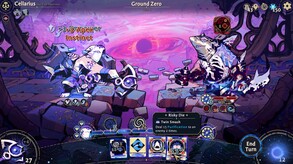
Astrea is a DICE-deck-building roguelike that flips the script on deckbuilders by using dice instead of cards and a unique dual “damage” system: Purification vs Corruption. Build a dice pool strong enough to purify Astrea's out-of-control corruption and save the Star System.

Modeled estimate, not a reported figure. How we estimate →
Prices
Each in the currency that store quoted — not converted: the gap between two rows is the publisher's pricing, not an exchange rate.
Discounts
Every price cut of more than 20% we have observed, in each market that quoted one, with this game's chart position on either side of it. These are episodes, not a model: a sale is one event, and one event cannot tell you what the next one will do.
Reviews, worldwide (the counter carries no country): 1.14/day in the week to Sep 3 → 1.57/day in the week after.
About

Astrea is a DICE-deck-building roguelike that flips the script on deckbuilders by using dice instead of cards and a unique dual “damage” system: Purification vs Corruption. Build a dice pool strong enough to purify Astrea's out-of-control corruption and save the Star System.

• Unique dual “damage” system: Purification vs Corruption - In Astrea there is a new type of “damage” system. Purification can be used to damage enemies or heal yourself. On the other hand, corruption can be used to damage yourself or heal the enemies. Pacify enemies through Purification, or Corrupt yourself to unleash abilities that help tip the scales.
• Dynamic Health Bar system - With skills attached to your health bar, you can take Corruption to enable these skills and unleash powerful abilities. But be careful, if you take too much Corruption you will be consumed by it.
• Not cards, but dice! - Build a dice pool that fits your playstyle. Choose from over 350 dice and three dice types; reliably safe, perfectly balanced, or powerfully risky. A dice type system designed with high-risk, high-reward in its core.
• Customize your dice - Forge your fate by editing die faces with new actions, tipping the odds of powerful results into your favor.
• Choose from Six Brave Oracles - Each possessing their own unique dice sets, abilities, and playstyles. From ingenious spellcasters to brutish berserkers, whether you like beating the opponent into submission or outsmarting them with clever plays, there’s an oracle for you.
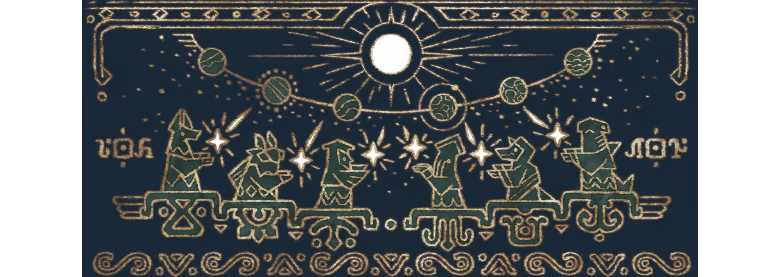
• 20 Upgradeable Support Sentinels - Enchanted constructs that offer supportive dice rolls making them reliable companions in the heat of battle.
• Uncover Over 170 Modifying Blessings - Imbue your Oracle with unique passives yielding potent effects that change up your fundamental tactics. Choose between Star Blessings, passive effects with lower power, or Black Hole Blessings, powerful passive effects with a drawback.
• More than 20 random events - Find mysterious locations that can change the course of your run.
• Manipulate your enemies and control your fate - Enemies attack using their own die, making it possible for you to manipulate their die to change their intent.
• 16 Difficulty Levels - Customize your experience using difficulty levels to test all your abilities.

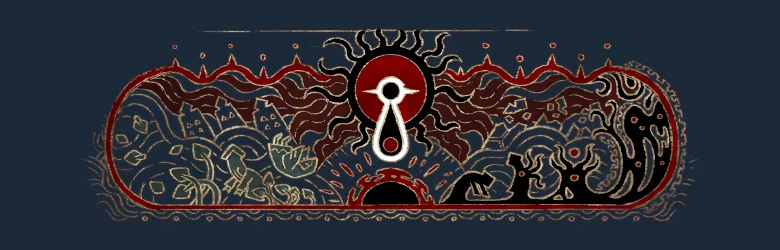
Long ago - when ancient ruins were once flourishing civilizations and their populace lived in idyllic bliss - a mystical star governed all. Loyal disciples, called Six-Sided Oracles, were blessed by their star, granting them the strength to seal away the gift of heavenly bodies within mystic relics.
All was perfect and harmonious, until that one fateful day - The Crimson Dawn Cataclysm. A ferocious inferno sundered down from the sky, engulfing the entirety of the star system, crumbling the foundations of their society and corrupting the souls of the weak-willed. The disciples of the star were lost to the chaos - their creations scattered across a vast world of ruin. Could there still exist those who were capable of wielding their power?
Eons later, descendants of the Six-Sided Oracles embark on a journey to finish the failed battle that their predecessors started and save their star system.

Add-ons
Each DLC is estimated with the same model as a game, then summed — a modeled figure, not reported DLC sales.
Sums Steam + Google Play only; PlayStation, Xbox, GOG publish no volume signal, so the true total is higher by an unknown amount.
| Store | Price | Audience | Score | Chart | Est. revenue |
|---|---|---|---|---|---|
SteamYou are here | $12.49−50% | 4.5Kreviews | 92% | — | $2M |
| $9.99 | 275ratings | 78% | — | $442.8K | |
Updates
Build ids and update times come straight from Steam's PICS — the same source SteamDB reads. Patch history grows as we record new builds.
Engagement
Reviews
Themes across 105 recent reviews and how positive each mention is. A keyword signal, not full sentiment analysis.
Reviews
It is hard to make a dice game feel fair and fun. This does both beautifully. Addicting and well made. Give it a chance.
Honestly, I'm quite fond of this game, although the randomness did irritate me quite a bit in the beginning. Most people compare Astrea to Slay the Spire, and I can understand where that impression comes from. However, Astrea adds enough new ideas to the formula to make it feel fresh in a genre that has started to become a little stale: roguelike deckbuilders. First, you can choose one of six Oracles, each with unique dice combinations and special features. As you progress through a run, you can also choose between three types of dice: Safe, Balanced, and Risky; which become the foundation of your build. On top of that, you can further customize your runs with Blessings, Star Blessings (smaller benefits with no downside), and Black Hole Blessings (powerful benefits that come with a notable downside). You can also acquire Sentinels, which act as companions and provide additional ways to support your build and run. Some of the bosses can be absolutely brutal, and sometimes luck can still screw you over, even when you've done your best to mitigate it. Thankfully, you have plenty of ways to manipulate your dice, including crafting and replacing dice sides with powerful effects, which gives you a fair amount of control over the randomness. At the end of the day, Astrea remains a really interesting and engaging game. It takes the familiar roguelike deckbuilder formula and puts its own spin on it, making the game stand out in among the sea of the similair games.
Media

Related
Related
Price dynamics, follower growth, revenue and sales trajectories with interactive tooltips
This and every other Pro feature is free until October 20, 2026. A free account is all it takes.
Every market we collect.
For scale, across Steam · Top Sellers · Brazil over the last 30 days: the 25 chart moves that followed a price cut of more than 20% went a median of 10 places towards #1, and the 2,413 moves with no price cut behind them went 2 away. One store, one chart, one country — it is the only place we have enough observations to say even that.
Prices outside the United States have been collected since 6 August 2026 and chart positions since 19 July 2026, so a cut older than that has no market to compare and a market that joined later has no history yet. Nothing here is converted between currencies.
Genres
Stats
All-time low is the lowest price we've recorded for this game since we started tracking it.
Languages: English, French, German, Spanish - Spain, Japanese, Russian, Simplified Chinese, Traditional Chinese, Portuguese - Brazil, Korean
| $24.99 |
| 117ratings |
| 82% |
| — |
| not modelled |
| $13.74−45% | 59ratings | 90% | — | not modelled |
| $12.49−50% | 30ratings | 90% | — | not modelled |
Matched by title — a reused name can pair the wrong games. * is a critic aggregate. Prices and positions are each store's United States storefront; Epic charts worldwide. Audience and Score too, except Steam's, which is worldwide.
Hours played at review time, across 105 reviews with recorded playtime.
positive critical· bar length = how often the theme comes up
这游戏非常好玩,在各种卡牌肉鸽中特色和可玩性都是一流的,游戏的腐化净化系统,更像是一般桌游的点数设计,快速来回加减,还有额外的美德过度腐化作为奖惩,而且只要不掉心就满血的无战损设计,也算是个特色。肉鸽游戏有一个重要的设计是游戏时长,路线长战斗多就繁琐,太短了,比如之前玩过一个卡牌加自走棋的肉鸽,路线又不够长发育不足,这个游戏由于每局满血的设计,就没有火堆回血的节点,商店功能融合,购买升级改骰子等功能都在,守卫也是有钱就可以一直升级,还有伟大的删4牌换遗物的节点,不战斗就拿牌的节点,收益可能很大的问号节点,很大程度上弥补了战斗时间长可能导致整局太长的问题,又不会发育不足。卡牌的设计上充分体现了骰子这个特色,六个面各不相同,而且同功能保守均衡冒险这种设计,简化了卡牌设计的数量,不需要像其他卡牌游戏一样专门设计一些垃圾牌来扩充牌池进行平衡(没人拿只有衍生出来才会用的牌),基本都是因为流派不同才不拿而不是本身就是垃圾卡才不拿,而且凸显出骰子的不确定性的特色。游戏删牌量很大,都可以玩无限或者小循环,而且没有费用所以过牌能出牌,所以很容易爽局。 游戏的问题也有,一个是战斗过程还是有些繁琐,因为只有7血的缘故,因为数值太小所以每一点数值都更需要考虑,所以虽然算的快但是算的多,而且遗物有太多累计的,出多少牌触发,跨战斗累计,怪物腐化值,荆棘死亡炸弹等等,要算的太多了实在是很累。职业强度并不是很平衡,虽然每个职业都有至少一个很强的流派,但是很多流派实在是垃圾没法玩,而且随机衍生的牌很少,导致通关方式相对固化,不会很耐玩。 每个职业最高难度有个十来连胜了,写一点浅显的理解思路。以下攻略以1.2.819为准。写这个攻略主要是帮助玩家减少入门门槛,希望有更多人喜欢这个游戏,毕竟这游戏攻略还是有点少的。 整体运营思路以洁为核心,游戏删牌很多且有伟大的删4换遗物,所以很容易洁下来,而且每个职业的基础牌数值都太低了,只有少数功能牌可用。一层路线走商店删2加上删2节点非常强。这个游戏由于特色的完全随机,每次sl进来抽到的牌和扔的点数都完全不一样,不愧是骰子,所以多拿冒险牌追上限,大不了多sl,总会有一条时间线让你通关,反而拿保守骰子常常会因为数值不够出现必死局面。防御端圣洁是神卡,甚至值得出门第一抓裸一张,而且这游戏大多的运转牌是有负面的,循环无限需要圣洁的支持才行。二层后面可以进保守牌节点,因为重掷两张在保守很容易遇到,另外一张在史诗,后期找一个保守重掷加容错很好用。一层精英非常难打,很可能死,但是后面稍微成型之后就可以一路精英上去,高难度的小怪其实也不那么好打。路线选派优先找核心,有的核心牌只有冒险,所以早走冒险节点拿牌是个不错的选择。 穆尼:美德很强,转化重掷都很好用,还有唯一的抽牌美德,可以靠刷新运转,强度前二的技能。推荐流派是强化,核心牌一个是研究翻倍,可以单局翻出很高的数值,有张获得研究回合结束失去的牌,翻倍不会翻倍失去的数值,在翻倍流派里比其他探究好用。另一个是永久强化流,找个没有成长的怪可以一直养研究然后做一个非常强的骰子,前期玩起来吭哧瘪肚,但是稍微强化几个就还能用了,好处是养成之后可以多删牌,研究和强化牌都可以删掉全拿运转防御,容错最高,缺点就是用来养骰子的那关非常坐牢。 其次是转化流,靠高厄运加上转化打伤害,可以配合巫术骰子流做运转,强度一般,但是高难度本身就有一堆巫术骰子要处理,所以强度还行,不是很爽的流派但是还算可用,多拿加厄运和转化的骰子。 运转核心是靠改敌人骰子抽三张或者刷新美德的牌,两张改敌人骰子抽三可以无限,而且可以把敌人特殊效果骰子改了,很好用,前期改完之后记得重掷一下 鲨鱼:美德超级垃圾,设计师想象中是叠很高的赋能然后自残流反复使用美德,所以基础数值太低完全没法用,但是高难度自残就是暴毙,叠的又慢,基础骰子也是最弱的之一,活力重拳数值低强风不敢用,所以鲨鱼有且仅推荐浪,幸好这个流派还算好玩,强度也很高。核心牌有三个,一个是涨潮,浪翻倍,一个浪击,多少层浪打多少伤害,史诗是有个一点浪两伤,等效三倍浪非常好用,然后碎浪触发一般的浪数值,好处是从保守到史诗都有很好拿到。浪可以无视荆棘,死亡炸弹,算是强制减血上限所以无视回血,除了强还能简化思考量。 运转主要靠减浪抽2那张牌,有些浪本身有抽1。这个流派本身主要靠倍率而不是运转,所以运转不强。防御段额外有个灵魂,实际上不如圣洁好用,少有的优势区间是防最终boss的直接减心,但鲨鱼美德又是一坨所以不需要boss切姿态,所以也就那样,还有一点是保守有个全员有buff就获得一层灵魂的牌,胜在保守好拿,前期还算好用。 工匠:最不知道怎么赢的一集,局中很看守卫给的什么,守卫不同可以有很多通关方式,美德有腐化3一般用来杀守卫触发特效的,但是更多时候是卡自己,并不好用。核心流派一个是守卫流,守卫拿抽牌守卫,可以不断触发守卫抽牌,机智报废和修复抽牌是核心,过牌量很高,但是不那么推荐给守卫加持续buff的流派,高难度想持续保住守卫还能自保很难。有一个保守牌是永久更换守卫,前期神卡,数值型守卫前期可用后期都不行,早换早安心。建议养一个要一直或者的守卫,比如六面随机的那个,然后一个反复触发死亡修复的,比如抽牌重掷。 还有一个流派是护盾流,核心牌是盾击和驻波,翻倍光盾和跨回合盾不消失,盾猛真是卡牌游戏不可不品的一环啊,由于玩家血量都是7,所以敌人输出都不高,光盾几乎可以替代圣洁用,前期都会抓一点不亏的,其他没啥好说的,简单粗暴。 防御核心有无敌的圣洁光环,全员圣洁太强了,光盾数值也不低,运转守卫流机制报废加修复抽牌,盾猛流和浪一样吃倍率不吃运转不太重要。 小蜜蜂:不知道怎么就赢(死)了的一集,强度非常高,随机性也是最高的一个,美德都很看脸容易高血压,但是数值还是够的,保障了前期的强度。各种流派都有一定强度,但是主要推荐两个。一个是困惑行动,叠聪慧到50然后百分百净化,核心牌抓一两张聪慧,然后缺陷探照这种运转牌可以很容易小循环,成型很容易是通关保底流派,缺点是数值低,虽然能无限但是一顿运转猛如虎,一看伤害3到5,可以挂一个伤害牌加速。另一个是彗星流,因为遗物有很多可以配合的,一次腐化附带5净化之类的,而且也有运转牌,缺点是刚需圣洁,毕竟会加腐化值,但是数值够高打的快。 这两个流派本身就是自带运转的,小蜜蜂很需要圣洁,前期就会被荆棘打的痛不欲生,彗星还加腐化,早拿光盾过度也行,其他流派比如混乱骰子,漫无目的,闪避都是单卡高数值但是缺运转导致体系数值一般,属于优秀过度 狗子:美德强度很高,但是要一直算单双所以有点麻烦,数值够,还有双倍特效就是太靠左了,初始骰子第二弱,大概只比鲨鱼强,一定优先删低级舒缓,数值太低了。核心流派最推荐疫病流,核心牌清除爆发单体伤害和爆炎群伤,保守到史诗都有,因为流派运转出色所以虽然保守数值很低但是也够用,拿到一个保守清除爆发都能通关一般的强度含金量,拿到之后只走冒险,拿萨满系列冒险牌打运转快速叠疫病然后秒人。萨满系列牌配上圣洁也可以达到无限,所以圣洁也很重要,而且爆发流是最怕荆棘的,所以圣洁的优先级非常高。 另一个流派是舒缓流,核心牌是直接触发敌人舒缓,以及舒缓翻倍两张牌,和疫病相比优势是稳定,毕竟疫病是加过度腐化值的,而且舒缓可以给自己回复,伤害虽然不如疫病爆发流高但是有回复就是长线的资本,有个遗物是魂温无上限,没多一点就给一点舒缓,比疫病还爽的爽局。 运转端除了萨满以外,还有魂温过牌,但是并不好用,因为为了高魂温需要多拿段数牌,为了过牌要多拿牌就是矛盾的,最强段数牌反而是疫病爆发流,但是又不如萨满牌,作为补充过牌可以拿,好处是六面都是过牌更稳定一点。 鱿鱼:机制最复杂的一个,四个球不同机制而且因为转球所以都会触发,不像其他角色可以直接不用某些机制。美德也是为了球服务的,设计很复杂很整体的一个角色,很有意思。不是很好分具体流派,因为没法玩单独某一个球。虔诚球有圣洁,非常重要,而且只建议拿这一个,获得额外护盾那些牌都不好用。知识球可以不用,业力有核心过牌,加业务抽牌那张牌是运转核心,就是刚需圣洁,可以配合忏悔爆发打伤害。宇宙球有活跃的时候打30那张冒险牌,前期就能当强力过度,后期勉强也能当核心。 总体来说强力推荐流派基本都是围绕核心运转牌来的,一般通关就是一张圣洁为主的防御,加上一两张核心输出,一张重掷,两三张运转,洁到七八张牌打循环,实践证明各流派都能最高难度十几连胜,其他还有些好玩的流派,比如鱿鱼的猴戏牌旭日,如果有精准或者重掷多的话可以玩玩,强度一般但是还算有意思。
少见的没有严格意义上的正面负面效果的游戏,一切数值都是资源转换的一部分,让人着迷
### 8/10 有些意思,但是爽度差点
If you wanted even more rng in your dicedeckbuilder rougelike this game is perfect for you! Similar gameplay loop to slay the spire. Progress through branching paths, fighting enemies, powering up ect. Where it diverges the most is in two ways: an inverse damage/healing system and that your cards are dice with six sides. You damage the enemies/heal your allies with purification and take damage from/heal the enemies with corruption. You do mostly purification and enemies do mostly corruption but you can kill yourself with your own corruption dice, which you are forced to either use or change to something else. When your "health" drops below a certain level you can use passive abilities tied to your healthbar called virtues that do various things. Also you are VERY frail in this game. One high enemy high roll, a misplay on your part or even forgetting about the effect of one of your dozen+ passive equipments in the endgame will cause you to die in one turn. Thankfully you have three lives that regenerate after each boss fight, however you can and should greed to sacrifice your lives to get passive upgrades aka star blessings. On the best runs you're dancing on a knife's edge. Despite the heavy rng nature of this game you actually have a lot more control than you'd think. Rerolling is a common mechanic on both dice and virtues that lets you change both friendly and enemy dice rolls. If you build a slim deck with rerolls, good reforges and keep safety in mind things actually feel LESS swingy than many other rougelites i've played. Also like sts there is no permanent power progression, only unlocking new characters, dice and items. Some of which are worse than the baseline stuff. Also two separate ascension systems, one that affects the entire run and one that only changes the true ending boss fights. All in all good game with fun power scaling, 6 characters to choose from and a moderate learning curve. Also beautiful artwork/graphics and a nonviolent theme are a big plus for me when i'm tired of blood & gore games.
Great game. A remixed take on the deck building genre that mixes in dice and a risk/reward health system. Pros: -There's plenty of characters to choose from that have their own special relics, abilities, and dice to choose from. They range from the simple beat-stick big dice win to backflipping-on-a-skateboard-on-a-guard-rail complexity. -The game rewards you for taking full advantage of the systems they have in play, and there are a lot of archetypes between each class that you can meaningfully win with. -I love the health system, it makes the combat forgiving as you have multiple lives in case you make a mathematical error, AND healing comes easy enough. -Risk/Reward dice. Similar to Mario Party dice, the dice in Astrea range from Low Risk/Reward to High Risk/Reward. Although adding more RNG may seem daunting, the game has multiple ways of mitigating your bad dice faces such as inverting harmful damage to helpful damage, selecting a specific face on a die, or even permanently converting it into a different face for the rest of the run. Neutral: RNG. There are 6 sides on a dice and not only are you receiving dice from your deck at random, but also the sides they come in are random too. Cons: I have one major con with the game, iconography bloat: Each character has their own unique dice effects, each with their own symbol depicting it. Knowing which ones are which on-the-fly takes time and familiarity that adds a level of mental friction. Enemies can also accumulate a number of buffs that require parsing through what exactly an enemy will do when you play dice. In all: The game has a wonderful style, built on top of a risk/reward system that doesn't require a statistician degree to win with, and plenty of RNG for lovers of the genre. It features plenty of builds and enemy type is varied enough, but can feel cumbersome and tired by run 10 or more. There's a lot of information to parse through, but it can be done with enough time. -Iconography bloat. There are a
TL;DR: I am only giving this a No because it feels like this is actually a relatively short game, if I had bought this at full price, I'd 100% be mad. I bought it at 50% off, which, means it still feels bad but not as bad. Reading the negative reviews for this game, I was genuinely expecting this game to be really RNG heavy or incredibly unfair. Some of the negative reviews definitely pointed out to this game being relatively shallow or short, which I can now see, but NONE of the negative reviews pointed out this game is really easy so I am thinking it is a heavy case of skill issue and/or gamers really not wanting to read their games for some reason. I played the demo of this before purchasing it, and while normally you might expect the first chapter or leg of a game to be the same between a demo and the real thing, what I did not expect was for the tutorial to also be the exact same and unskippable. I think, normally, this doesn't really bother me, but the writing in this game is kinda bad, so it definitely stuck out lol. Anyways, I genuinely enjoyed the demo, so I was eager to get into the game. Again, the first "chapter" (Act, w/e) was the same in terms of layout/fights (though obviously, what die I got and stuff was different), so it feels like there's less enemy variety than a game of this nature should have, but ultimately, it was fine/fun. Your first character you unlock can basically alter the kinds of die you or your enemies use. The basic mechanic in this game boils down to: you can deal damage or heals; heals heal you but hurt your enemy, damage hurts you but heals your enemies. There are 3 types of die you can use: Safe, Neutral, and Risky, safe die don't have any damage on their faces (just heals) and then you can kinda guess what Neutral and Risky means. As you take damage, you unlock special abilities that you can use while your HP is dipped below certain thresholds (and also they refresh if you dip your HP below them and then raise it past it, which is kinda nutty/broken lol); you essentially have 3 HP bars and once you lose your last HP on your last bar, you lose. I literally played 1 run, won 1 run, lost NO hearts (which is an achievement), and leveled up the first character until Lvl. 2, which according to the in-game stats, means I unlocked 33% of all of that characters unlocks and unlocked 8% of the whole game already. In one run, blind after only playing the demo. I also unlocked 10%+ achievements in 2 hrs. of playtime. I'd assume (hope) the other unlockable characters will make this game more difficult, as I assume the modifiers you unlock will as well (like Ascension, Heat, etc.), but this base game is really easy if you just read what things do. I have played a number of other games where (in their reviews) it feels like players are allergic to just reading what's on the screen, like they feel entitled to not have to do any reading and just be able to figure the game out by seeing what's going on...but then they get mad when they can't do that and blame the game instead of themselves lol. Anyways, this games appears relatively short and that's a little disappointing. I breezed through my first base run (which, even in like StS or other similar games, it took me at least a number of tries to beat my first run) and I didn't even really struggle a little bit and I am worried that I will breeze through the rest and get bored before I get challenged because, honestly, the core mechanics are pretty neat. All in all, play the demo. If you vibe with the demo, the whole game kind of is literally that, for better or for worse. Idk about anyone else, but to me, that's kind of disappointing, I enjoyed the demo and then it felt like more of the same playing the full game, which feels like either the demo showed too much or the game is doing too little. Either way, I can't recommend this game with how underwhelmed I am by it despite enjoying it, it is DEFINITELY not worth the full price tag and it is a tolerable purchase at 50% off. P.S: The music in this game is pretty bad/bland as well and there's NO option to make the game silent in the background outside of minimizing it, which is annoying.
ok so I WAS gonna recommend this but then I saw the 25 dollar price tag and, wow, I didn't realize how expensive this was. The game is pretty, but there's so much wrong with it that makes it feel like a 15 dollar game rather than a 25 dollar one A LOT of my comparisons are gonna be to slay the spire, because slay the spire is the most similar game to compare to, so bear with me here, but here's a list: - The music tries too hard to be epic. Slay the spire sets a mood in the background, Astrea distracts my thinking in the forefront. I also just don't like the music of this game much in general, but I digress. - Keyword soup. Every character has its own unique keyword mechanics that don't get re-used on other characters, a lot of them just straight-up terrible or otherwise completely overpowered - Blessings (artifacts) not feeling useful enough. Too many of them require keywords or even type of dice you might not even have based on options you picked earlier - RNG isn't fully seeded. Unlike Slay the Spire, where everything will ALWAYS play out the same way if you pick the same choices, in Astrea the ONLY deterministic thing is the order you draw your dice in. But anything beyond the order dice get drawn is random. This includes: randomly generated dice, random targeting effects, randomized damage/healing values (snecko style), random dodge and/or critical effects, and most beligerent of all: the ♥♥♥♥♥♥♥ ROLL OF THE DICE, so even your VERY FIRST TURN is completely different if you reset. But despite these problems, it has a fun core gameplay loop, all about risk/reward. You can build around the risk/reward of picking dice with dangerous sides on it, knowing how well you can manipulate the rolls mid-combat. You can play around the risk/reward of damaging yourself on purpose with your own dice to activate stronger virtue effects, knowing how well you can defend against the enemies' current and possible future attacks, it's a really cool system, that's weighed down heavily by the downsides listed earlier. On sale, I would recommend this game. But at 25 dollars, there's no way. Absolutely not. Wait for a BIG sale.
99% of gamblers quit before they win big.
Active players
Estimated daily and monthly active players (DAU/MAU) modeled from peak concurrency.
Players by region
Where this game's players are, estimated from review languages.
Players also reviewed
The games this title's players most often review too — audience affinity.
Related
| Game | Estimated lifetime revenue | Reviews | Review score | Price |
|---|---|---|---|---|
| $1M | 1.6K | 87% | $19.99 | |
| $426.4K | 637 | 84% | $19.99 | |
| $212.1K | 792 | 76% | $14.99 | |
| $9.8K | 26 | 69% | $13.99 | |
| — | 0 | — | — | |
| — | 0 | — | — |
Related
| Game | Estimated lifetime revenue | Reviews | Review score | Price |
|---|---|---|---|---|
| $2M | 19.8K | 80% | $4.99 | |
| $2M | 4.2K | 84% | $14.99 | |
| $2M | 2.5K | 58% | $19.99 | |
| $2M | 3.4K | 84% | $19.99 | |
| $2M | 3.3K | 96% | $22.99 | |
| $2M | 5.2K | 78% | $24.99 |