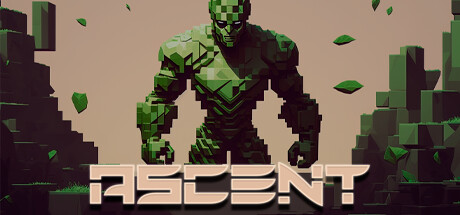
Ascent is a minimalist indie platformer developed by SipmleSoft and published by khukhrovr that embraces a stripped-down design philosophy centered almost entirely on precision, repetition, and mechanical mastery. Rather than presenting a sprawling world, layered narrative, or complex progression systems, the game focuses on a single, clearly defined idea: overcoming a sequence of vertical challenges through careful movement and timing. From the first moments, it becomes evident that Ascent is less about discovery and more about discipline, asking players to refine their skills through persistence and familiarity with its mechanics.
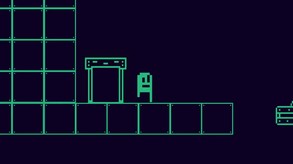
Gameplay revolves around navigating compact levels filled with hazards, platforms, and timing-based obstacles. Each stage has a clear endpoint marked by a portal, and reaching it is the sole objective. The controls are intentionally simple, limiting the player’s actions to basic movement and jumps, yet the level layouts demand precise execution. Hazards are placed in ways that punish hesitation or sloppy timing, turning even short sections into tense micro-challenges. This design reinforces a rhythm where failure is frequent but fast, encouraging players to immediately retry and gradually internalize patterns until muscle memory takes over.
Level design is where Ascent attempts to justify its narrow focus. Stages are constructed as self-contained tests, often emphasizing vertical movement and tight spacing that leave little margin for error. There is very little visual distraction, and environmental elements exist almost entirely to serve gameplay clarity. This functional approach keeps attention locked on obstacle placement and movement flow, making each success feel earned rather than accidental. While this clarity benefits players who enjoy precision challenges, it can also make environments feel sterile, as there is little variation in presentation or atmosphere beyond the increasing difficulty.
Difficulty progression is steady but uncompromising. Early levels introduce mechanics gently, but the game quickly escalates into sequences that require consistent accuracy. Mistakes often lead to instant failure, yet restarts are nearly instantaneous, softening frustration and maintaining momentum. This design choice places Ascent firmly in the tradition of old-school platformers and modern precision titles that value repetition as a learning tool. Players who enjoy mastering demanding stages through repeated attempts will find satisfaction in this loop, while those seeking a more forgiving experience may struggle to find enjoyment.
The game’s structure is concise, with a relatively small number of levels culminating in a final boss encounter. This brevity works both for and against it. On one hand, it keeps the experience focused and avoids padding, making Ascent easy to pick up for short play sessions. On the other hand, the limited content and lack of alternate modes or unlockables mean that replay value depends almost entirely on the player’s desire to improve performance rather than explore new mechanics. Once the challenge is overcome, there is little incentive beyond personal satisfaction to revisit completed stages.
Visually, Ascent opts for a clean and utilitarian aesthetic. Graphics are simple and functional, prioritizing readability over style. Platforms, hazards, and interactive elements are easy to distinguish, which is essential for a game built on precision. Sound design follows a similar philosophy, offering minimal audio cues that support gameplay without drawing attention away from the action. While this restrained presentation suits the game’s mechanical focus, it does little to establish a memorable identity or emotional tone beyond the tension of repeated attempts.
Overall, Ascent is a narrowly focused platformer that succeeds primarily on the strength of its commitment to precision gameplay. It does not attempt to broaden its appeal with narrative depth, visual spectacle, or expansive systems, instead delivering a compact challenge aimed squarely at players who appreciate repetition, strict timing, and mastery through practice. For fans of minimalist platforming experiences, it offers a straightforward and earnest test of skill. For those seeking variety, atmosphere, or long-term engagement, its limited scope and bare presentation may feel insufficient, leaving Ascent as a small but clearly defined entry within the indie platformer space.
Rating: 5/10