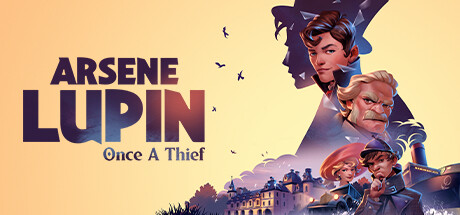
Discover the youth of a legend - Experience the transformation of Arsene Lupin, from whimsical thief to legendary hero, in 'Arsene Lupin - Once a Thief', an adventure and investigation game freely adapted from the works of Maurice Leblanc, with its events unfolding in the early 20th century.
Modeled estimate, not a reported figure. How we estimate →
Media

About
Genres
Stats
All-time low is the lowest price we've recorded for this game since we started tracking it.
Languages: English*, French*, Italian, German, Spanish - Spain, Simplified Chinese, Japanese, Russian, Polish*languages with full audio support
Engagement
Hours played at review time, across 40 reviews with recorded playtime.
Reviews
Themes across 40 recent reviews and how positive each mention is. A keyword signal, not full sentiment analysis.
positive critical· bar length = how often the theme comes up
Reviews
Avec [i]Arsène Lupin - Voleur un jour[/i], je m'étais préparé à une aventure tout juste passable, ayant été quelque peu échaudé par mes expériences précédentes sur [url=https://steamcommunity.com/id/Coucouoeuf/recommended/1573720/][i]Agatha Christie - Hercule Poirot: The First Cases[/i][/url] puis [url=https://steamcommunity.com/id/Coucouoeuf/recommended/2223740/][i]Agatha Christie - Hercule Poirot: The London Case[/i][/url], deux jeux avec lesquels ce dernier né des studios Blazing Griffin partage les mêmes mécaniques de [i]gameplay[/i]. J'ai donc prudemment attendu une promotion pour l'acquérir à moitié prix. Hélas, [b]même à 15€, l'ensemble est trop mauvais pour mériter une quelconque recommandation[/b]. Nous avons fait le jeu en couple, mais Madame, pourtant moins exigeante que moi, a préféré me laisser seul terminer le jeu. Les points positifs : - La direction artistique, sans être éblouissante, propose une palette intéressante car cohérente. - C'est un 100% extrêmement simple, puisque vous n'aurez qu'à tendre la main pour chaparder tous les succès, lesquels tomberont naturellement au fil de la progression. - Librement inspiré de l'œuvre de Maurice Leblanc, le jeu témoigne d'un certain respect pour les personnages des romans. Cela dit, il fait montre d'une diversité de connivence, introduisant notamment un juge Bouvier de couleur dans le Paris des années 1900. - Peu gourmand, le jeu tournera sans encombre sur n'importe quelle machine (en restant limité au 16/9). Les points négatifs : - La durée de vie du titre est famélique (à peine huit heures de jeu), sans la moindre rejouabilité possible. - Nous nous attendions à un jeu à la narration réussie en français, car il s'agit d'Arsène Lupin quand même ! Mais dans la langue de Molière, les dialogues sont étranges, certaines répliques paraissant déconnectées et même maladroitement enchaînées. Tout cela confère au jeu un rythme décousu, auquel il est difficile d'adhérer. L'histoire est peut-être plus cohérente et captivante en anglais, le jeu ayant été développé par un studio écossais. - L'interface utilisateur est assez inégale, rendant parfois la saisie de combinaisons laborieuses, ou bien compliquant inutilement la compréhension d'énoncés à travers des formulations curieuses. - Raconter d'abord un cambriolage sous un certain angle, avant de revenir dessus pour que le joueur puisse découvrir le pot aux roses, est une idée intéressante. Mais le jeu s'efforce d'en cacher un maximum afin de surprendre, ce qui renforce le caractère bizarroïde de la narration. - Le jeu est si simple, et le joueur tellement guidé par la main, qu'il en anesthésie le bulbe... Deux combinaisons nous ont ainsi donné du fil à retordre, simplement parce que nous ne nous attendions plus à devoir faire un effort de réflexion. - Lupin est un maître dans l'art du déguisement, soit. Mais de là à parfaire l'apparence et aussi la voix de n'importe qui pour duper son monde, tel Mystique dans X-Men ? On s'éloigne du panache de Leblanc. - La musique d'ascenseur du jeu est tantôt fade, tantôt pénible. - Les options de configuration sont extrêmement limitées et reflètent cruellement la pauvreté technique du titre.
One of these "deduction" games that rely on the mind map trope to get from clues to conclusions, this might be the worst implementation you'll ever find. - Poorly thought-out nodes, with high level of redundancy, overlap, and obvious absence. - Idem for relationships. - On the other hand, textually unrelated nodes are expected to be connected. - Direct contradictions can be seen on a same map, yet cannot be confronted. - Incorrect conclusions forced to be drawn. - Unwarranted induction leaps alongside over-itemised trivialities. - Poorly worded texts, partially responsible for the issues described above. - Bad syntax; for instance, blurbs refer to 3rd parties as he or she without names (the writer clearly infers said name from the previous node in their list, without considering that we don't see their list, we see reorganised radiant trees with no semantic continuity.) - Maslow's hammer, with mind maps used to describe everything and the kitchen sink. Meanwhile, dialogues are incoherent, most lines seem out of place, or out of character, if not utterly off topic. Clues do not open questioning lines; unrelated events or mind map inductions must be completed first. On top of that, some question/answer pairs seem to have been mixed up, bug-like. Facts often fail to match what is shown, and either way don't make sense. In short, nothing is heuristic whatsoever, with no room for intuition, while logic is completely botched. The game is playable (and easy still) for its linearity (almost hand-holding-like) and severe compartmentalisation. Frankly, the most irritating aspect is the bungled questioning, with tons of missing entries, constant interruptions (that also ruin the pace,) chains of immediately contradictory deductions, non sequiturs... UI-wise, the small size of locations and the loading screens between each of them betray a subpar product, one made for pocket phones. Right click use is inconsistent: it usually switches from room to menu as if pressing ESC, unwantedly so, or cancels closeups, as expected, but sometimes it refuses to do so, sometimes is meant for inventory usage... Entering safe combinations is incredibly inefficient and glitchy. I'd forgive the UI shortcomings, but the genre demands decent writing with airtight, clear and rich structure, none of which are found here, quite the opposite.
The game itself is a pretty mediocre detective style which you can expect from the developer. However I stopped playing this game and wish I could still refund, because I just lost all my progress. I accidentally clicked on "new game", which starts a new game without confirmation, overwriting the existing (only) save. There are no manul saves. This is super stupid and annoying. Cannot recomment this crap.
This is the 3rd game done in an diorama(esque), Point n Click - move mouse to manually see all '360 degree in an area type' game by this developer. It's by far the best and I enjoyed the others. In 'Poirot first cases', 99% of gameplay was the deduction boards, which got a bit tedious. In 'London cases', gameplay was upped a bit with less deduction boards, but still quite a lot. While the story was good, it wasn't great. Here the story was great (I had never read any of these books). They upped the gameplay a bit more and reduced the amount of deduction boards, especially as the game went on. They have an option for hint for the board and it is just that, not a solve. When I was clicking on the wrong things on a board, an item went white - indicating one end of a statement/item and crossing out some others so eventually you'll get it. Many of the puzzles were trying to find a 4 digit code for a safe, so it depends on the type of puzzles you like in a game. A couple of times the clues were a bit obtuse/patience needed. I'd have liked a bit more variety re puzzles, but mostly it was straightforward enough if you have played a few games with needing to work out the code. I get nausea on any standard 360 game so while at times it was clunky/slow trying to turn the angle around in order to move correctly, I got used to it and appreciated being able to play this. But I had to remember to move the angle around slowly to avoid getting nauseated. The clunkiness was the worst in the first few chapters but if you remembered to keep looking around you usually didn't miss much. Just the usual keep going back to talk to everyone if you can't progress. There are objectives which does help but doesn't help you in what order to do things but just a nice nudge. I think 99% of achs are auto and you can replay any chapter if you do miss any so that side of things was nice and relaxing. It's more of a visual novel. It's a nice old fashioned "universal' - no slurs, no swearing very family friendly. It would be good to play with a young teen/anyone who liked a good story. The voiceovers were VG. If you naturally are observant and like riddles/code type puzzles, and like good books, then I recommend this game. If you liked the other games then I think you'd enjoy this one as well. I think the balance of the deduction board (just clicking on 2 items/observations) was a lot better and as such enjoyed that part and thoroughly enjoyed the whole game. It was well made. [url=https://store.steampowered.com/curator/40751408/]Ginger’s Games Curator page[/url]
[h1]Impressively faithful to canon. Shame about the gameplay.[/h1] I'm not big on point-and-click games, nor am I especially interested in Maurice Leblanc’s literary works, which makes this review tricky. Let me start with the good: All of the due diligence, from a literary perspective, was done. The developers got permission from Leblanc's family estate to tell this story, and have clearly researched all of his books. If you're a diehard Lupin fan, that alone probably makes this game worth a purchase. (Thirty bucks though, oof. Maybe on sale?) The story is solid; appropriately grounded for a tale of the Gentleman Thief. And as a point-and-click, it's... fine. Perfectly playable on controller, and on Steam Deck, as it happens. The music is good. The visual style might not be for everyone but I was okay with it. If you're especially fond of point-and-click adventures, this is probably a worthy enough title. Purchase it at whatever price point you feel justifies an eight-hour experience. The gameplay, though. I highly encourage the use of a guide whenever you feel stuck, as otherwise some of the "moon logic" in the puzzles will likely stonewall and frustrate the vast majority of players. There will be moments when you don't realize you needed to check a particular object again, or you needed to speak to someone with a disguise instead of without one, or vice-versa. I got stuck several times in my eight-ish hours with this title (much of it offline, hence the logged hours), and got so annoyed that I nearly walked away from the game entirely. Keeping the pace and flow of play going is, I think, the key to enjoying this game. If you don't get an "ah-ha" moment within a few minutes of mulling over a puzzle, I doubt that looking up the solution will negatively impact your experience. Real talk, this review would be a thumbs-down if there weren't only 37 reviews at time of writing. At that level of obscurity, I think I've at least provided enough caveats to my review, and really made it clear that [b]I am only recommending this game to a specific subset of people[/b], that this very mixed review can still be a thumbs-up in the end. So with that said, [b]Recommended [i]specifically[/i] for huge Lupin fans looking for a competent story, or point-and-click genre enthusiasts, at whichever price point you think is appropriate for an eight-ish hour game.[/b] Sad to say, I think pretty much everyone else can give this a pass.
Arsene Lupin – Once a Thief is a stylish, story-driven adventure that invites players into a playful reimagining of Maurice Leblanc’s legendary gentleman thief. Blazing Griffin approaches the material with a narrative twist: the game is framed as an ongoing conversation between Lupin and his own creator, who challenges the thief to retell several of his most audacious crimes. This layered structure becomes the heart of the experience, allowing the player to witness each scenario from multiple viewpoints—first as Lupin, crafting and executing bold heists, and then as Inspector Ganimard, attempting to reconstruct the events and expose the elaborate trickery behind them. It’s a clever, theatrical approach that gives the game a unique identity while honoring the flamboyant spirit of its literary roots. The visual presentation reinforces this tone with isometric environments rendered in a clean, painterly style. Rooms, museums, mansions, and train compartments are filled with detail, and the ability to rotate the camera helps uncover hidden angles and interactable objects. The layouts strike a balance between elegance and clarity, giving each location the feel of a stage set while remaining readable for puzzle-solving. Character models are simple but expressive enough to fit the narrative style, and the overall atmosphere evokes early 20th-century intrigue with warm lighting, textured backdrops, and a sense of Parisian sophistication. The voice acting—both in English and French—is confident and gives Lupin and Leblanc a charming dynamic. Accompanied by a jazzy, caper-style soundtrack, the presentation captures the mischief and wit that define the franchise. Gameplay leans toward a relaxed blend of exploration, deduction, and light puzzle solving. Each chapter presents a different Lupin escapade, where you gather clues, inspect objects, arrange timelines, decode patterns, or match pieces of evidence on a deduction board. None of these puzzles are punishing, and the game encourages experimentation rather than penalizing mistakes. This keeps the flow smooth and accessible, especially for players who prefer narrative-driven adventures over logic-heavy challenges. Switching perspectives between thief and detective adds variety—Lupin’s sections emphasize clever maneuvers and staged illusions, while Ganimard reconstructs the truth through observation and reasoning. This juxtaposition keeps the player engaged, revealing new interpretations of earlier scenes and lending the story a layered, almost theatrical rhythm. Despite its strengths, the game does have limitations that may temper expectations. The puzzles, while varied, are generally straightforward and rarely push the player beyond casual engagement. Some deduction sequences rely more on trial-and-error than on clear logical cues, which can momentarily break immersion. The relatively short runtime—often around six to eight hours—means the adventure ends before its mechanics have a chance to fully mature. Although the environments are appealing, character animations and smaller visual details sometimes feel minimal compared to larger-budget adventure titles. A few usability issues, such as small text or occasionally awkward navigation of larger evidence boards, can disrupt the otherwise smooth pace, especially on smaller screens. Still, the charm and personality of Arsene Lupin – Once a Thief carry it a long way. Its narrative framing, dual perspectives, and witty exchanges make it a refreshing take on the detective-adventure genre. Rather than overwhelming the player with difficulty, the game focuses on style, momentum, and storytelling, inviting them to appreciate the elegance of Lupin’s schemes and the dogged persistence of his lifelong pursuer. Fans of classic detective fiction, slow-burn mysteries, and stylish caper stories will find plenty to enjoy. In the end, Arsene Lupin – Once a Thief succeeds as a compact, character-driven adventure that celebrates its iconic protagonist with grace and humor. It may not satisfy players seeking complex puzzles or deep systemic gameplay, but as a narrative escapade filled with charm, clever structure, and historical flair, it captures the mischievous appeal of the gentleman thief in a way that feels both faithful and fresh. Rating: 7/10
Very weak writing. Looks and plays like a mobile game.
Interesting game which keeps you on the rails for the majority of the game. There are some good puzzles that do take some thought before that 'aha!' moment. A lot comes down to conversational puzzles where you do need to select the correct response. Sometimes this is very obvious and some more vague but helps the story progress nicely. The absolute standout is the voice acting of the characters which is top notch. The visuals are bright, colourful and very pleasing. Camera controls consist of rotating the camera but it's not too bothersome. The story itself was engaging and the game felt it was long enough by the time it finished. Recommended
好评给亚森·罗平,永远的侠盗,自由浪漫的冒险传奇。 —————— 致有兴趣了解原著的小伙伴:目前市场上绝大多数中译本质量一般,存在改编儿童版及缩略本混杂、篇目收录不全的问题。简体中文版推荐群众出版社1998年版(百度亚森·罗平吧置顶贴有txt分享链接);繁体中文版推荐好读出版社或立村文化出版社。 —————— 很难想象能在2024年看到基于亚森·罗平原著改编的游戏作品(虽然一直观望到2025年才买哈哈哈)。剧情的基本走向忠于原著,很多名场面和经典对白都有还原,但在部分细节上有所改动、扩写和略写,应该可以满足绝大部分罗平粉(除非你有极致的原著强迫症,不接受任何改编)。略写的部分可能会对没有读过原著的玩家造成一些困惑,比如 [spoiler]游戏中没有交代罗平易容为博德吕越狱的细节[/spoiler] 。法语配音很棒,从头到尾听完了全部对话,沉浸感十足。 本地化略有瑕疵,存在部分误译问题(例如 [spoiler]"Deliver the boss' notes"翻译成“把字条交给老板”,应为“递交老板的字条”[/spoiler] )。如果遇到难以理解的文本,建议看英文。可能会解谜造成些许影响,但问题不算太大。 解谜难度中等偏简单,所有线索都会明确标出(也许想要挑战自我的玩家可以尝试关闭解谜提示)。有解谜玩法也有作案玩法,这点好评。但玩法略显单调,基本上都是找东西、找人说话、连线、排序这些套路。 交互手感一般,存在偶尔会难以按到按钮的问题。也有一些bug,比如说 [spoiler]在马拉基城堡完成盗窃以后,没有出现放置字条的交互选项[/spoiler] ,重开了这个章节才解决问题。 总体来说,游戏以沉浸式的视角演绎了原著中《亚森·罗平被捕》《亚森·罗平在狱中》《亚森·罗平越狱》《歇洛克·福尔摩斯姗姗来迟》这4个章节,体验还算不错,原著粉丝或不介意上述问题的玩家可以考虑入手。
Прекрасная игра на 1-2 вечера. Приятная рисовка и фоновая музыка, загадки в основном не сложные, но парочка прям застопорила.
Related
Related
Trends
Modeled estimate over time, reconstructed from Steam's monthly review histogram.
Momentum
Pace estimated from the game's recent review growth (our daily snapshots) at its own sales-per-review ratio — a momentum signal, not booked sales.
Audience
Estimated from the language of this game's reviews — a proxy for where players are, not official Steam demographics.
Related
| Sinister Halloween | $36.3K | 147 | 82% | $7.99 |
| Babushka's Glitch Dungeon | $36.3K | 247 | 99% | $5.99 |
| Demeo Battles | $36.3K | 75 | 71% | $19.99 |
| Into Black | $36.3K | 128 | 88% | $11.99 |
| Scars of Summer: After | $36.3K | 127 | 94% | $11.99 |
| Claymores of the Lost Kingdom | $36.3K | 90 | 71% | $9.99 |