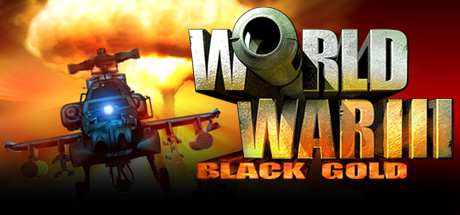
World War III: Black Gold is a classic real-time strategy game developed by Reality Pump and published by Topware Interactive that presents a speculative military conflict centered on the world’s most valuable resource: oil. Released during the early 2000s, the game attempts to blend traditional RTS mechanics with a slightly more realistic approach to logistics and modern warfare. Set in a near-future geopolitical scenario where global oil reserves are rapidly running out, the game imagines a world pushed toward large-scale conflict as nations scramble to secure the last remaining sources of energy.
The story premise revolves around the idea that global oil supplies are projected to be depleted within a decade, triggering economic instability and rising political tension between major powers. As alternative energy solutions fail to emerge quickly enough to replace oil, nations begin preparing for war in order to control the remaining reserves. This growing crisis eventually erupts into a global conflict involving several powerful factions. Players can take command of one of three major forces—the United States, Russia, or Iraq—each representing different political interests and military doctrines. While the narrative primarily acts as a backdrop for the strategic gameplay, it gives the campaign structure a sense of urgency and global scale.
The single-player campaign is divided into multiple mission arcs corresponding to the three playable factions. Each faction’s campaign offers its own perspective on the unfolding conflict, presenting different objectives and battlefield scenarios. Missions range from defensive operations where players must hold strategic territory to large-scale assaults that require capturing enemy infrastructure or securing critical oil fields. Between missions, brief story sequences and mission briefings help contextualize the conflict and explain the shifting alliances and strategies taking place across the world.
Gameplay follows many of the traditional conventions of the real-time strategy genre. Players must establish bases, construct buildings, gather resources, and deploy military units across expansive battlefields. Oil serves as the primary resource that fuels military production and technological development. To secure this vital resource, players must build oil extraction facilities and defend them from enemy attacks. Managing these oil operations becomes a central strategic objective, as losing access to oil can quickly cripple a player’s ability to maintain their military forces.
Combat in Black Gold focuses on modern military units such as tanks, armored vehicles, helicopters, missile systems, and artillery. Each faction offers a slightly different set of technologies and tactical abilities that shape how players approach combat. American forces tend to emphasize advanced air power and precision strikes, allowing them to deploy powerful aerial attacks that can devastate enemy formations. Russian forces often rely on durable armored units and efficient repair capabilities, enabling them to sustain prolonged ground engagements. Iraqi forces introduce stealth-oriented tactics, including the ability to camouflage certain units from radar detection, allowing them to launch ambushes or infiltrate enemy territory undetected.
One of the game’s more distinctive features is its emphasis on supply logistics. Unlike many strategy games where units can fire endlessly without limitations, World War III: Black Gold introduces an ammunition system that requires careful management. Units consume ammunition during combat, and once depleted they must return to supply points or receive resupply deliveries from support units such as helicopters. This system forces players to think beyond simple unit production and consider the sustainability of their battlefield operations. Maintaining supply lines and ensuring troops remain stocked with ammunition can become just as important as the combat itself.
The battlefield environments are presented in full 3D, which was relatively impressive for a strategy game at the time of its release. Players can rotate and zoom the camera to observe combat from different angles, giving them better control over battlefield positioning. Terrain plays a meaningful role in how battles unfold. Different surfaces such as sand, grass, or rocky ground affect vehicle movement speeds, while elevation changes influence line of sight and tactical positioning. Environmental conditions such as weather and time of day further add variety to missions and influence visibility on the battlefield.
Visually, the game emphasizes realistic military hardware with detailed vehicle models and explosive combat effects. Tanks move with weight and momentum across the terrain, artillery bombardments produce large explosions, and helicopter gunships circle overhead while firing rockets at enemy positions. While the graphics naturally reflect the technological limitations of early 2000s PC hardware, the game still manages to create a convincing atmosphere of large-scale military warfare.
Sound design helps reinforce this battlefield atmosphere. The game features a mixture of dramatic orchestral music and ambient combat sounds that accompany intense engagements. Gunfire, missile launches, and vehicle engines contribute to the sense of commanding a large mechanized army in active combat zones. Voice communications and mission briefings further enhance the feeling of being part of a coordinated military operation.
The game also includes multiplayer functionality and skirmish modes that allow players to test their strategies outside the campaign. These modes enable matches against AI opponents or other players, offering a sandbox environment where different faction abilities and tactical approaches can be explored. For strategy enthusiasts, this adds significant replay value beyond the story-driven campaign missions.
Despite its strong ideas and interesting mechanics, the game does have a few noticeable flaws. Unit pathfinding can occasionally behave unpredictably, particularly on maps with complex terrain features. Certain elements of the user interface also feel dated compared to modern strategy games, which may make managing large armies slightly cumbersome. Additionally, while the faction differences add variety, the overall strategic depth does not always reach the level of the most iconic RTS titles of the era.
Even with these shortcomings, World War III: Black Gold remains an interesting example of early modern-warfare RTS design. Its focus on resource conflict, logistical supply systems, and realistic battlefield mechanics gives it a distinctive identity among strategy games of its time. While it may not have achieved the legendary status of genre giants like Command & Conquer or StarCraft, it still offers a thoughtful and engaging experience for players interested in military-themed strategy.
Overall, World War III: Black Gold delivers a solid and occasionally innovative real-time strategy experience that rewards careful planning and tactical thinking. Its combination of modern military combat, resource management, and logistical strategy creates a game that feels both challenging and immersive. For players who enjoy classic RTS titles and want to explore a slightly different take on modern warfare strategy, it remains a worthwhile experience even years after its original release.
Rating: 7/10