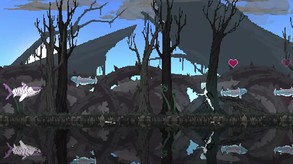
Traverse stunning pixel landscapes, collect resources, and solve genetic puzzles to bring life back to a desolate planet. Play as an android created by the last human in existence to retrace evolution and save the world from mass extinction, while discovering the true weight of the human condition.
Modeled estimate, not a reported figure. How we estimate →
Media
About
Genres
Stats
All-time low is the lowest price we've recorded for this game since we started tracking it.
Languages: English, Japanese, Simplified Chinese, Traditional Chinese, Korean
Engagement
Hours played at review time, across 41 reviews with recorded playtime.
Reviews
Themes across 41 recent reviews and how positive each mention is. A keyword signal, not full sentiment analysis.
positive critical· bar length = how often the theme comes up
Reviews
둘만을 위한 세상을 만들기 위해 둘이 노력한 이야기 [spoiler] 근데 원래 인체연성은 족나 위험하다는건 강연금 때문에 다 알고 있었음 [/spoiler]
World for Two, developed by Seventh rank and published by room6 and yokaze, is a quietly introspective adventure that trades urgency and spectacle for patience and reflection. It places the player in control of an android assisting the last human scientist in a world where life has nearly vanished. Instead of presenting this scenario as a crisis to be solved through action, the game frames it as a gradual process of restoration, where each small step toward rebuilding the ecosystem carries meaning. The gameplay centers on collecting energy and genetic data to recreate living organisms. Starting with simple life forms, players experiment with different combinations of DNA to produce new species, gradually expanding the scope of what can exist in this fragile world. This system is not driven by strict instructions but by curiosity and observation, encouraging players to test possibilities and learn through discovery. Each successful creation feels like a meaningful achievement, but it is tempered by the knowledge that these creatures are temporary, reinforcing the idea that life in this setting is part of a continuous cycle rather than a permanent solution. Exploration plays a supportive role, allowing access to a range of environments that reflect the world’s slow recovery. These areas are distinct but interconnected, each offering different resources and opportunities for experimentation. Movement through them is unhurried, with no immediate threats or time constraints pushing the player forward. This creates a rhythm that is calm and deliberate, giving space for the player to absorb the atmosphere and consider their next steps. However, this pacing can also make progress feel slow at times, particularly when waiting for resources or attempting combinations that do not yield results. The visual presentation is one of the game’s strongest elements. Its pixel art is detailed and expressive, capturing both the emptiness of a world in decline and the subtle beauty of its gradual renewal. Small touches, such as environmental reflections and gentle animations, add depth without overwhelming the scene. The soundtrack complements this approach with soft, understated compositions that enhance the sense of calm and introspection. Together, these elements create a cohesive atmosphere that supports the game’s themes and encourages a more reflective style of play. Narratively, the game takes a restrained approach, focusing on the relationship between the android and the scientist rather than delivering a complex plot. The story unfolds through small interactions and environmental context, allowing players to interpret its meaning rather than presenting it directly. Themes of responsibility, isolation, and the consequences of creation are woven into the experience, giving it an emotional undercurrent that becomes more apparent over time. This subtle storytelling fits the overall tone, though it may feel understated for those expecting a more defined narrative arc. There are, however, some limitations that may affect how the game is received. The reliance on experimentation can occasionally lead to moments of uncertainty, where progress depends on trial and error rather than clear logic. The slow pacing, while intentional, may not appeal to players who prefer more immediate feedback or structured progression. Additionally, the relatively limited scope means that the core mechanics do not evolve significantly over time, which can lead to a sense of repetition during longer sessions. Despite these challenges, World for Two succeeds in delivering a cohesive and thoughtful experience. It does not aim to be fast-paced or mechanically complex, but instead focuses on creating a space where players can engage with its themes at their own pace. Its design encourages reflection rather than reaction, offering something that feels distinct within the broader landscape of adventure games. In the end, it is a game that leaves a lasting impression through its atmosphere and ideas rather than its scale or intensity. For players willing to embrace its slower, more deliberate approach, it provides a meaningful and memorable journey through a world on the edge of renewal. Rating: 8/10
very nice game, liked it a lot
血肉苦弱,机械飞升
the first idea was good but it got too quickly repetitive
アンドロイドの体を活かし、人類が滅亡した惑星からDNAを採取、生き残りの博士と共に世界を救う物語。 綺麗なドットの世界(都市伝説解体センターの方が担当)も音楽も本当に素敵だった。 手軽さとすっきり感、もっとレビューあってもおかしくない、色んな人におすすめしたい作品。 タイトルってそういうことか、となれるのも良い。 クリア後に前日譚があるのも嬉しかったです。
World for Two ist ein wunderschönes Indie-Pixel-Spiel mit zwar wenig Spielmechanik (um DNA zu sammeln und neue Spezies zu züchten läuft man quasi nur von A nach B), aber dennoch überzeugt es durch die tolle Musik und seine kleine aber feine Hintergrundgeschichte. Vor allem das am Ende spielbare Chapter 0 bringt Klarheit über unsere Existenz als Android. ♡
[h1] 7 frogs out of 10 [/h1] So, I streamed this game, and I really love the overall feel of the game, but the mechanics can take some work that makes it increasingly more aggravating. The Issues I had with the game are: [list] [*] 1. Any failure to create a new lifeform eats the genes you used, which at first, is fine, but when you get further in the game, this can put you back by about 10 minutes of back and forth to make a latestage lifeform, even with teleporting. [*] 2. Want to make more than one artificial gene at a time? Too bad. Be ready to make each gene one at a time, comeplete with a small cutscene. EVERY. SINGLE. TIME. [/list] The art of this game is gorgeous, and the music is great, and the story isn't bad. I love the frogs the most and I have like 7 of them so far.
后期的基因采集过于繁琐,但仅凭它的音乐和画面就足以称为一款好游戏,值得一玩
good
Related
Related
Trends
Modeled estimate over time, reconstructed from Steam's monthly review histogram.
Audience
Estimated from the language of this game's reviews — a proxy for where players are, not official Steam demographics.