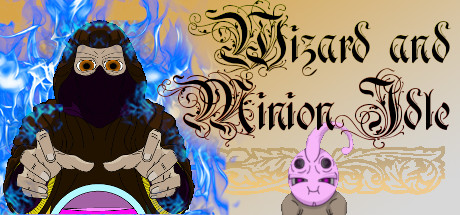
Train your stats, cast spells, feed your minion, defeat monsters and bosses, raise demons, craft gems, go fishing and so much more in Wizard and Minion Idle--WAMI. This free to play, solo developed, Idle/active hybrid game has flexible pacing for long-time play-ability.
Revenue comes from in-game items and microtransactions, which our price-based model doesn't estimate. Copies below reflect the player base, not paid sales.
Media
About
Genres
Stats
Languages: English
Engagement
Reviews
Themes across 40 recent reviews and how positive each mention is. A keyword signal, not full sentiment analysis.
Reviews
+
A true blue Idle game that comes in the footsteps of the great NGU Idle. As someone who has thoroughly played both, it is spiritually a sidegrade, but functionally a downgrade. If you haven't played NGU yet, then stop reading this and go play that instead. You will not regret it. If you have completed NGU, then feel free to continue with this review. You are probably here because this game looks similar to NGU, and as such I will be heavily, repeatedly, and unapologetically comparing the two games. While NGU is long finished and complete, this game is still unfinished and although is nominally still being worked on, progress is very slow. For most intents and purposes though, you can probably roughly consider it to be on par with/or as a complete game, and it is at least as long as NGU. At the time of writing this review, I have reached what is probably close to the end of the lategame, although not at hyper-lategame levels of progress yet. It has also been roughly a year and a half since I touched the game while taking a very extended break that came after the "spell" was broken when I had to devote my time to other things. Perhaps I will eventually come back, and perhaps I won't. I have already gotten what I wanted out of the game. It was alright. As you can probably expect from the previous description, as well as how the game looks in the pictures and trailer, the core gameplay is basically just like NGU, having a variety of different systems to slowly unlock that each slowly build up their own power, and interact with/upgrade the other systems. Just like with NGU, progression is mostly fixed and linear, with effort still being rewarded in speeding up your progress, but with sharply diminishing returns. While the gameplay is very similar to NGU, one key part where they differ is in the pacing of the game. The gameplay of both games revolves around slowly building up your power in order to clear various "walls" which gate and then unlock further progression that you can use to build up for the next wall. Over time, the walls get longer and tougher, and each one generally will take a little longer to clear than the last. Although the gameplay is effectively the same as NGU, there is no better way to put it than to say that NGU simply does it better. While there were a few hiccups throughout NGU, mostly towards the very early game, most of the progression was extremely smooth and well paced, with a comfortable amount of features to keep you occupied while you got ready for the next wall. In comparison, WAMI lacks that same smoothness. It is not terrible by any means, but you do feel the difference between a game that is just does something alright, compared to a truly well made and polished game that is able to offer something special. It is hard to pin down the exact feeling I get from comparing NGU to WAMI, and at the end of the day it is impossible to remove all the subjective elements, but the best way to describe it is that it feels like the developer of NGU put their full heart into it, while WAMI is maybe only at 70 or 80% heart. There are fewer finer details, and while to give credit where credit is due, many of the features in WAMI are unique and different compared to NGU, they still feel on average shallower and less well thought out compared to what you would have found in NGU. Where you will notice many different small details and pieces of polish in NGU, you will not find the same in WAMI, from details in gameplay, story, humor, art, and so on... Even with its unique features, it takes enough from NGU to reasonably be considered a sort of clone, and everything that it does take it just does worse. Do I regret the time I spent playing WAMI? Not really. But at the same time, I can't say that it was ever special in the same way that NGU was. NGU was the game that first got me into the idle and incremental genre, and I don't believe that WAMI would have been able to do the same if it took NGU's place. The only reason I played this in the first place was because I wanted to play more NGU but didn't want to commit the sin of actually restarting NGU, and WAMI has somewhat delivered on that. Right now the game rests at an 89% positive review rating, but I feel like it is a game that really should be closer to 87% positive, so that is why this review is negative even though my feelings are more neutral and arguably slightly positive. Idle games of this caliber are a large investment, not interms of money but instead time, and at the end of the day, why settle for anything other than the best? And this game certainly isn't the best...
Related
Related
Trends
Concurrent players on Steam, sampled daily since tracking started.
Hours played at review time, across 40 reviews with recorded playtime.
positive critical· bar length = how often the theme comes up
This feels like it wanted to be NGU Idle without putting in the work. The combat is Adventure Mode from NGU idle...without monster pictures or monster names. Just generic 'Evil Creatures' with an HP bar that drains. And then another HP bar takes it's place. 0 personality to it. The tutorial boxes are...odd. Like, instead of putting in story, the game just says 'Hey! Try getting to level 12!' when you do 'Wow! That was hard, huh! Oh look, a creature is charging at you! Feed it this treat!' with the option being 'Feed it a treat'. No images. Not actually being part of the game world (It's a pop-up box, like the tutorial boxes). The tutorials are kind of bare-bones. Like, it told me about Adventure Mode (Which is more like Adventure Mode from NGU than the grinding going on at the start), and that I can equip items to my Minion...Except I can't find the items to equip. It says I GOT some. But unlike NGU, who's UI is clean and has a clear 'Items' tab...This game does not. And it turns out the 'Item's button is hidden UNDER the pop-up box telling me I got an item. Oh, and there's no monster names or pictures in Adventure, either. Just the area name: 'Monster Forest', and the rarity of the monster. No names. No pictures. Just a draining bar. 0 personality. The EXP Shop has increasing prices, which means the Mana grind is even worse, because every purchase means the next purchase will be more expensive. You start with 1 million Mana, but your Mana Generation is so slow that it will take TWO DAYS to fill it. Which removes both the concept of raising your max mana because you hit the cap & need more, and needing Mana Gen because you raised your cap and need it to fill faster, which shows the player how those mechanics interact. Instead, you need to pump Mana Gen because a default 2 day refill is absurd. Don't buy Max Mana, because you already have absurd amounts. The tooltips did not say it, so I don't know if it exists, but skills don't seem to reduce in mana cost when used. So the idea of Rebirthing/Reincarnating to reduce skill costs & save on Mana does not exist. It has a Soul Shop, which is the AP shop from NGU Idle, except the prices are tens of thousands, with 5k being the cheapest, and the game begrudgingly gives you 1 Soul Point every couple of actions you take, like upgrading your Town. Seriously; There are a grand total of THREE potions for 5k Souls. Then the next lowest price for an item is is 20k. Then 25k, 50k, 75k, 90k, 100k, 150k, 200k, and finally 250k. Oh, but the game sure has a way to buy Soul Points with your real cash, so there's that! Even a $100 pack! That basically means the Soul Shop completely missed the point of the AP Shop being a dig at microtransactions while also being an OPTIONAL way to support the dev because the game gave you generous amounts of AP. It also has player profile icons for RL cash. And a 'Daily Reward', to get in on that FOMO exploitation. It seems to completely lack the story/boss fights of NGU. As I said at the top; That part is like a watered down Adventure Mode, where you just attack automatically and the enemies are generic 'Evil Creatures' with no picture, individual names, or story attached. All in all, it really feels like the dev or devs wanted to be the next NGU, did not want to put in all that work, and then slapped on a real money shop with a $100 option while thinking 'This should make me millions!'
Wizard And Minion Idle from Oni Gaming is an incremental RPG that leans unapologetically into depth and long-term progression, offering a layered experience that gradually unfolds into something far more complex than its modest presentation suggests. At its foundation, it follows the familiar idle formula of accumulating resources, upgrading stats, and pushing through increasingly difficult encounters, but what sets it apart is how aggressively it expands that formula into a web of interconnected systems. The result is a game that feels less like a simple idle clicker and more like a slow-building management RPG where every mechanic feeds into a larger progression engine. The gameplay centers on developing both a wizard and their accompanying minion, each contributing to combat and resource generation in different ways. Early on, progression feels straightforward—defeat enemies, gather materials, and invest in upgrades—but this simplicity quickly gives way to a more intricate structure. Systems such as spell enhancement, demon assignments, gear acquisition, and exploration layers begin to stack on top of one another, creating a sense of continuous discovery. What makes this structure compelling is how each new feature doesn’t replace the previous ones but instead enhances them, reinforcing a loop where small optimizations compound into significant long-term gains. A defining element of the experience is its reincarnation system, which resets progress in exchange for permanent bonuses and new opportunities for growth. This mechanic transforms the game from a linear climb into a cyclical process of refinement, encouraging players to approach each run with greater efficiency and strategic awareness. Over time, these resets become less about starting over and more about accelerating forward, as accumulated bonuses dramatically shorten the path back to previous milestones. This creates a satisfying rhythm where effort is consistently rewarded, even when progress appears to stall in the short term. Customization plays a major role in maintaining player engagement. The game offers a wide range of ways to shape your build, from prioritizing combat power to focusing on resource generation or balancing multiple aspects of progression. Demon assignments, spell upgrades, and equipment choices all influence how efficiently your wizard and minion perform, allowing for meaningful experimentation. This flexibility ensures that progression doesn’t feel entirely predetermined, giving players a sense of ownership over their growth and encouraging them to adapt their strategy as new systems unlock. Despite its strengths, the game’s ambition can also be its biggest hurdle. As more mechanics are introduced, the interface becomes increasingly dense, and navigating the various menus can feel cumbersome. Information is not always presented in the most intuitive way, which can make it difficult to fully understand how certain systems interact without investing significant time. For newcomers especially, the sheer volume of features can feel overwhelming, potentially creating a barrier to entry that the game never fully resolves. Pacing is another area where the experience can fluctuate. The early stages are engaging and fast-moving, offering frequent rewards and a clear sense of progress. However, as the game advances, the pace slows considerably, with certain upgrades requiring extended periods of waiting or heavy optimization to achieve. While this is typical of the genre, there are moments where the grind feels less like a deliberate design choice and more like an unavoidable bottleneck, which can dampen the overall sense of momentum. Even with these drawbacks, Wizard And Minion Idle succeeds in delivering a deeply engaging experience for players who enjoy intricate systems and long-term progression. It doesn’t aim to be a casual or lightweight idle game; instead, it offers a dense and evolving framework that rewards persistence and strategic thinking. For those willing to invest the time, it provides a satisfying sense of growth and mastery that continues to unfold well beyond the initial hours. In the end, Wizard And Minion Idle stands as a content-rich and ambitious entry in the idle RPG space. While its complexity and pacing issues may not appeal to everyone, it offers a rewarding experience for players who appreciate depth and are willing to navigate its more demanding systems. Rating: 8/10
Wizard And Minion Idle is, as the game suggests, an Idle game, unfortunately for the past few days what I've played didn't feel like one. It's a big game, especially for a clicker/idle, lots of different things, each one of which is entirely different from one another, but as a few other reviews have mentioned, some of these can't be idled for more than a few minutes at a time, or with Adventuring having a maximum of 12 hours offline boost instead of normal offline bonuses, I wasn't even aware of this for several days. This game copies a lot of what it has from another game I've played called NGU Idle, another enjoyable yet extremely long game. I enjoy games like these, it has ups and downs, but overall it's unique enough to stand out (barring one game, whereas most idle/clicker games tend to have dozens if not hundreds of clones). Normally I'd give this game a positive review, as it has almost everything I enjoy, but the one issue I have seems to come from how you log in. I don't think I've ever played a game where you have not one, but two options of signing in, Online and Offline, I have lost literally hours of work due to apparently? clicking the wrong one, luckily this game also has another method of saving, importing/exporting, but for some reason using this method I simply load to when I logged in after my save was already overwritten (so I'm guessing the issue may be on my side). The only thing I can think of as to why my data gets deleted randomly (An entire playtime (from open/close) would be the feature no other game I've played as, the option to log in either offline/online.
Wizard and Minion Idle is an interesting idle game, in that it has a really good foundation but it is just doing what 4G did with NGU Idle with a less interesting color scheme and less intuitive features. Before going deeper into my review, based on my SUPER limited playtime of this, I don't know EVERY feature this game has to offer, but based on release dates from NGU Idle on Kongregate (at least 2018) and this game's release date of 2019 on Steam, I'm assuming NGU Idle came out first. Is this game worth playing? That's up to you, I would recommend trying both of them and see which one you like more, the UI and art isn't really appealing to me, which was something I said (or at the very least thought) for Farmer and Potatoes Idle from Oni Gaming (same creator) but for the 3 games from Oni I've tried (this one, F&P Idle, and Revolution Idle) this is the only one I will leave a review not recommending the game. The Adventure Mode inventory is a shrunk-down version of NGU Idle's, the Spell, Conjuring, Demon, and Town section are some of the most re-hashed sections of incremental games, which is to be expected in more content-heavy games which this one undoubtedly is. The minion lab is a lot like the Hacks section of NGU Idle. And that's based solely on my 20 or so minutes of playing this game. I have locked sections of content (which I would also have in NGU Idle with that playtime) so I can't thoroughly evaluate the game. But I went into this game blind, without reading reviews or anything, I just got into Revolution Idle and saw that this dev also made Farmers vs Potatoes and was like wow I really like those 2, let's try this one. And the instant I got into the Minion Lab and Adventure I was like wow, this really just feels like NGU Idle. But, what I can tell you (and what other reviewers who have sunk thousands of hours into this game have also said) is that you should just play NGU Idle as this plays like a similar version of it with a lot less charm, a less user-friendly UI, less unique or trailblazing, and just does what NGU Idle does in worse or more shallow ways. I've sunk 4.5k hours of screentime into NGU Idle and 2000 days on my save. But ultimately, if you like this game, then play it.
《Wizard And Minion Idle》以“巫师养成”为核心,将放置挂机与主动操作完美结合,构建了一套“基础积累-深度解锁-循环进阶”的完整玩法体系,打破了传统放置游戏“无脑挂机”的刻板印象。 玩家将扮演一名初出茅庐的巫师,核心目标是提升自身实力、探索魔法世界。基础玩法围绕“点击/挂机收益”展开——通过点击屏幕或挂机自动积累魔力,用魔力升级法术、强化自身属性,进而击败怪物、推进关卡,解锁更多游戏内容。这种经典的点击放置模式,让玩家无需投入过多精力,碎片化时间即可轻松推进进度,完美契合休闲游戏的核心需求,即便长时间不在线,巫师与仆从也会持续积累资源,回归时总能收获满满的成长反馈。 但随着进度推进,游戏的深度会逐步显现。不同于同类游戏单一的属性升级,WAMI 构建了多维度的养成体系:除了基础的法术与属性强化,玩家还能召唤并培养忠诚的仆从,通过喂食、实验提升其战力,让仆从成为协助战斗、积累资源的重要助力;可以召唤恶魔,根据自身需求分配它们负责产出魔力、金币或强化战力,实现资源获取的个性化规划;解锁城镇建筑后,还能通过升级房屋、学校、神庙等建筑,永久提升金币收益、法术效果与战力加成,每一步规划都能带来明确的成长反馈。 游戏的缺点主要集中在画面过于简陋;其次没有中文翻译,并且游戏内容的呈现方式则又完全是文本,导致入手有些难度。
Just a very simple text on screen game, hours of enjoyment and I've barely scratched the surface. Easy to put down, easy to sit about and engage for bouts of time.
Very fun long term idle game! Hard to find good idle games that can last for months or even year(s)!
A good, grindy progress simulator. Sometimes that's what you need in life, and WAMI delivers in spades. Completion is measured in months or even years, apparently. After nearly three months, I can believe the latter estimate. While there are in game purchases available, the game is accessible without spending any money.
Momentum
Pace estimated from the game's recent review growth (our daily snapshots) at its own sales-per-review ratio — a momentum signal, not booked sales.
Engagement
DAU/MAU are modeled from peak concurrent players (≈×8 and ×28) — Steam publishes no active-user counts, so treat these as rough estimates, not reported figures.
Audience
Estimated from the language of this game's reviews — a proxy for where players are, not official Steam demographics.
Related
| Emberward | $2.3M | 3.8K | 97% | $19.99 |
| Journey to the West | $774.2K | 1.7K | 81% | $19.99 |
| The Eyes of Ara | $94.6K | 845 | 83% | $4.49 |
| Sect And Monsters | $7.7K | 138 | 80% | $4.99 |
| FURRY DREAMS | $3.8K | 28 | 86% | $3.99 |
| FURRY GIRLS | $3.5K | 26 | 92% | $3.99 |