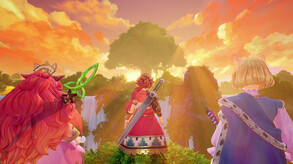
Explore a world of elemental spirits and adventure in the latest Mana action-RPG.
Modeled estimate, not a reported figure. How we estimate →
Prices
Each in the currency that store quoted — not converted: the gap between two rows is the publisher's pricing, not an exchange rate.
Availability
We put this game to every storefront we collect. A market that answered not sold has told us something about the game; a market we never asked has not, and the two are never drawn the same.
Discounts
Every price cut of more than 20% we have observed, in each market that quoted one, with this game's chart position on either side of it. These are episodes, not a model: a sale is one event, and one event cannot tell you what the next one will do.
About
Genres
Sums Steam only; PlayStation, Xbox publish no volume signal, so the true total is higher by an unknown amount.
| Store | Price | Audience | Score | Chart | Est. revenue |
|---|---|---|---|---|---|
SteamYou are here | $23.99−60% | 2.7Kreviews | 78% | — | $1.4M |
| $59.99 | 5.4Kratings | 85% | — | not modelled | |
Updates
Build ids and update times come straight from Steam's PICS — the same source SteamDB reads. Patch history grows as we record new builds.
Engagement
Reviews
Themes across 834 recent reviews and how positive each mention is. A keyword signal, not full sentiment analysis.
Reviews
Visions of Mana is a game of almosts and I don't mean it's almost 10/10 I mean it's almost ok. For example the story is almost ok if it didn't play out like every other JRPG trying to copy the FFVII formula. Swap Sephiroth for Daedolos and it's pretty f***ing clear from chapter 1 who's going to die off during the story. You see it worked in FFVII because the player spends a huge chunk of time doing goofy stuff with she-who-must-be-killed-off like cross dressing, stamping all over her flowers, rescuing her from a lab. In Visions of Mana they-who-must-be-killed-off is literally an NPC on the side lines of the battlefield. And the only build-up we have is an end of chapter spiel about everything that happened in the chapter... Which brings me to my next point. The dialogue is endless drivel that repeats itself over and over so much that I ended up skipping most of the dialogue in the second half of the game and still understood what was going on. The story has this over emphasis on explaining everything, like everything needs a reason or a backstory or worse a fetch quest to make sure loose ends are tied up. "Hey did you hear about the [b]Rabbites[/b] down the road? Man I was just walking down the road and saw these [b]Rabbites[/b]. They looked pretty menacing so I avoided the [b]Rabbites[/b]. I'm worried about other merchants who might walk the road, what if they run into the [b]Rabbites[/b]... You know, the [b]Rabbites[/b]. The [b]Rabbites[/b] down the road... Go kill the [b]Rabbites[/b]" [i]Our hero valiantly wonders down the road and slays all the [b]Rabbites[/b]...[/i] "Oh hey it's you did you kill all the [b]Rabbites[/b]? I was walking down the road again and didn't see a single [b]Rabbite[/b]. You see this isn't just the road I walk every day, this is the road I take when I need to reach the market. I used to walk this road every day with my pet [b]Rabbite[/b], until one day [b]Rabbites[/b], something something [b]Rabbites[/b]. then [b]Rabbites[/b], more [b]Rabbites[/b] f***ing [b]Rabbites[/b]. Thanks here's some gold... But that piece of gold there is special, you see it's shaped like my pet [b]Rabbite[/b]..." AAAAAAAAAAAAAAAAAHHHHHHHHHHHHHHHH [i]Our hero valiantly pulls the power cord out of their computer[/i]. The soundtrack (I don't normally review these) is almost an absolute banger. There are some parts of the game especially the boss battle against The Gary where there's actual power metal. The only problem is these moments are short and fleeting so you don't get to spend much time bathed in them whilst slaying the [b]Rabbites[/b] down the road! It's almost as if they're doing it to make you buy the Soundtrack. The combat system is very basic. Use element X against element Y, or use element X class strike against element X in which you will do 3x it's HP as damage anyway. Hell you can use a class strike against an enemy that is immune to the element of the class strike and you'll still kill it. The problems were blaringly obvious from the start when I could cheese a lvl 50 dungeon at level 14. Those enemies are the median point on the damage/progression table and their damage couldn't one-shot me, so god forbid, and I was right, enemies above lvl 50 are equally as trivial. 8 elements, 8 Alms and the game gives us 5 characters max and only 3 in combat. There was so much opportunity for diversity and depth but it was all thrown away for what? To have a meaningless, obvious and contrived plot devices? I give it a positive review because at the end of the day I don't regret the time spent. It's a wholesome story and the game feels like it would serve as an entry point into the RPG genre. It's nice to play while having a video playing in the background. I'll give credit where it's due, [b]the level designers for this game did a fantastic job.[/b] Every area looks great and unique. The weather and atmosphere is carried really well. And when the budget started running out and the later stages of the game got smaller they made the effort to keep those areas interesting... Except for the part where they just repeated half the locations to create a bigger dungeon before the final boss.
Media

Related
Related
Price dynamics, follower growth, revenue and sales trajectories with interactive tooltips
This and every other Pro feature is free until October 20, 2026. A free account is all it takes.
14 of 15 markets; the rest we haven't asked for this title, not markets where it is unavailable.
14 on sale1 answered “not sold”0 we did not ask
The 1 “not sold” market is read from the Steam price pass of Sep 2: that day the store answered for this game elsewhere and gave no price there. The 14 priced markets are the same rows as the table above — each the latest price we hold, dated here when it is older than that pass. The 0 marked “not asked” were not put to this store at all — either it has no storefront there or we do not collect it yet, and neither is a statement about the game. A refusal is a refusal on one day; a store can list a title again tomorrow.
Reviews, worldwide (the counter carries no country): 1/day in the week to Aug 4 → 1.43/day in the week after.
For scale, across Steam · Top Sellers · Brazil over the last 30 days: the 24 chart moves that followed a price cut of more than 20% went a median of 9 places towards #1, and the 2,419 moves with no price cut behind them went 2 away. One store, one chart, one country — it is the only place we have enough observations to say even that.
Prices outside the United States have been collected since 6 August 2026 and chart positions since 19 July 2026, so a cut older than that has no market to compare and a market that joined later has no history yet. Nothing here is converted between currencies.
Stats
All-time low is the lowest price we've recorded for this game since we started tracking it.
Languages: English*, French, German, Spanish - Spain, Japanese*, Korean, Simplified Chinese, Traditional Chinese*languages with full audio support
| $23.99−60% |
| 1.1Kratings |
| 76% |
| — |
| not modelled |
Matched by title — a reused name can pair the wrong games. * is a critic aggregate. Prices and positions are each store's United States storefront; Epic charts worldwide. Audience and Score too, except Steam's, which is worldwide.
Hours played at review time, across 836 reviews with recorded playtime.
positive critical· bar length = how often the theme comes up
7.5/10 Pros: - Some of the best level design I've ever seen. Maps are sprawling and gorgeous, and feel extremely fun and rewarding to explore. - Combat feels fast-paced and challenging, while still being manageable. - Great collect-a-thons; lots of reasons to go back and re-explore areas, with plenty of different things to find on each map. - Art style looks amazing. Haven't had any performance issues either (GeForce 3060 here.) Cons: - Voice acting is a very hit or miss. There's some great performances, but also some really bad ones. - Character design is kind of bleh. It's obvious who any main players in the story are going to be, since they're so ridiculously flashy instead of just looking... somewhat normal. - Story is pretty bland thus far. I'm into chapter two at the time of writing this, and while there's been *hints* that things might change, so far there's been very little for me to care majorly about; feels like a reverse FFX in a way... group of friends super excited to go on a pilgrimage to sacrifice themselves.
This is a great addition to the Mana series. The story is engaging and hits some memorable emotional beats, and the characters are fun and well-voiced (and are refreshingly supportive of each other). Combat is brisk and each character has 9 different class paths available, offering a generous degree of customization. The music is fresh while retaining the Mana style. The visual design is gorgeous. Seriously, I don't think the devs got enough credit there; there are few anime-styled games that look this good. Many areas (particularly Longren village and Rhata Harbor) had design sensibilities that reminded me fondly of classic PS2-era action-RPG titles. I enjoyed playing through it, and I hope it did well enough that Square is convinced to continue the series. Runs pretty well on Steam Deck if you use FSR2 and shoot for a 30fps lock with high detail settings.
the story and writing are pretty terrible
半額セールだったので購入。全体的にグラフィックはかなり綺麗です、キャラの3Dモデルも良くできていました。しかし評価できるのは見た目だけで、肝心のゲーム部分に細かい不満が大量にあり、特にユーザビリティが酷すぎてストレスが溜まりました。個人的な好みの話を言えば、シナリオが一番酷いかも…登場人物に全然感情移入できなくて制作者が泣かせたいシーンでも1mmも涙腺が緩まなかった。
Visions of Mana marks an important return for a series that has long carried a devoted following but has struggled to find its footing in the modern RPG landscape. Square Enix approaches this new entry with a clear intention: revive the charm, warmth, and elemental fantasy that defined the Mana identity, while presenting it through contemporary action-RPG systems and richly rendered environments. The result is a game that feels like both a tribute to its lineage and a cautious step forward, embracing accessibility, visual vibrancy, and fluid combat while maintaining the gentle, almost storybook-like tone that the franchise is known for. The story centers on Val, a young Soul Guard chosen to escort his childhood friend on a pilgrimage connected to the world’s elemental balance. What begins as a ceremonial journey gradually unfolds into a wider conflict involving the fading power of the Mana Tree and forces seeking to disrupt the natural harmony that sustains the world. The narrative evokes classic JRPG motifs—prophecies, elemental spirits, chosen guardians—but it delivers them with a soft-spoken sincerity rather than bombast. The tone is optimistic, comforting even, and while the story does not push boundaries or strive for deep philosophical tension, it maintains an earnest emotional core. Characters interact with warmth and camaraderie, carrying the kind of lighthearted charm that characterized older Mana titles. However, this gentleness sometimes comes at the cost of depth; several character arcs feel underdeveloped, and major story beats can resolve too quickly or predictably. Where Visions of Mana finds its strongest footing is in its action-RPG combat system and character progression. Combat is fast, colorful, and dynamic, blending real-time movement, quick attacks, aerial combos, and ability-based techniques tied to elemental classes. Each character can shift classes based on elemental affinities, providing access to distinct weapon types, attack patterns, and support skills. This flexibility encourages experimentation, letting players tailor party roles to suit their preferred playstyle—whether focusing on raw damage, crowd control, healing, or hybrid builds. The system flows smoothly, with battles rarely dragging and enemies often encouraging tactical positioning rather than button-mashing. There are occasional frustrations with the camera or the visual clutter created by overlapping effects, but overall the combat proves to be one of the game’s most consistently enjoyable elements. Exploration aligns with this design philosophy by combining semi-open world zones with a sense of gentle adventure. Each region is vibrant and inviting, filled with treasures tucked behind cliffs, puzzles gated by new abilities, hidden pathways, and optional challenges. The environments are lush and varied—sun-drenched plains, glowing forests, desert expanses, and floating islands—each rendered with a painterly touch that blends modern visual fidelity with nostalgic aesthetics. While the game does not embrace fully open-world freedom, the areas are large enough to encourage curiosity without overwhelming players. There is a rhythmic pleasure in revisiting earlier zones once new traversal skills are unlocked, revealing secrets that were inaccessible before. This sense of light, organic exploration captures one of the most beloved qualities of classic Mana titles: the joy of wandering through a magical world simply because it feels good to be there. The audiovisual presentation strengthens this connection to the series’ roots. The orchestral score, blending lively field themes with serene ambient tracks, reinforces the emotional tone of each region and echoes the musical lineage established by earlier Mana entries. Sound design enhances both combat and exploration, from the satisfying sweep of elemental attacks to the quiet rustling of creatures in the distance. Visually, the game presents one of the most striking interpretations of the Mana aesthetic to date: soft, colorful, almost fairy-tale-like environments that feel comforting rather than overwhelming. This cohesion of sound and art direction helps the game maintain a distinct identity even when its gameplay mechanics echo broader action-RPG trends. Despite its many strengths, Visions of Mana occasionally falters in pacing and structural ambition. Several dungeons repeat visual motifs or lack memorable set pieces, and certain sections feel like transitional filler rather than meaningful narrative or gameplay progression. The story maintains a slow, steady warmth but rarely escalates into moments of dramatic tension, leaving some players wanting a more impactful emotional payoff. There is also a recurring sense that the game plays things safe—mechanically solid, visually appealing, but rarely surprising. While this restraint helps maintain the series’ gentle tone, it also limits the title’s potential to reach the same heights as more daring or narratively complex JRPGs. Even with these limitations, Visions of Mana succeeds in reestablishing the series as a relevant and enjoyable presence in today’s RPG landscape. It delivers a pleasurable blend of responsive combat, uplifting aesthetics, welcoming exploration, and heartfelt characterization. It may not redefine the action-RPG genre, but it doesn’t need to—its strength lies in how confidently it embraces the Mana legacy while offering a polished, modern framework that opens the door for new players. For those seeking a colorful, comforting adventure with satisfying action and a world worth wandering, Visions of Mana offers a beautifully crafted return to form and a hopeful foundation for the franchise’s future. Rating: 8/10
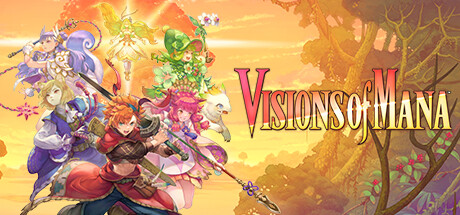
Skills/abilities/spells/passives/Team Comps galore! Banger music tracks and amazing credits song. Sidequests, map markers, special areas, timed trials, post-game unlockables! BUT... Really slow start. Combat is an absolute slog in the beginning and not much story stakes until like... 65% in. Despite my gripes with the combat, AI, story, and some character development, it was fun, and if this is how the Mana series ends, well, I wouldn't be mad.
A relatively-basic, but well-made Action-JRPG with semi-open world elements. It's not really doing anything plot-wise that you haven't seen in classic RPGs, but that's fairly standard for the Mana franchise. That said: the gameplay is fun (they've made a lot of improvements since Trials), and and the characters are entertaining. Overall, a solid game that I'd recommend to any fan of the franchise or old-school JRPG fan.
As much as I visually like the game, everything falls short on the main thing, and that is combat. Combat is soooo repetitive, same combos every single time even when fully upgraded. Not to mention you unlock a few more skills after finishing the game once and doing a "NG+". The trailers do a poor job at showing what combat is actually like. You have combos to knock enemies up and follow it up in the air, keeping them there but the mechanics make it where your attacks won't push your character forward to connect every attack. If you played games such as Devil May Cry or Genshin impact you will know that no matter what, you will always be next to the enemy either by a combo or simply because the game is designed to help you stay next to the enemy to keep on slashing attack after attack, but not here. You have a momentum on the ground, knock them up and there's no follow up... you have to walk forward, jump and try to catch the enemy in the air, otherwise the enemy will just fall to the ground and this will lead you to start the same combo again. Its horrendous I have no clue what the devs were thinking. Otherwise, spoiler alert, the story is quiet grim and dark compared to the contrast of the bright colors and happy smiles you see throughout the game. Children are deemed sacrificial to keep an ecosystem alive and people cherish their demise lmao wtf japan. Children go as far as wishing to be sacrificed and get sad if the fairy doesn't pick them from the lot. Anyways I have to give it a thumbsdown because the combat, the main thing about the game, is so painfully boring and unsurprising you'll be forced to embrace it just to see the story through. "Here's a free movie ticket, but your seat will have spiky bugs that will crawl on your ass and you'll be force to stand up and shake them off every few minutes!"
A great and overlooked addition to the Mana series. The combat is easily the best in the series with a fun class system for each character. I put around 70 or so hours in the PS5 release and bought this on sale on Humble Bundle to try out on my Deck and I can confirm this game looks absolutely stunning on the OLED screen with a stable framerate. Story wise it's your average Mana story but where this game shines for me is in it's characters, specifically Careena, Palamena, Morely and Julei. Combat wise all characters are fun to play but Val's Weapon Master/Berserker/Edelfrei, Careena's Maverick/Divine Fist, Morely's Samurai, Palamena's Rune Seer/Masquer/Archmage and Julei's Necromancer classes are standouts
Active players
Estimated daily and monthly active players (DAU/MAU) modeled from peak concurrency.
Players by region
Where this game's players are, estimated from review languages.
Players also reviewed
The games this title's players most often review too — audience affinity.
Related
| Game | Estimated lifetime revenue | Reviews | Review score | Price |
|---|---|---|---|---|
| $1.4M | 2.2K | 89% | $19.99 | |
| $1.4M | 4.5K | 80% | $9.99 | |
| $1.4M | 1.4K | 63% | $24.99 | |
| $1.4M | 5.8K | 91% | $14.99 | |
| $1.4M | 4.6K | 88% | $12.99 | |
| $1.4M | 761 | 64% | $59.99 |
Related
| Game | Estimated lifetime revenue | Reviews | Review score | Price |
|---|---|---|---|---|
| $15.5M | 12.5K | 87% | $49.99 | |
| $5M | 2.9K | 88% | $59.99 | |
| $4.3M | 3.1K | 90% | $59.99 | |
| $1.1M | 1.6K | 47% | $14.99 | |
| $700.2K | 5.2K | 83% | $7.49 | |
| $207.9K | 316 | 73% | $29.99 |