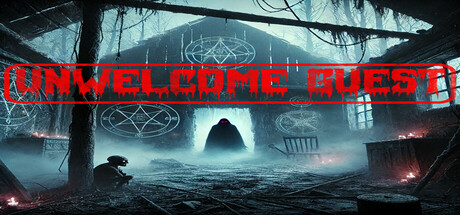
You find yourself in a house that the owners have long since abandoned. But something lurks in the shadows, watching your every move. Explore the rooms, solve the mysteries, and find a way to banish the evil... Before it gets to you.
Modeled estimate, not a reported figure. How we estimate →
Media
About
In the silence of the night, the door creaks... You are an uninvited guest in a house that the owners have long since abandoned. But you are not alone here. A dark silhouette watches from the shadows, following your every step. Who is he? And why does this house not let go of those who cross its threshold?
Explore rooms full of secrets and terrible finds. Read the notes of the former owner, who tried to drive out the evil, but failed. Solve the riddles to finish what you started - or become the next victim. But remember: the deeper you go, the closer He becomes...
Will you be able to reach the end and survive?
Stats
All-time low is the lowest price we've recorded for this game since we started tracking it.
Languages: English, Ukrainian, Russian
Reviews
Unwelcome Guest is a slow-burning psychological horror experience that prioritizes atmosphere, unease, and environmental storytelling over overt scares or action-heavy gameplay. Developed by BalNaur and published by BalNaur Horror Studio, the game places players in the uncomfortable role of an intruder inside a deserted house, where every creaking floorboard and flickering light seems to hint at a presence that does not want to be discovered. Rather than relying on constant jump scares, the game builds tension through isolation, ambiguity, and the gradual realization that the house itself is part of something deeply wrong. From the moment you step inside the abandoned residence, the game establishes a sense of vulnerability. The setting is claustrophobic and oppressive, with narrow hallways, locked rooms, and dim lighting that forces players to move cautiously. Silence is used effectively, often broken only by distant noises or subtle environmental sounds that keep you second-guessing your surroundings. The house feels lived in yet abandoned, filled with decaying furniture, scattered personal items, and unsettling visual details that suggest a tragic or disturbing past. This attention to environmental detail plays a major role in sustaining immersion and dread. Exploration drives the experience, encouraging players to thoroughly investigate rooms and objects to uncover clues about what happened within the house. Notes, journals, and environmental hints slowly piece together a fragmented narrative involving previous inhabitants and their attempts to confront or escape a malevolent presence. The storytelling is intentionally indirect, leaving much of the interpretation to the player and reinforcing the sense that you are uncovering something forbidden. This method rewards careful observation and patience, as critical information is often hidden in plain sight rather than presented through explicit exposition. Puzzle-solving is woven naturally into the environment, with challenges that rely on logic, pattern recognition, and attention to detail rather than abstract mechanics. These puzzles often involve interacting with objects in the house, unlocking pathways, or triggering events that allow further exploration. While not especially complex, they are effective at slowing the pace and increasing tension, as solving them often requires lingering in dangerous or unsettling spaces longer than feels comfortable. This design choice reinforces the psychological aspect of the horror, making progress feel earned rather than routine. The horror itself is largely suggestive rather than explicit. The entity haunting the house is rarely seen directly, instead revealing itself through environmental changes, unsettling sounds, and moments where reality feels subtly altered. This restraint allows fear to grow organically, driven by anticipation rather than spectacle. For some players, this approach will be deeply unsettling, as the lack of clear threats keeps the imagination working overtime. Others may find the experience less intense than more aggressive horror games, as the tension builds slowly and deliberately rather than peaking frequently. Visually, Unwelcome Guest delivers a grounded and atmospheric presentation that supports its themes well. While not pushing technical boundaries, the lighting, textures, and environmental design effectively convey decay and neglect. Shadows are used strategically, often obscuring key areas and creating uncertainty about what lies ahead. The overall presentation favors mood over realism, ensuring that the house feels like a believable yet deeply unsettling space rather than a generic horror setting. Mechanically, the game remains simple and accessible. Movement and interaction are standard for first-person exploration games, with no combat systems or advanced mechanics to master. This simplicity keeps the focus firmly on atmosphere and discovery, though it also means gameplay variety is limited. Players seeking complex systems or high-intensity encounters may find the experience understated, but this design choice aligns with the game’s emphasis on psychological discomfort rather than adrenaline-driven fear. Narratively, the game leaves many questions unanswered, opting for ambiguity over clear resolution. The story unfolds gradually and often indirectly, and the ending leans more toward emotional and thematic closure than definitive explanation. This approach may frustrate players who prefer clear answers, but it complements the game’s overall tone, reinforcing the idea that some horrors are better felt than fully understood. Overall, Unwelcome Guest succeeds as a focused atmospheric horror experience that values tension, mood, and player interpretation. It may not appeal to those looking for fast-paced scares or action-oriented gameplay, but for fans of slow-burn psychological horror and environmental storytelling, it offers a haunting journey through a space that feels genuinely unsafe. Its strength lies in restraint, trusting atmosphere and imagination to do the heavy lifting, and in doing so, it delivers an experience that lingers long after the final room is explored. Rating: 5/10
очень ломанная игра, и даже не пугает. ну задумка не че так) есть прохождение : ►👀☞ https://youtu.be/vNieORea5Yw 👀◀ (◕‿◕)
Related
Related
Trends
Concurrent players on Steam, sampled daily since tracking started.
Momentum
Pace estimated from the game's recent review growth (our daily snapshots) at its own sales-per-review ratio — a momentum signal, not booked sales.
Related
| 7 Days to Die | $425.3M | 403.5K | 87% | $44.99 |
| Euro Truck Simulator 2 | $421.6M | 932.1K | 97% | $19.99 |
| Mount & Blade II: Bannerlord | $309.8M | 293.9K | 88% | $49.99 |
| Palworld | $279.6M | 445.8K | 94% | $20.99 |
| The Forest | $254.8M | 678.5K | 96% | $19.99 |
| Clair Obscur: Expedition 33 | $243.3M | 273.2K | 95% | $47.99 |
Related
| Glasses and Girls | $315.6 | 51 | 82% | $0.49 |
| Food and Girls | $315.6 | 51 | 86% | $0.49 |
| Dances and Girls | $322 | 52 | 83% | $0.49 |
| Carnival and Girls | $334.4 | 53 | 85% | $0.49 |
| Anime Sunset Ride | $334.4 | 54 | 67% | $0.49 |
| Cosmic Journey PC Live Wallpaper | $336.3 | 52 | 71% | $0.49 |