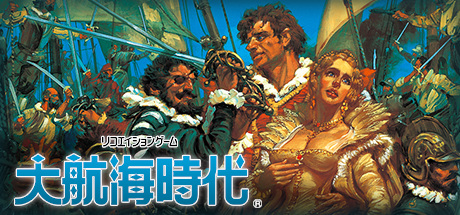
*Uncharted Waters*, developed and published by KOEI TECMO GAMES CO., LTD., is an early example of a game that dares to treat exploration as more than just a mechanic—it makes it the entire point of the experience. Set during the Age of Discovery, it places players in a world defined by ambition, trade, and the unknown, where progress is not handed to you through structured objectives but earned through curiosity and careful decision-making. Rather than pushing a rigid storyline, the game provides a loose narrative framework and then steps back, allowing players to chart their own course across a vast and largely open map.
You take on the role of Leon Franco, a young noble with the goal of restoring his family’s status, but that objective quickly becomes just one of many possible motivations. The game’s strength lies in how it allows you to define what success means. You can become a merchant, building wealth through calculated trade routes, or a naval combatant who thrives on conflict and piracy. Alternatively, you can embrace the spirit of exploration, seeking out distant ports and uncovering new territories. These paths are not mutually exclusive, and the freedom to shift between them gives the experience a sense of organic progression that feels surprisingly modern despite its age.
The core gameplay revolves around managing a ship and navigating between ports, with trading acting as the primary driver of growth. Buying goods where they are plentiful and selling them where they are scarce sounds simple in theory, but in practice it requires attention to detail and a willingness to experiment. Markets vary, prices fluctuate, and success often depends on knowledge gained through trial and error. Sailing itself introduces another layer of consideration, as players must manage supplies, plan routes, and account for the passage of time. Long voyages can be risky, especially when resources run low, creating a constant tension between ambition and caution.
Exploration adds a sense of discovery that elevates the experience beyond straightforward trading. The map is not fully revealed from the start, and players are encouraged to venture into unfamiliar regions in search of new opportunities. Discovering ports, expanding your knowledge of the world, and reporting findings contribute to your progress, reinforcing the idea that knowledge is just as valuable as wealth. This aspect of the game captures the essence of the historical period, making each journey feel purposeful even when it doesn’t lead to immediate profit.
Combat exists as a supporting system, allowing players to engage in naval battles or piracy, but it is not the primary focus. Encounters are relatively simple compared to modern standards, emphasizing positioning and basic tactics rather than deep mechanical complexity. Still, they add variety to the gameplay loop and provide an alternative path for players who prefer a more aggressive approach. The ability to choose how much you engage with combat further highlights the game’s commitment to player freedom.
However, the game’s age is apparent in several key areas. The interface can be difficult to navigate, with menus that lack clarity and require patience to understand. Information is not always presented in a user-friendly way, forcing players to rely on experimentation and deduction. The pacing is also deliberately slow, with long stretches of travel and gradual progression that may feel tedious to those accustomed to faster, more guided experiences. These elements can make the game feel inaccessible at first, particularly for newcomers to older simulation titles.
Visually, *Uncharted Waters* is modest, reflecting the limitations of its time. Its graphics are functional rather than impressive, focusing on conveying information rather than creating spectacle. Yet there is a certain charm in its simplicity, and the accompanying soundtrack helps create an atmosphere that supports the sense of adventure. The presentation may not be a major draw, but it does enough to complement the gameplay without getting in the way.
What ultimately makes *Uncharted Waters* memorable is its sense of openness. It trusts players to find their own direction, offering systems that interact in meaningful ways without forcing a specific path. This design philosophy gives the game a lasting appeal, particularly for those who enjoy slower, more deliberate experiences where discovery and planning take center stage. It may lack the polish and accessibility of modern titles, but it compensates with a depth and freedom that remain compelling.
In the end, *Uncharted Waters* is a foundational entry in the exploration and simulation genre, one that rewards patience and curiosity above all else. It is not a game for those seeking immediate gratification, but for players willing to invest the time to understand its systems, it offers a rich and satisfying journey across a world that feels alive with possibility.
Rating: 7/10