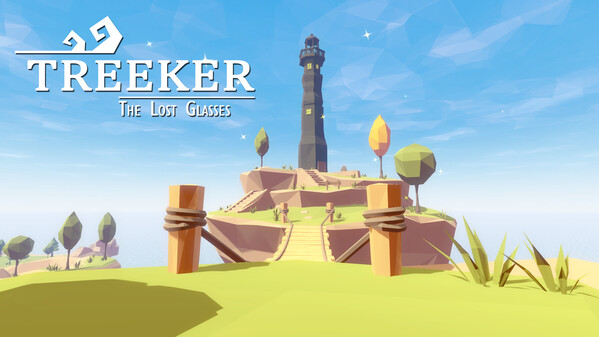
Treeker: The Lost Glasses is a first-person adventure game, with puzzles and platform elements. Use the glasses to see hidden things that will help you solve the challenges. This package includes both the classic and the remake versions of the game.
Modeled estimate, not a reported figure. How we estimate →
Media

About
Treeker: The Lost Glasses is a first-person adventure game, with puzzles and jumping puzzle elements.
This package includes 2 versions of the game: the original low-poly version released in 2015, and the remake version that replaced the classic game a few years later.
Stats
All-time low is the lowest price we've recorded for this game since we started tracking it.
Languages: English
Engagement
Hours played at review time, across 40 reviews with recorded playtime.
Reviews
Themes across 40 recent reviews and how positive each mention is. A keyword signal, not full sentiment analysis.
positive critical· bar length = how often the theme comes up
Reviews
💋
Treeker: The Lost Glasses – Classic + Remake Edition, developed and published by Fernando Paulo (Zefaistos), is a small-scale first-person puzzle-platformer that presents itself as both a game and a reflection of its own development. By including both the original version and a later remake, it gives players a chance to experience not just the core idea, but also how that idea evolved over time. At its center is a simple but intriguing mechanic involving a special pair of glasses that reveal hidden elements in the environment, forming the basis for most of the game’s puzzles and progression. The gameplay is built around exploration and light platforming, with players moving through compact 3D spaces while interacting with objects and uncovering paths that are not immediately visible. The glasses mechanic is the defining feature, encouraging players to shift their perspective—both literally and mentally—to solve puzzles. At its best, this creates satisfying moments where the solution feels clever and rewarding, as hidden platforms or clues suddenly come into view. The concept itself is strong, offering a clear identity that sets the game apart from more conventional puzzle-platformers. However, the execution of this idea is inconsistent. Some puzzles are well-designed and intuitive, while others rely too heavily on trial and error or obscure visual cues. There are moments where the game provides little guidance, leaving players unsure of what they are meant to do next. This lack of clarity can interrupt the sense of discovery, turning what should be engaging problem-solving into frustration. The platforming elements, while functional, are relatively basic and do not introduce significant variation as the game progresses, which can make the overall experience feel repetitive. The inclusion of both the classic and remake versions is one of the game’s more unique aspects. The original release has a raw, experimental quality, with simple visuals and a straightforward presentation that reflects its indie origins. The remake improves on this with cleaner visuals and a slightly more polished feel, but the changes are mostly cosmetic. The core gameplay remains largely the same, meaning that the remake does not fully address the underlying issues present in the original version. Instead, it serves more as an alternate way to experience the same design rather than a reimagining of it. Visually, the game adopts a minimalist approach, with environments that are easy to navigate but lack detail and variety. This simplicity helps maintain clarity, especially when interacting with the glasses mechanic, but it also limits the game’s ability to create a strong sense of atmosphere or immersion. The audio design follows a similar pattern, providing basic background support without adding much to the overall experience. While the presentation is functional, it does little to elevate the game beyond its core mechanics. In terms of structure, Treeker is a relatively short and focused experience. It does not overstay its welcome, but it also does not expand significantly on its central ideas. The lack of new mechanics or meaningful progression as players advance reinforces a sense of sameness, as the gameplay loop remains largely unchanged from beginning to end. This makes the game feel more like a concept explored to its limits rather than a fully developed system with room to grow. Despite these limitations, there are moments where the game’s creativity stands out. The glasses mechanic, when used effectively, offers a unique twist on environmental puzzles, and the ability to compare the original and remake versions provides an interesting perspective on indie development. These elements give the game a certain charm, particularly for players who appreciate experimental designs and small-scale projects. Ultimately, Treeker: The Lost Glasses – Classic + Remake Edition is a modest but thoughtful indie title that succeeds in presenting a compelling central idea, even if it does not fully realize its potential. Its strengths lie in its creativity and its willingness to explore perspective-based puzzles, while its weaknesses stem from inconsistent design and limited depth. It works best as a short, experimental experience—one that offers glimpses of ingenuity but leaves room for refinement. Rating: 6/10
Die Idee ist cool aber es wurde nichts richtiges draus gemacht. Man hat eine Art Glas oder Linse durch die man sehen kann und verborgene Dinge aufdecken kann. Ist allerdings nichts was man nicht schonmal irgendwo anders gesehen hat. Nach kurzer Zeit wurde das Gameplay einseitig weil zu langsam neue Mechaniken eingeführt wurden, also habe ich aufgehört.
This could have been a decent first-person puzzle game but it's way, WAY too rough around the edges for me to recommend. I gave up after the part with disappearing platforms that requires you to restart the game to reset (meaning if you fail this section once and are shunted back to the checkpoint, the platforms do not respawn and the gap is too large to leap across without them. This is not acceptable in a released game). This immediately followed an obnoxious section of jumping across at least two dozen small, floating, half-invisible platforms, by the way.
Short, fun, tricky but fair platforming puzzler.
o game em si é bem rápido achei os puzzles faceis até, mas pelo preço vale a pena e muito. Jogo é gostoso de se jogar, com gráficos bonitos e bem polidos. Não tem dialogo e poucas musicas, mas o som do ambiente é bem gostoso de se ouvir. Enfim nota 7/10 recomendo caso vc não tenha nada para fazer e queira algo pra passar o tempo
it's a fun puzzle adventure in fp
A first person puzzle game with decent controls and appealing visuals. The puzzles seemed fairly straight forward and the controls were responsive. It handles both keyboard and control (even switching between the two) well. If you like this type of game, its worth picking up when bundled. Of course, I don't particularly like this type of game so take my recommendation with a grain of salt.
Очень интересная игра , хоть на английскому , но нереально понравилась :D
Short fun platformer.. With beautiful graphics.. Sometimes it gets very frustrating... Sometimes objectives aren't clear... 7/10 Enjoyable
Related
Related
Trends
Modeled estimate over time, reconstructed from Steam's monthly review histogram.
Momentum
Pace estimated from the game's recent review growth (our daily snapshots) at its own sales-per-review ratio — a momentum signal, not booked sales.
Audience
Estimated from the language of this game's reviews — a proxy for where players are, not official Steam demographics.
Related
| 101 Cats in Australia | $457.1 | 60 | 95% | $0.49 |
| My Strange Girlfriends | $452 | 73 | 78% | $0.99 |
| SEARCH ALL - CACTUSES | $462.6 | 56 | 88% | $2.99 |
| SEARCH ALL - MUSHROOMS | $462.6 | 56 | 82% | $2.99 |
| Dodge Bubble | $463.1 | 51 | 69% | $0.49 |
| Furry Woof and Nya | $464.4 | 75 | 85% | $0.99 |
Related
| 7 Days to Die | $425.3M | 403.6K | 87% | $44.99 |
| Euro Truck Simulator 2 | $421.6M | 932.3K | 97% | $19.99 |
| Mount & Blade II: Bannerlord | $309.8M | 294K | 88% | $49.99 |
| Palworld | $279.6M | 447.5K | 94% | $20.99 |
| The Forest | $254.8M | 678.6K | 96% | $19.99 |
| Project Zomboid | $239.1M | 461K | 94% | $19.99 |