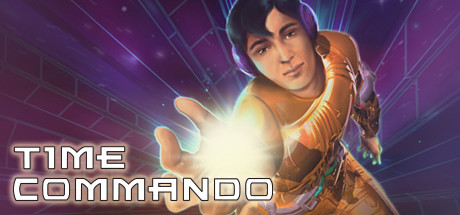
For retro gaming lover, discover a jewel of 1996: Time Commando Let's fight across 9 time periods: prehistoric, Roman, feudal Japan, Medieval, Conquistador, the Wild West, and the modern wars
Modeled estimate, not a reported figure. How we estimate →
Media

About
Genres
Stats
All-time low is the lowest price we've recorded for this game since we started tracking it.
Languages: English**languages with full audio support
Engagement
Hours played at review time, across 42 reviews with recorded playtime.
Reviews
Themes across 42 recent reviews and how positive each mention is. A keyword signal, not full sentiment analysis.
positive critical· bar length = how often the theme comes up
Reviews
7/10
Time Commando is a distinctly mid-1990s action title whose ambition and identity are inseparable from the era in which it was created. Originally developed in the 1990s and re-released on Steam by [2.21], the game stands as a time capsule of early 3D action design, combining experimental camera work, pre-rendered environments, and relentless combat into a fast-moving journey across human history. It is a game that values spectacle and variety above refinement, and while its mechanics show their age, its creativity and raw energy remain its defining strengths. The premise is simple but immediately engaging in a very 90s way. A powerful military simulation computer designed to recreate battles across time has been corrupted by a rogue entity known as the Predator Virus. Rather than shutting the system down, humanity’s solution is to send in a highly trained operative, Stanley Opar, to fight the virus from within the simulation itself. This narrative excuse allows the game to jump freely between wildly different historical eras, turning each level into a new setting with its own enemies, weapons, and visual identity. The story is never particularly deep, but it doesn’t need to be; it exists to justify constant escalation and change. Gameplay is centered on third-person action viewed through fixed camera angles that shift as you move through environments. Stanley automatically equips weapons appropriate to each era, ranging from primitive clubs and spears to swords, firearms, and futuristic tools. Combat is constant and aggressive, with enemies frequently spawning in groups that rush the player head-on. The emphasis is less on careful tactics and more on momentum, positioning, and quick reactions. This design keeps the pace brisk but can also make encounters feel repetitive, especially when enemy behavior relies more on numbers than intelligence. One of Time Commando’s most memorable aspects is its sheer variety of settings. Players are thrown into prehistoric jungles, Roman arenas, feudal Japan, medieval battlefields, the Wild West, modern warzones, and futuristic cityscapes. Each era introduces new enemy types and weapons, forcing players to adapt repeatedly rather than settle into a single combat rhythm. This constant change prevents the game from feeling visually monotonous and gives it a sense of adventure that was relatively uncommon at the time of its original release. Visually, the game uses a hybrid approach that was ambitious for its era. Characters and enemies are rendered as 3D models, while backgrounds are pre-rendered images designed to look cinematic and detailed. This technique allows environments to feel more elaborate than fully real-time 3D games of the same period, but it comes at a cost. Fixed camera angles can obscure enemies or make spatial awareness difficult, particularly during intense combat. Combined with movement controls that feel stiff by modern standards, this can lead to moments of frustration, especially when precise positioning is required. The controls themselves reflect early experimentation with 3D action. Movement can feel rigid, and attacks lack the fluidity expected from modern third-person combat systems. However, once players adjust to the rhythm and limitations, the game reveals a certain arcade-like clarity. You are rarely asked to solve complex puzzles or explore freely; instead, the game pushes you forward relentlessly, reinforcing its identity as a combat-focused experience rather than a hybrid action-adventure. Audio design contributes significantly to the atmosphere. The soundtrack shifts tone depending on the era, moving between tense, percussive tracks and more ambient pieces that underscore the sense of danger and urgency. Sound effects for weapons and enemy reactions are sharp and exaggerated, reinforcing the game’s aggressive pacing. While voice acting is minimal or absent, the lack of spoken dialogue keeps the focus on action and movement rather than narrative exposition. Difficulty in Time Commando is consistent with its old-school roots. The game rarely eases up, and enemy encounters often rely on attrition, testing how well players can manage health and resources while pushing forward. A constantly ticking virus meter adds pressure, discouraging excessive hesitation and reinforcing the idea that time itself is the enemy. This mechanic encourages forward momentum but can also punish players who want to explore environments more thoroughly. From a modern perspective, Time Commando is undeniably dated. Its camera system, control scheme, and combat repetition are all products of early 3D experimentation, and new players may find the learning curve steep simply due to unfamiliar design conventions. Yet these same qualities give the game its character. It represents a period when developers were willing to take bold risks, mixing genres and ideas in ways that felt unpolished but imaginative. Ultimately, Time Commando is best appreciated as both an action game and a historical artifact. It offers a frantic, era-spanning adventure driven by constant combat and visual variety rather than mechanical elegance. Players willing to accept its rough edges will find a game bursting with personality and ambition, one that captures the experimental spirit of 1990s action design. While it may not satisfy those seeking smooth modern controls or deep systems, it remains a memorable and distinctive experience for fans of retro action games and time-travel spectacle. Rating: 7/10
Si llegaste a este juego es por que lo jugaste durante tu infancia. Curiosamente no ha envejecido mal, obviamente las texturas del 3D pues si se ven viejas, pero los controles sencillos y los diversos niveles a lo largo de la historia aun lo hacen un juego divertido. La nostalgia lo eleva, pero aun así es un juego muy recomendable
A classic game from Windows 95's PCs in 1990s.
Uno de mis juegos preferidos que corría en Windows 95, recuerdos de la infancia.
Só pela nostalgia mesmo
A combination of the best elements of "Alone in the Dark" + a beat-em-up/shoot-em-up + some interactivity + sci-fi. And, nothing takes out of my mind the Wachowskys got inspired on this game to make "The matrix"...especially after seeing the end of the "Modern wars" level.
Excelente jogo, marcou muito minha infância, tenho o cd original dele até hoje XD
A true childhood classic and my favorite PC game of all time. My friends and I used to pass the controller (or keyboard!) every time one of us died. I never finished the game, but the variety in stages like Feudal Japan and the Wild West kept me coming back. That was a golden era where innovative gameplay mattered far more than high-end graphics, no DLC, no seasonal passes, just pure fun.
NO GOOD SOMETHING IS WRONG SOUND IS CH0PPY AN AND VIDE0.... WHO DO I CONTACT TO GET THE UPDATE OR FIX FIX THIS PROBLEM I REALLY LIKE THIS EASY GAME AND REMEMBER IT 20 YEARS AGO
Related
Related
Trends
Modeled estimate over time, reconstructed from Steam's monthly review histogram.
Momentum
Pace estimated from the game's recent review growth (our daily snapshots) at its own sales-per-review ratio — a momentum signal, not booked sales.
Audience
Estimated from the language of this game's reviews — a proxy for where players are, not official Steam demographics.
Related
| Lust in Space 🔞🪐 | $10.9K | 100 | 81% | $3.49 |
| MOAI 3: Trade Mission Collector's Edition | $10.9K | 61 | 92% | $9.99 |
| My Hidden Things | $10.9K | 86 | 76% | $8.99 |
| Tree It | $10.9K | 186 | 94% | $3.99 |
| SNUG | $10.8K | 86 | 64% | $6.99 |
| Usotsuki Game / 谎言游戏 | $10.9K | 270 | 74% | $1.99 |